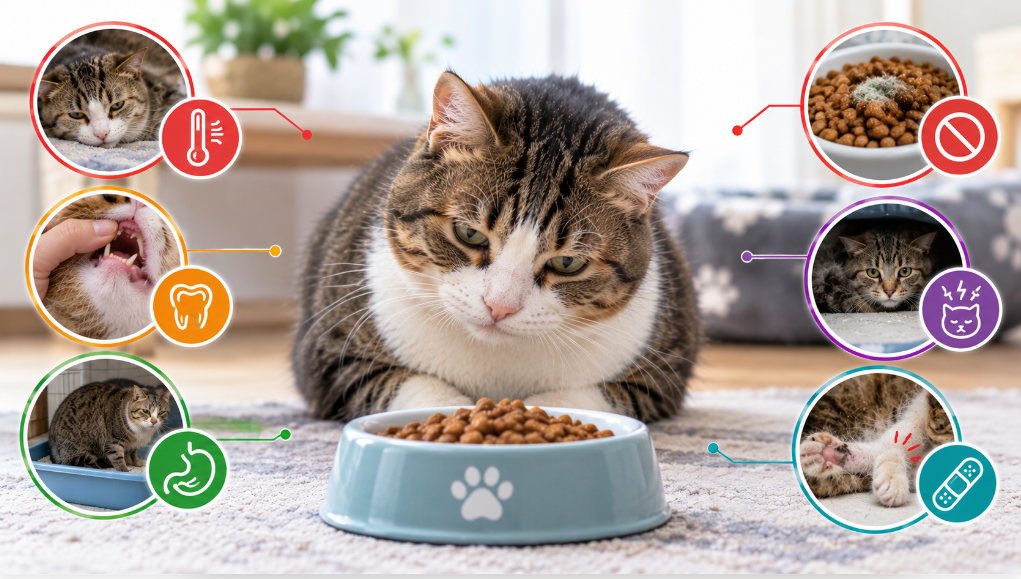

A cat that won’t eat is usually dealing with one of four things: a problem with the food or the feeding spot, stress, mouth pain, or an illness. The first two are often easy to fix at home. The last two need a vet.
Here is the rule to remember. If your cat has eaten almost nothing for a full day, call your vet. If it has gone two days, treat it as an emergency. Cats are different from dogs and people here. A cat that stops eating can develop a serious liver problem within days.
This guide explains why cats stop eating, how to tell a small problem from a big one, and what you can safely try at home while you arrange help.
How long can a cat go without eating?
Not long. One skipped meal is no cause for alarm. A full day of little or no food is the point to call your vet. Kittens, older cats, overweight cats, and cats that already seem unwell should be seen sooner.
The reason is the liver. When a cat stops eating, its body moves fat from storage into the liver to burn as fuel. A cat’s liver handles this badly. The fat piles up inside the liver cells, and the organ stops working properly. This is called hepatic lipidosis, or fatty liver disease, and it can be fatal if it is not treated fast.
Fatty liver almost always has a cause behind it. In more than 90 percent of cases, another condition such as diabetes, pancreatitis, kidney disease, or cancer is involved. So a cat that refuses food is rarely just being fussy for long.
The two-day rule: a cat that has eaten almost nothing for 48 hours needs a vet that day. For kittens and senior cats, call after 24 hours.
Is your cat refusing food, or unable to eat?
Watch what your cat does at the bowl. The behavior points to the likely cause.
| What you see | What it may mean | What to do first |
| Sniffs the food and walks away, but eats treats | Dislikes the food, or it is stale or cold | Offer fresh, slightly warm food in a new flavor |
| Goes to the bowl, then backs away or drops food | Mouth pain | Book a vet visit soon |
| Licks lips, drools, or turns away from the bowl | Nausea | Call your vet, especially if there is vomiting |
| Sneezing, watery eyes, blocked nose | Cannot smell the food | Warm the food and call your vet if it lasts a day |
| Hides, or stops eating after a change at home | Stress | Restore routine and a quiet spot, call your vet after a day |
Food and feeding problems that are easy to fix
Check the simple things first.
A new food. Cats can be wary of a change in flavor, texture, or even kibble shape. If you switched foods recently, go back to the old one. Then change over slowly across a week or more.
Old food. Dry food goes stale or rancid once a bag has been open for about a month, so buy sizes your cat can finish in that time. Wet food dries out and spoils if it sits in the bowl. Throw it out after a few hours, and sooner in warm weather. Wash the bowl every day, because old residue smells bad to a cat.
Cold food. Cats prefer food at room temperature or slightly warm. Food straight from the fridge has very little smell. Let it sit out for a few minutes, or stir in a spoonful of warm water.
A bad spot. Cats avoid food that sits close to the litter tray or in a noisy part of the house. Move the bowl somewhere calm, away from litter and bins.
Competition. In a home with more than one cat, a shy cat may skip meals to avoid a bully. Cats like to eat small meals alone. Give each cat its own bowl, and place the bowls in separate rooms or out of each other’s sight. The feeding guidelines from feline vets also suggest several feeding stations and puzzle feeders.
Treats and weather. A cat that snacks all day may not be hungry at dinner. Appetite also follows the seasons. Cats eat roughly 15 percent more in winter than in summer, so a small dip in a heatwave can be normal if your cat is bright, active, and holding its weight.
Can stress make a cat stop eating?
Yes. Cats like routine, and almost any change can switch off their appetite. Common triggers include a house move, a new pet, a new baby, visitors, building work, and changes to your daily schedule. Even new furniture can do it.
Cats hide stress well. You may only notice the food left in the bowl. Help your cat by feeding at the same times each day, giving it a quiet room with a hiding place, and keeping familiar bedding in reach.
Do not wait for stress to pass on its own. A stressful event often starts a spell of eating less, and that can lead to fatty liver. If your cat has barely eaten for a day, call your vet.
Could mouth pain be the problem?
Yes, and it is one of the most common causes. More than half of cats over the age of three have some form of dental disease. The usual forms are gum disease and tooth resorption, where the tooth breaks down and becomes painful.
A cat with a sore mouth often wants to eat but can’t. Look for these signs:
- Walking up to the bowl, then backing away
- Dropping food or chewing on one side
- Drooling or bad breath
- Pawing at the face
- Choosing soft food and refusing kibble
Many cats show no obvious signs at all, so a change in appetite may be the only clue. Your vet can check the mouth, clean the teeth, or remove a painful tooth. Until then, offer soft wet food.
Which illnesses cause a cat to stop eating?
Loss of appetite is often the first sign of illness. These are the common ones:
- Nausea and stomach problems. A nauseous cat licks its lips, goes to the bowl, then backs away. Vomiting, diarrhea, and constipation often come with it.
- Kidney disease. It can make a cat feel sick to its stomach and turn it off food.
- A blocked nose. Cats use smell to decide whether to eat. A stuffy nose from a respiratory infection, with sneezing and watery eyes, can end their interest in a meal.
- Pain or injury. Check for wounds, limping, or a swollen face.
- Other conditions. Diabetes, pancreatitis, an overactive thyroid, liver disease, and cancer can all reduce appetite.
You cannot tell these apart at home. A vet can use a physical exam, blood tests, and sometimes X-rays or an ultrasound to find the cause.
Why is my kitten not eating?
Kittens have much smaller reserves than adult cats, so a kitten that won’t eat for more than a day needs a vet. Newly weaned kittens may simply need a different kibble shape, or a splash of water to soften the food. Give a kitten a safe place to eat where other pets can’t chase it, and keep small objects it could swallow out of reach.
What to do at home when your cat won’t eat
These steps are safe to try while you wait for a vet visit. They do not replace one.
- Check the food. Smell it. If it is stale, throw it out and open a fresh pack or can.
- Warm it. Slightly warm wet food smells stronger. Stir it well and test it with your finger, because a microwave heats unevenly and can scald a cat’s mouth.
- Change the flavor or texture. Try a smooth pâté if your cat refuses chunks, or the other way around. Offer small amounts.
- Move the bowl. Pick a quiet spot away from the litter tray, other pets, and noise.
- Hand-feed a little. A few morsels from your fingers, with some calm attention, can get a cat started.
- Keep notes. Write down what your cat eats, any vomiting, litter tray changes, and how much it drinks. Your vet will want this.
Never hold food back to make your cat accept a new diet, even a prescription one. If your cat refuses it, ask your vet for another option. Do not force food into your cat’s mouth, and never give human medicine, because some common painkillers are toxic to cats.
When should you call the vet?
Call the same day if your cat has eaten little or nothing for a full day, or if you see any of these:
- Vomiting, diarrhea, or straining in the litter tray
- Unusual tiredness, or hiding more than normal
- A yellow tinge to the gums, ears, or whites of the eyes
- Drooling or pawing at the mouth
- Not drinking
- Visible weight loss
A yellow tint is a sign of jaundice and means the liver is in trouble. Go to an emergency vet if your cat has not eaten for two days.
What will the vet do?
Your vet will weigh your cat, check its mouth, feel its belly, and take its temperature. Blood tests, urine tests, X-rays, or an ultrasound may follow. Treatment depends on the cause. It might be dental work, anti-nausea medicine, or treatment for an infection or kidney disease.
Many cats also need help eating while they recover. For early fatty liver, treatment means fluids, vitamins, and a feeding tube. Some cats go home within a few days, and most then need tube feeding for about a month. Cats treated in time can recover well, and the condition rarely comes back.
Conclusion
A cat that won’t eat is telling you something. Check the food, the bowl spot, and any recent changes at home first. If your cat eats almost nothing for a full day, call your vet, and treat two days as an emergency. Early help prevents fatty liver and finds the real cause, whether that is a sore tooth, a stuffy nose, or something more serious. A good result is a cat back at its bowl, eating normally within a day or two.
Frequently asked questions
How long can a cat go without eating?
Not more than a day or two. Call your vet after 24 hours of little or no food, and treat 48 hours as an emergency. Kittens and senior cats need help sooner.
Why is my cat not eating but acting normal?
A cat can feel fine and still be put off by stale food, a new flavor, a noisy feeding spot, or early mouth pain. Offer fresh, slightly warm food in a quiet place. If your cat still skips meals after a day, book a vet visit.
Why will my cat eat treats but not its regular food?
Treats are tastier and smell stronger, so a cat may hold out for them. It can also mean the regular food is stale or the cat has gone off it. Cut back the treats, offer fresh food, and call your vet if it lasts a day.
Will my cat starve itself?
Yes, some cats will. A stressed, sick, or hurting cat may refuse all food even when hungry. Do not wait for hunger to win. Call your vet if your cat refuses food for a full day.
Should I change my cat’s food if it won’t eat?
Try a different flavor or texture of the same type of food first. Make bigger changes slowly, mixing new food into the old over a week. If your cat eats a medical diet, ask your vet before changing it.
Related Articles
Is It Normal for Cats to Throw Up? When to Worry
Why Did My Cat Throw Up? Causes and Warning Signs


Pingback: Why Is My Cat Limping? Causes and When to See a Vet
Pingback: Why Is My Cat Salivating So Much? Causes & When to Worry
Pingback: How Long Does a Cat Stay in Heat? (7 Days on Average)
Pingback: Can Cats Have Autism? What Those Signs Really Mean
Pingback: Can Cats Get Colds? Symptoms, Care and Red Flags
Pingback: When Are Cats Fully Grown? Age & Growth Stages Explained
Pingback: Do Cats Need Baths? How Often to Bathe a Cat Safely
Pingback: Can Cats Eat Broccoli? Safety, Benefits and Portions
Pingback: Why Does My Cat Bite Me Gently? Love Bites, Explained
Pingback: How Many Teeth Do Cats Have? (30 Adult, 26 Kitten)
Pingback: Is Peppermint Oil Safe for Cats? No — Here's Why
Pingback: Can Cats Have Coconut Oil? Benefits, Risks and Dosage
Pingback: Can You Trim a Cat's Nails? Yes — Here's How Safely
Pingback: How Can You Tell If a Cat Is Pregnant? Week-by-Week Signs
Pingback: What Fruits Can Cats Eat? Safe and Toxic Fruits Listed
Pingback: How Often Do Cats Need Rabies Shots? Full Schedule
Pingback: Why Does My Cat Wee on My Bed? Causes & Fixes
Pingback: What Does It Mean When Your Cat Licks You? (7 Reasons)
Pingback: Can Cats Have Seaweed? Safety, Benefits and Risks
Pingback: Why Does My Cat's Breath Smell So Bad? Causes & What Helps
Pingback: How Do Indoor Cats Get Worms? (7 Surprising Ways)
Pingback: Can Cats Get Lyme Disease? (Rare, But Possible)
Pingback: What Does Mange Look Like on a Cat? Signs & Treatment