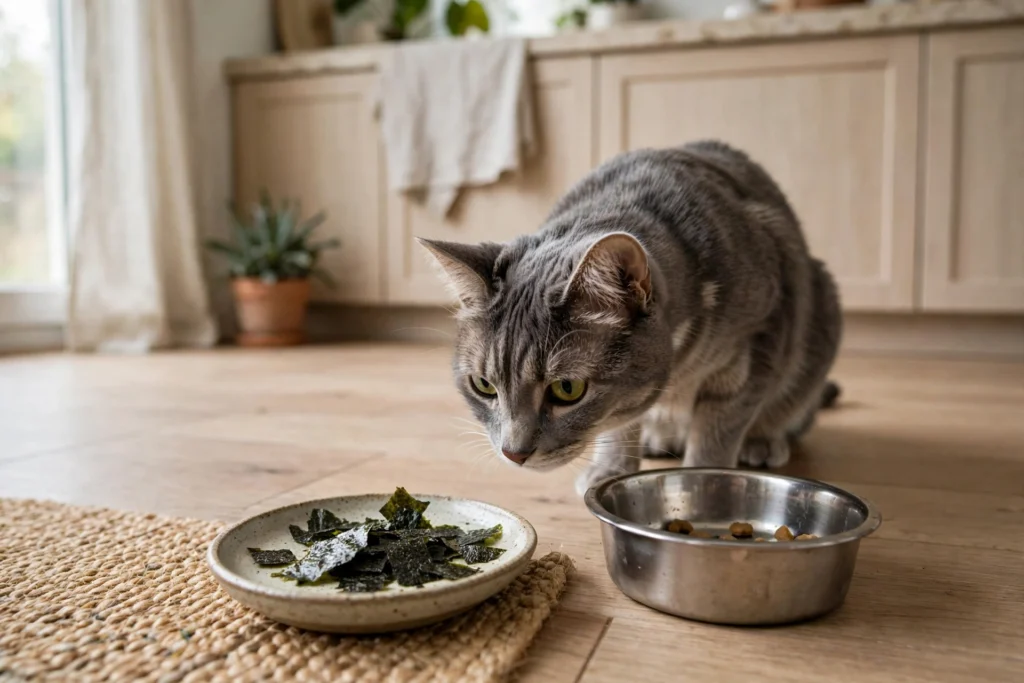

Yes, cats can have seaweed. Plain, unsalted seaweed — the plain nori sheets used for sushi are the easiest example — is safe for most cats in small amounts, and many cats genuinely enjoy the taste. The catch is the dose and the type: seaweed is rich in iodine, some kinds far more than others, and too much iodine can disturb your cat’s thyroid gland.
This guide explains which types of seaweed are fine, which to avoid, what nutrients seaweed actually offers a carnivore, and how much is sensible. It also covers the one rule that matters most: never feed seaweed your cat found, or you collected, at the beach.
Is seaweed safe for cats?
For a healthy adult cat, yes, in treat-sized amounts. Seaweed is not toxic to cats, and edible seaweeds made for the food trade are a normal ingredient in some commercial pet foods and supplements. Cats are obligate carnivores, so seaweed is never a food they need — think of it as an occasional bonus, not a dietary requirement.
Safety depends on three things:
- The type. Nori sits at the gentle end. Kelp sits at the powerful end, with far more iodine per gram.
- The extras. Plain is fine. Salt, oils, and flavorings turn a safe snack into a poor choice.
- Your cat. A healthy cat handles a little seaweed easily. A cat with thyroid disease is a different case, covered below.
If your cat has already stolen a piece of plain nori from the counter, there is no need to panic. Watch for mild stomach upset and read on for the amounts that make sense going forward.
What nutrients does seaweed give a cat?
Seaweed has an impressive nutrient list for a plant food, which is why it shows up in pet supplements. What it can offer includes:
- Iodine. The headline nutrient. Your cat’s thyroid gland uses iodine to make thyroid hormones, which control metabolism. Cats need iodine in their diet, and complete cat foods already supply it — seaweed adds more on top.
- Minerals. Seaweed contains calcium, magnesium, iron, and potassium in small amounts.
- Omega-3 fats. Some marine algae contain EPA and DHA, the same omega-3s found in fish oil. Algae is where fish get them from in the first place.
- Fiber. Seaweed fiber can support normal digestion and stool quality in small amounts.
- Vitamins and antioxidants. Seaweeds contain a range of B vitamins, vitamin K, and antioxidant compounds.
Keep the benefits in proportion. A thumbnail-sized piece of nori adds a sprinkle of these nutrients, not a meaningful dose. The one nutrient seaweed delivers in real quantity is iodine — which is exactly why portion control matters.
Which types of seaweed can cats have?
Not all seaweed is equal. Use this table as your quick reference:
| Type of seaweed | Safe for cats? | Notes |
|---|---|---|
| Plain nori sheets (unsalted, unflavored) | Yes — best choice | The mildest option. Tear off a small piece; lowest iodine of the common types. |
| Kelp and kelp powder | Caution — tiny amounts only | Very high in iodine. Use only pet products, follow the label dose exactly, and skip it entirely for cats with thyroid problems. |
| Spirulina | Generally yes, in tiny amounts | A freshwater blue-green algae used in some pet supplements. Buy reputable pet or food-grade products only. |
| Seaweed snacks made for people (roasted, salted, flavored) | No | Added salt and oils are bad for cats, and flavors like garlic, onion, or chili are genuinely dangerous. |
| Wild seaweed from the beach | Never | Can swell inside the stomach, and may carry pollutants, bacteria, and other debris. |
A note on kelp dental products: powders based on the kelp Ascophyllum nodosum are sold to reduce plaque when sprinkled on food. They are dosed in pinches for a reason. Follow the label, and ask your vet first if your cat has any thyroid history.
What are the risks of seaweed for cats?
Too much iodine and the thyroid
This is the main risk. Iodine feeds thyroid hormone production, and both too little and too much iodine can push the gland out of balance. The Cornell Feline Health Center explains that limiting dietary iodine is even used as one way to manage overactive thyroids in cats, because the gland cannot make excess hormone without iodine to build it from. A healthy cat eating a small piece of nori now and then is nowhere near problem territory. The risk grows with daily kelp, big portions, or a cat whose thyroid is already diseased.
Salt and seasonings
Roasted seaweed snacks for people are usually salted and oiled, and some come in flavors that should never reach a cat. Garlic and onion, including their powders, damage a cat’s red blood cells. Chili and wasabi are harsh irritants. Even plain excess salt can make a cat very thirsty and unwell. If it comes in a snack packet with a flavor name, keep it for yourself.
Stomach upset
Any new food can cause a soft stool or a vomit while the gut adjusts, and seaweed’s fiber makes this more likely if you start with too much. Introduce a tiny piece, wait a day or two, and increase only if all is well.
Choking and texture
A whole dry nori sheet can fold and stick to the roof of the mouth or be swallowed in a large, stiff piece. Always tear seaweed into small, cat-sized bits rather than handing over a sheet.
Why should you never feed beach seaweed?
Seaweed your cat drags in from the shore, or that you pick up on a walk, is the one form to avoid completely. Dried beach seaweed is a known hazard for pets for two reasons.
First, it expands. Dried seaweed absorbs water and swells. Eaten dry, it can swell inside the stomach or intestines and cause a blockage that needs emergency surgery.
Second, it is dirty. Beach seaweed can carry bacteria, pollutants washed into the sea, parasites, and sharp or toxic debris tangled inside it. You cannot wash that risk away reliably in a home kitchen. If your cat eats dried seaweed at the beach, call your vet the same day rather than waiting for symptoms.
How much seaweed can a cat have?
Treat seaweed like any other treat: small, occasional, and a tiny share of the day’s food. Practical guidance:
- Plain nori: a piece roughly the size of your thumbnail, torn into small bits, a few times a week at most.
- Kelp or seaweed powder for pets: strictly the label dose for a cat — usually a small pinch mixed into food. Never estimate with a kitchen spoon.
- Spirulina: a pinch in food, only from a product made or approved for pets.
- First time: offer half the usual amount and watch for vomiting, diarrhea, or itching over the next day.
Also serve seaweed slightly moistened or with a meal if your cat bolts food dry. It reduces the gulping-a-sheet problem and is kinder to the stomach.
Which cats should skip seaweed?
Some cats should not be offered seaweed at all, or only with their vet’s agreement:
- Cats with hyperthyroidism (an overactive thyroid), including cats on methimazole or similar medication. Extra iodine works directly against their treatment.
- Cats on an iodine-restricted prescription diet. These diets work only if nothing else the cat eats adds iodine — one kelp treat can undermine the whole plan.
- Cats with any thyroid history, even if currently stable, unless your vet says otherwise.
- Kittens and pregnant or nursing cats, whose hormone balance is still developing or under strain. Their complete food already covers their needs.
If your cat takes any long-term medication, a quick question to your vet before adding seaweed or any supplement is always worth it.
When should you call the vet?
Most seaweed nibbles end with nothing more dramatic than a satisfied cat. Call your vet if:
- Your cat eats a large amount of seaweed, especially kelp or a kelp supplement
- Your cat eats dried seaweed from the beach — call the same day, even if they seem fine
- You see repeated vomiting, diarrhea, drooling, or signs of stomach pain
- Your cat refuses food for more than 24 hours afterward; our guide on why a cat won’t eat explains the common causes and the warning signs
- A cat with thyroid disease eats seaweed snacks or kelp products
- You notice weight loss, restlessness, a racing heartbeat, or increased thirst in the weeks after starting any daily seaweed supplement — all possible signs the thyroid is being pushed
Conclusion
Plain seaweed, especially nori, is a safe and even nutritious little treat for most cats, as long as portions stay small. Respect the iodine: that one nutrient is why kelp needs care, why seasoned seaweed snacks stay human-only, and why cats with thyroid disease should skip seaweed altogether. And keep the rule simple — seaweed comes from the shop, never from the beach.
Frequently asked questions
Can cats eat nori sheets?
Yes. Plain, unsalted nori is the safest seaweed to share. Tear a small piece into bits rather than giving a whole sheet, and choose plain sheets over roasted, salted snack versions.
Can cats eat seaweed snacks made for humans?
Plain dried nori snacks with nothing added are fine in small amounts. Flavored or heavily salted ones are not — the salt and oil are unhealthy for cats, and garlic, onion, or chili seasonings are dangerous. Check the ingredient list before sharing any snack.
Is kelp powder safe for cats every day?
Only in the tiny label dose of a product made for pets, and only for cats with a healthy thyroid. Kelp is very concentrated in iodine, so daily use at food-spoon amounts can overload the gland. If your cat has any thyroid issue, skip kelp unless your vet approves it.
Can kittens have seaweed?
They do not need it. Kittens grow fast and their complete kitten food already provides balanced iodine and minerals. Extra seaweed adds risk without benefit, so wait until your cat is an adult, and keep early tastes very small.
What happens if a cat eats too much seaweed?
A single big helping most often causes vomiting or diarrhea. Large amounts of dry seaweed can swell in the stomach, and long-term overfeeding — especially of kelp — can disturb the thyroid. If a lot was eaten, or your cat seems unwell, call your vet.
Does seaweed help a cat’s teeth?
Kelp powders based on Ascophyllum nodosum are sold to help reduce plaque, and some owners see fresher breath and less tartar. They are a supplement, not a replacement for dental care, and they carry the same iodine caution. Dental diets, brushing, and vet checks remain the foundation.


Pingback: Why Does My Cat's Breath Smell So Bad? Causes & What Helps