
Yes, cats can snore — and for many cats it is completely normal. Snoring happens when the soft tissues of the nose and throat relax in deep sleep and vibrate as air passes over them. It is less common in cats than in dogs, but plenty of healthy cats snore softly for their whole lives.
The snoring worth paying attention to is the new kind: snoring that starts suddenly, keeps getting louder, happens while your cat is awake, or arrives together with other symptoms. This guide explains why cats snore, which cats snore most, how to tell ordinary snoring apart from other breathing sounds, and the signs that mean a vet should listen too.
Why do cats snore?
Snoring is a sound, and the sound comes from a partially narrowed airway. When your cat falls into deep sleep, the muscles of the throat relax. The soft palate and other tissues at the back of the nose and throat become loose, and each breath makes them flutter. That flutter is the snore. Anything that narrows the airway a little — sleeping position, anatomy, extra weight, a stuffy nose — makes the flutter stronger and the sound louder.
PetMD notes that snoring in cats is uncommon compared with dogs, and that a snoring cat is not necessarily a cat in medical trouble. Context is everything: the same sound can be a lifelong quirk for one cat and the first symptom of illness for another.
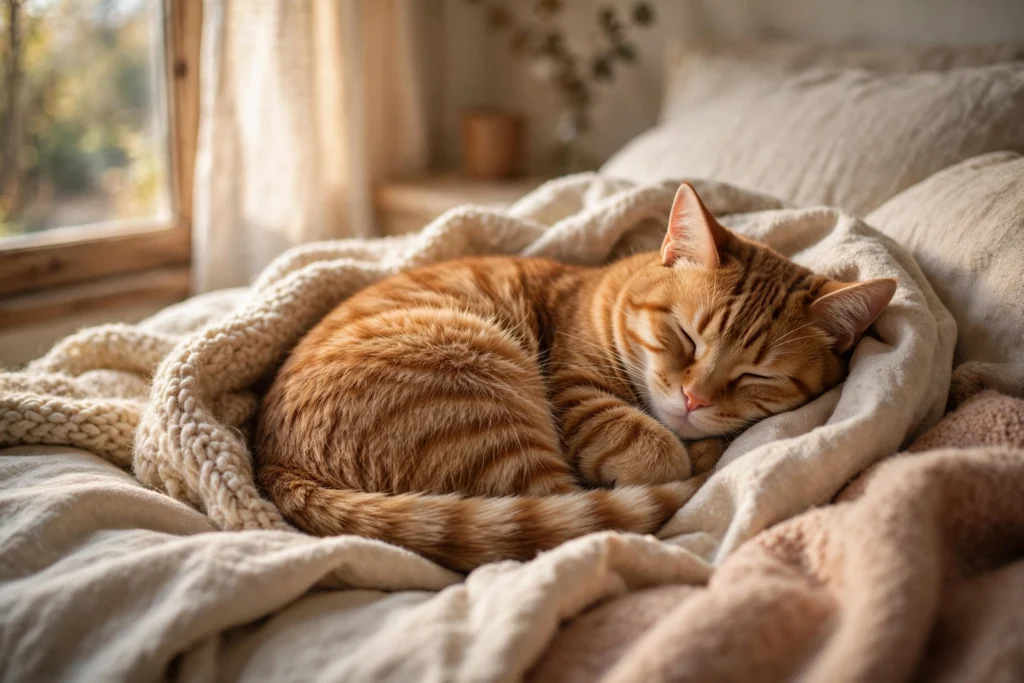
Cats tend to snore in their deepest sleep rather than while dozing. A cat that is merely resting with half-closed eyes usually breathes silently. The snores start when the cat is fully relaxed and deeply asleep — which is also why you will often hear twitching and tiny dream noises from the same cat a few minutes later.
Which cats snore the most?
Some cats are simply built to snore:
Flat-faced (brachycephalic) breeds
Persians, Himalayans, and Exotic Shorthairs are the champion snorers of the cat world. Their shortened facial bones, smaller nostrils, and relatively long soft palates crowd the airway, as vets quoted by PetMD from the Cornell Feline Health Center explain. Many of these cats snore from kittenhood, and a stable, lifelong snore in a flat-faced cat that breathes comfortably while awake is usually just their anatomy. What matters is change: a Persian that suddenly struggles, snores far more, or breathes noisily while awake needs a check.
Overweight cats
Extra tissue around the neck and throat narrows the airway from the outside, and fat in the chest wall makes breathing work harder. Overweight cats snore more, and losing the extra weight often reduces or stops the snoring. Obesity makes every other cause on this page worse, too.
Older cats
Senior cats can start snoring as tissues lose tone with age and a little weight creeps on. A gentle new snore in an otherwise well older cat is often just aging — but older cats are also the group in which growths inside the nose become more likely, so a vet check at the next visit is worthwhile.
Cats sleeping in odd positions
A cat asleep on its back, or with its head tipped at a strange angle or its chin tucked hard into its chest, may snore simply because gravity and posture are narrowing the airway. This positional snoring stops if the cat shifts or is gently encouraged into a flatter position.
Is it snoring, or a different breathing sound?
Owners use the word “snoring” for several different sounds, and vets separate them because they point to different parts of the airway. Learning the names helps you describe exactly what you hear — and a phone video of the sound is genuinely useful at the appointment.
| Sound | What it is | When you hear it | How worrying is it? |
|---|---|---|---|
| Snoring | Soft tissues of the nose and throat vibrating in relaxed sleep | Only while asleep | Usually normal, especially if long-standing |
| Stertor | A snoring-like, low-pitched snuffle caused by partial blockage in the nose or throat | While awake as well as asleep | Needs a vet check if new — it means the upper airway is partly obstructed |
| Stridor | A harsh, high-pitched sound, usually heard breathing in, coming from the voice box (larynx) area | While awake, sometimes with effort | See a vet promptly — the larynx is not a place for guesswork |
| Wheezing | A whistling sound, usually breathing out, from the lower airways in the chest | While awake, sometimes with coughing | See a vet — can be asthma or other chest disease |
| Purring | A rhythmic vibration cats make when content, and sometimes when stressed or in pain | While awake, often when stroked | Not a breathing problem by itself |
The key difference is sleep versus waking. As PetMD’s guide to noisy breathing explains, noisy breathing in cats is not common and usually indicates illness — if your cat’s breathing sounds like snoring while they are awake, they should be evaluated by a veterinarian. A sound that exists only in deep sleep is far less concerning than the same sound at breakfast.
What causes new or suddenly louder snoring?
A cat that has never snored and starts — or a quiet snorer that becomes a loud one — has usually developed one of these:
- Upper respiratory infection. The common cat “cold” viruses and bacteria inflame and swell the nose and throat and add mucus, which narrows the airway. Snoring that arrives with sneezing fits, a runny nose, or watery eyes usually belongs to this group. If your cat is also sneezing a lot, read our guide on why a cat is sneezing a lot for what to watch.
- Allergies and irritants. Dust, pollen, cigarette smoke, scented litter, and strong fragrances can inflame the nasal passages and trigger snoring in sensitive cats.
- Nasal polyps. Benign growths in the nose or the back of the throat, seen most often in younger cats. They are a classic cause of a young cat that snores, snuffles while awake, and has one-sided nasal discharge. Polyps usually need a vet procedure to remove.
- Dental and mouth disease. Infected teeth and inflamed tissues at the back of the mouth sit right next to the airway, and severe dental disease can contribute to noisy breathing — one more reason mouths and snoring sometimes arrive together.
- Something stuck in the nose or throat. A blade of grass is the classic culprit, especially in cats that chew houseplants or go outdoors. Sudden snoring or snuffling with head-shaking, pawing at the face, gagging, or one-sided discharge after being outside fits this picture.
- Growths in the nose. In older cats, a tumor inside the nasal passages can slowly narrow them. This is one reason gradually worsening snoring in a senior cat should always be checked rather than assumed to be age.
How can you help a snoring cat sleep more quietly?
If your vet has confirmed the snoring is harmless, these steps can turn the volume down:
- Keep your cat at a healthy weight. If weight is part of the picture, gradual, vet-guided weight loss is the single most effective fix for snoring. Never crash-diet a cat — slimming must be slow to be safe.
- Adjust the sleeping position. A flatter bed, or gently encouraging your cat to sleep with the neck straighter rather than tucked, can open the airway. Some cats snore far less on a slightly raised cushion under the head and shoulders.
- Add moisture to the air. A humidifier near your cat’s sleeping spot can soothe dry, irritated nasal passages, particularly in heated homes in winter.
- Clean up the air. Vacuum and dust regularly, choose low-dust litter, avoid smoking near your cat, and skip heavy plug-in fragrances around the sleeping area.
- Keep up with dental care. Healthy teeth and gums keep the tissues beside the airway healthy too.
- Leave harmless snoring alone. A soft, stable snore from a cat that eats, plays, and breathes easily while awake does not need treatment just because you can hear it.
What not to do: never give a cat human cold medicines, decongestants, or antihistamines unless your vet prescribes them — several common human ingredients are dangerous to cats.
When should you see the vet?
Book a vet visit if you notice any of these alongside snoring:
- The snoring is new, or clearly getting louder or more frequent
- Your cat makes snoring, snuffling, or whistling sounds while awake
- Nasal discharge (especially one-sided or bloody), sneezing fits, or watery eyes
- Reduced appetite, weight loss, hiding, or less energy than usual
- Coughing, gagging, or a change in your cat’s voice
- Snoring plus any sign the breathing itself is becoming hard work
Treat it as urgent — same-day or emergency care — if your cat is breathing with obvious effort, breathing with the mouth open or the neck stretched out, has pale or blue-tinged gums, or seems distressed and cannot settle. Cats hide breathing problems well, so visible effort means the problem is already significant. Any change in breathing rate matters too: a cat that starts breathing fast at rest, snoring or not, should be seen promptly. When you go, take the video of the sound with you — hearing the exact noise helps your vet localise it far faster than a description.
Conclusion
Yes, cats snore, and most snoring is harmless: relaxed throat tissues vibrating in deep sleep, made louder by a flat face, a little extra weight, or a funny sleeping position. The snores to act on are the changed ones — new, louder, present while awake, or paired with discharge, sneezing, coughing, appetite loss, or any breathing effort. Learn the difference between true snoring, stertor, stridor, and wheezing, keep your cat slim and the air clean, and let your vet check any sound that is new. A short phone video will make that visit count.
Frequently asked questions
Is it normal for a cat to snore loudly?
It can be. Flat-faced breeds and overweight cats sometimes snore surprisingly loudly their whole lives, and loudness alone is not proof of a problem. Loud snoring that is new, getting worse, or joined by other symptoms is different — that pattern needs a vet check.
Why does my cat snore only sometimes?
Usually because of sleep depth and position. Cats snore in deep sleep, when the throat is most relaxed, and a tucked or twisted position narrows the airway further. A cat that snores in one sleeping spot or pose but not others is showing classic positional snoring.
Do kittens snore?
They can, especially flat-faced kittens, and soft occasional snoring in a thriving kitten is usually fine. But persistent snuffly, snoring-like breathing in a kitten — particularly with discharge or poor growth — can point to an infection or a polyp and deserves a vet visit rather than being written off as cute.
Can a cat snore while awake?
A cat cannot truly “snore” awake in the sleep sense — but it can make stertor, a snoring-like sound caused by a partial blockage in the nose or throat. Stertor while awake is not normal and should be checked by a vet, because the airway is narrowed for a reason.
How can I tell snoring from purring?
Timing gives it away. Purring happens while your cat is awake, usually during stroking or contentment, and feels like an even vibration. Snoring happens only in sleep, rises and falls with each breath, and often comes with a slightly open mouth or loose jowls. A deep-sleeping cat may also twitch and chatter softly — that is dreaming, not purring.
Should I wake my cat up if they snore?
No. Harmless snoring does not hurt your cat, and cats need their deep sleep. Just note the pattern — when it happens, in which positions, and whether it is changing — so you can spot the difference if the snoring ever becomes one of the worrying kinds.