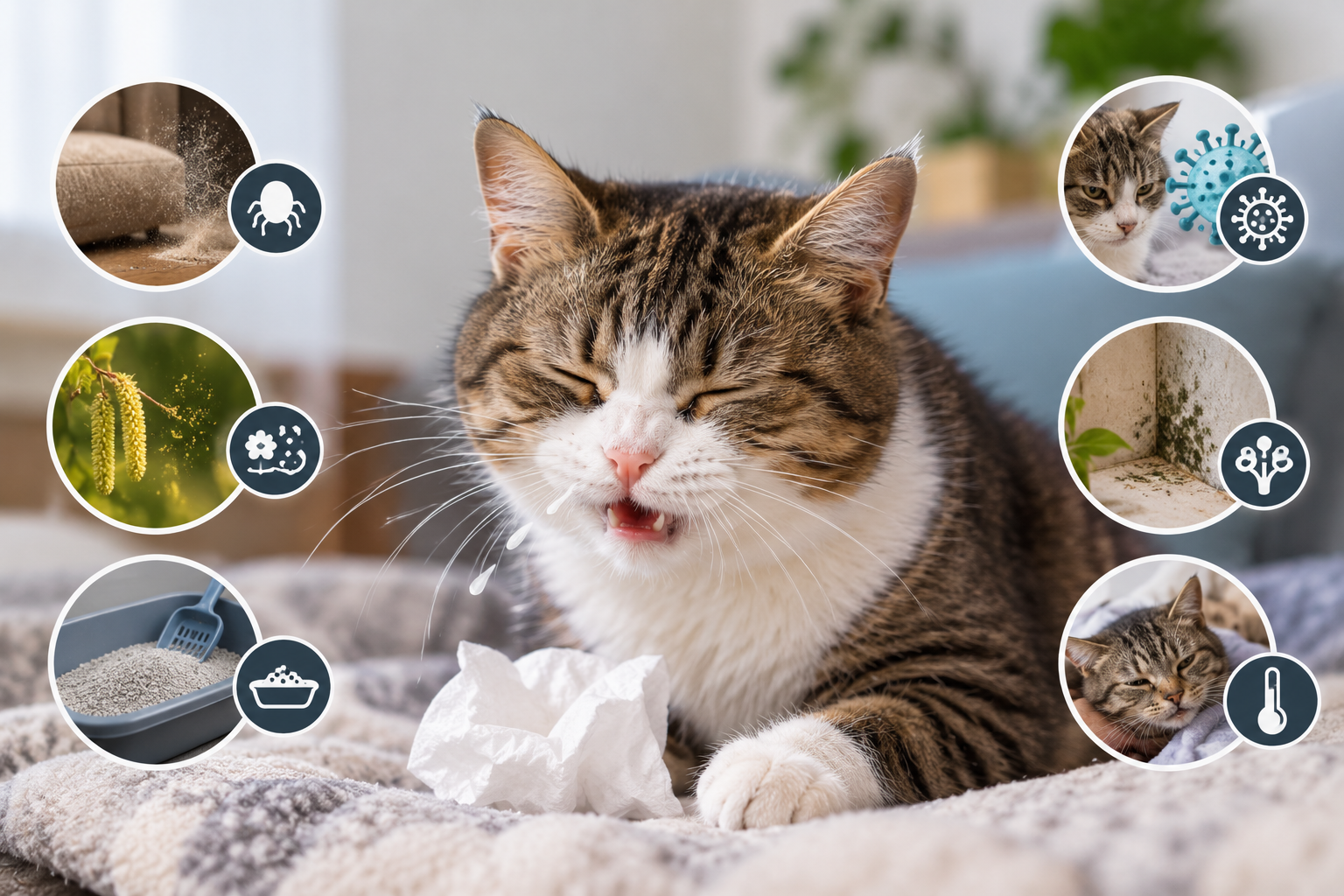
A cat that sneezes a lot most often has cat flu, an infection caused by a virus. Dust, smoke, and sprays can cause it too. Less often, the cause is a bad tooth, something stuck in the nose, or long-term nose inflammation. Sneezing that comes with other signs, or that lasts more than a few days, needs a vet.
This guide covers each cause, what the extra signs mean, and how to help your cat at home. You will also see exactly when to stop waiting and book an appointment.
Is it normal for a cat to sneeze a lot?
A sneeze now and then is normal. Cats sneeze to clear dust or a tickle from the nose, just like we do. One or two sneezes, then back to normal, is nothing to worry about.
“A lot” is different. Sneezing fits that return through the day, sneezing that lasts several days, or sneezing with other signs points to a problem in the nose or throat. Watch what comes with it. A runny nose, watery eyes, or a cat that is quiet and eating less tells you more than the sneeze itself.
Check the sound, too. Reverse sneezing, coughing, wheezing, and hiccups can all look like sneezing. If you are not sure what your cat is doing, film a short video on your phone. Your vet can learn a lot from it.
What if your cat sneezes a lot but acts completely fine? That is common. A cat that eats well, plays, and has normal energy often has an irritant in the air, a mild infection, or a carrier virus flaring up. Keep a close eye on it for a few days and note how often the sneezing happens. If it does not fade, or any other sign appears, have your vet check it.
What causes a cat to sneeze a lot?
The causes fall into a few groups. Here they are, starting with the most common.
Cat flu
More than 90 percent of upper respiratory infections in cats come from two viruses: feline herpesvirus and feline calicivirus. “Upper respiratory” simply means the nose, throat, and eyes.
The signs look like a bad human cold: sneezing, a runny nose, watery or red eyes, low energy, and less appetite. The two viruses differ a little. Herpesvirus often hits the eyes hard and can cause sores on the clear surface of the eye. Calicivirus tends to cause ulcers on the tongue and a sore throat.
Cat flu spreads easily. It passes through sneeze droplets, through contact with a carrier cat, and through shared bowls, bedding, and clothes. The viruses can survive on objects for up to 2 days (herpesvirus) or up to 10 days (calicivirus). Kittens, unvaccinated cats, older cats, cats from shelters or large groups, and stressed cats get sick most often.
Most cats that recover stay carriers, especially with herpesvirus. The virus can lie quiet for months, then show up again during a stressful time. Some cats then have a few days of mild sneezing.
Dust, smoke, and other irritants
Anything that tickles the nose can set off sneezing. Common triggers are dusty cat litter, cigarette or vape smoke, scented candles, air fresheners, perfume, and cleaning sprays. Very dry air can irritate the nose too.
Think about timing. If the sneezing began after a new litter, a new cleaning product, or a new candle, that is a strong clue. Remove the new item for a week and see if things settle.
Real allergies do happen in cats, from pollen, dust mites, or mold. They are less common than infections, though. An allergy usually means sneezing and watery eyes, sometimes with itchy skin, but no fever and no drop in energy.
Bad teeth
The roots of a cat’s upper teeth sit very close to the nasal passages. When a tooth root gets infected and forms an abscess, the infection can spread into the nose. That leads to sneezing and nasal discharge. Bad breath, drooling, or a cat that avoids hard food are hints that the mouth is the problem.
Something stuck, or growths in the nose
A blade of grass or a bit of plant can lodge in a nasal passage. The cat sneezes hard and often paws at its face. Sometimes the object comes out on its own. If the sneezing keeps going, a vet needs to take a look.
Polyps are another cause. These are soft, non-cancerous growths in the nose or at the back of the throat, and they often follow long-term inflammation. Nose tumors are less common and mostly affect older cats. Most of them are cancer and tend to spread into nearby tissue, so early checks matter.
Long-term nose inflammation
Some cats sneeze for weeks or months. Vets call this chronic rhinosinusitis, which means ongoing inflammation of the nose and sinuses. A typical pattern is sneezing with a thick nasal discharge for more than four weeks.
One of the most common causes is damage left behind after a bad bout of cat flu. The lining of the nose stays inflamed, and bacteria move in. Vets can usually keep the signs under control, but a full cure is rare. Most cats need ongoing care, such as humid air at home and treatment during flare-ups.
Fungal infection
A fungus called Cryptococcus can infect a cat’s nose. It lives in soil and bird droppings, and cats get it more often than dogs do. Signs include sneezing and discharge. In advanced cases the eye may bulge. A blood test can help find it.
Here is a quick guide that links common clues to likely causes. It is only a guide, and only a vet can confirm the cause.
| What you notice | Likely cause |
| Sneezing, watery eyes, runny nose, low energy | Cat flu |
| Sneezing that began after a new litter, spray, or candle | An irritant |
| Sneezing with bad breath or drooling | A dental problem |
| Sudden hard sneezing and pawing at the face | Something stuck in the nose |
| Sneezing and thick discharge for over four weeks | Long-term inflammation, a polyp, a fungus, or a tumor |
How long does cat sneezing last?
It depends on the cause. Mild cat flu often eases in 5 to 10 days. Many cases last 7 to 21 days, and severe infections can take several weeks. Sneezing from an irritant should fade within a few days of removing the trigger.
Sneezing that goes past four weeks is a different story. At that point it is no longer a simple cold. It points to a long-term problem such as chronic inflammation, a polyp, or a tooth issue, and it needs a proper exam. Waiting longer rarely helps, and some causes get harder to treat the longer they go on.
When should you take your sneezing cat to the vet?
Book a visit if the sneezing lasts more than a few days, gets worse, or keeps coming back. Go sooner if you see any of these signs:
- Your cat is not eating or drinking
- Very low energy, or hiding more than usual
- Noisy or hard breathing, or breathing with the mouth open
- Blood coming from the nose
- Thick yellow or green discharge
- Squinting, red eyes, or a cloudy eye
- Weight loss, or a bulging eye or swollen face
Open-mouth breathing or struggling to breathe is an emergency. Do not wait for a regular appointment.
Kittens, older cats, and cats with FeLV or FIV (two viruses that weaken the immune system) can get very sick very fast, so take them in early. A stuffy nose also dulls a cat’s sense of smell, and a cat that cannot smell its food often stops eating. Poor eating slows recovery, so do not let it drag on.
Before the visit, jot down a few notes. Your vet will want to know when the sneezing started, how often it happens, and what the discharge looks like (clear, cloudy, yellow, or bloody). Add any new products at home, contact with other cats, and your cat’s vaccine dates. A short video of a sneezing fit helps too.
What will the vet do for a sneezing cat?
Your vet will start with your cat’s history and a check of the nose, eyes, mouth, and throat. For a typical flu case, that is often enough. A throat or eye swab can confirm which virus is involved, though it is not always needed.
If the sneezing has gone on for weeks, the tests go deeper. Blood tests, a CT scan, a tiny camera in the nose, and tissue samples are common, and most need anesthesia. Even then, a clear cause is found in as few as 36 percent of cats with long-term nose disease, so the work is often step by step.
Treatment follows the cause. Cat flu care is mostly about comfort. Antibiotics help only when bacteria have joined in, since they do not work on viruses. Your vet may also give eye drops, pain relief, a fine-mist treatment, or antiviral medicine in severe cases. Bad teeth are treated or pulled. Polyps and stuck objects are removed. A tumor or fungal infection needs its own plan.
How can you help a sneezing cat at home?
If your vet says home care is fine, these steps help a cat feel better while the body fights the infection:
- Wipe away eye and nose discharge with warm, damp cotton wool. Use a fresh piece for each eye.
- Tempt your cat to eat. Gently warm soft, strong-smelling food, such as kitten food or fish in oil.
- Add moisture to the air. Sit with your cat in a steamy bathroom for a few minutes, or run a humidifier in the room.
- Keep fresh water out, and add wet food to help your cat drink enough.
- Cut irritants. Switch to a low-dust litter and keep smoke and sprays away from your cat.
- Keep your cat calm and warm. If you have other cats, keep the sick one in its own room with separate bowls and a separate litter tray.
Never give your cat human medicine without asking your vet. Nasal decongestant drops can be toxic to cats, and common human pain relievers such as paracetamol are dangerous for them.
Can you stop your cat from sneezing so much?
You can lower the risk. Vaccination is the biggest step. The core cat vaccine protects against herpesvirus, calicivirus, and another serious virus called panleukopenia. It does not always stop infection, but it usually prevents severe illness, so keep boosters up to date.
Next, keep stress low. Steady routines, a clean litter tray, and a quiet place to rest all help. Wash bowls and your hands after handling a sick cat, because the viruses travel on objects and clothes. Keep the home free of smoke and heavy dust, and ask your vet to check your cat’s teeth once a year.
Conclusion
A cat that sneezes a lot usually has cat flu or is reacting to an irritant. Cat flu often passes in one to three weeks with good home care. Sneezing that lasts longer, comes with eye or nose discharge, or leaves your cat tired or off its food needs a vet. Breathing trouble and blood from the nose need fast care. Keep vaccines current, and keep the air clean.
Frequently asked questions
Is it normal for a cat to sneeze a lot every day?
No. An occasional sneeze is normal, but daily sneezing fits are not. Something is irritating or infecting the nose. If it lasts more than a few days, or comes with discharge or low energy, call your vet.
Can my sneezing cat give it to my other cats?
Yes, if the cause is cat flu. It spreads through sneeze droplets, shared bowls, and bedding. Keep the sick cat in a separate room with its own bowls and litter tray, and ask your vet about vaccines for the others.
Can I catch a cold from my sneezing cat?
No. Cat flu viruses are specific to cats, so you will not catch them. They do spread easily between cats, so wash your hands and your cat’s bowls if you have other pets.
Why is my indoor cat sneezing a lot?
Indoor cats still catch cat flu from a new cat, a boarding stay, or a virus carried on clothes. They also react to dust, litter, smoke, and sprays. Think about what changed at home, and call a vet if it continues.
Can I give my cat Benadryl for sneezing?
Ask your vet first. It only helps sneezing caused by allergies, which are not the usual cause, and the right dose depends on your cat’s weight and health. Never use human decongestants, which can be toxic.
Related Articles
Why Is My Cat Breathing Fast? Causes and When to Worry
2 thoughts on “Why Is My Cat Sneezing a Lot? Causes and What to Do”