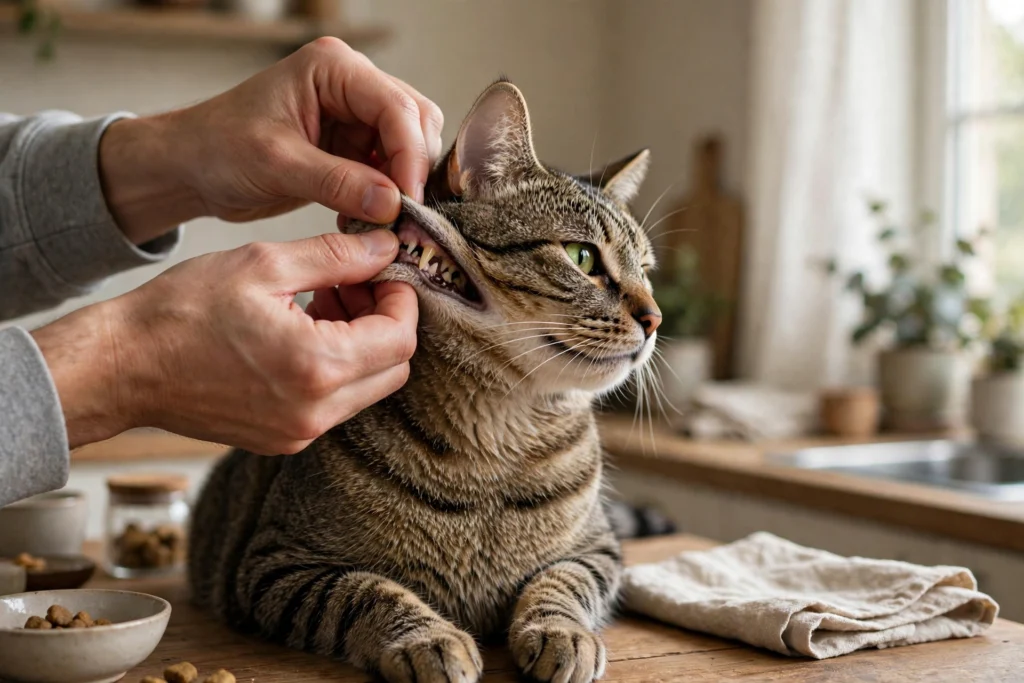

Yes, cats’ teeth do fall out — but only at one stage of life. Kittens lose all 26 of their baby teeth as adult teeth grow in, and that is completely normal. In an adult cat, a tooth falling out is never normal. Adult teeth are meant to stay in place for life, so a lost tooth almost always means dental disease, an injury, or another problem that needs a vet.
This guide explains the kitten timeline, why adult cats lose teeth, what to do if you find a tooth on the floor, and how to protect your cat’s teeth at every age.
Do kittens lose their teeth?
Yes. Kittens are born with no teeth at all. Their 26 baby teeth (also called deciduous or milk teeth) start pushing through the gums at around 3 weeks of age, and the full set is usually in place by 6 to 8 weeks. According to VCA Canada, the baby teeth then begin to be replaced from about 10 weeks of age, and by 6 to 7 months most kittens have all 30 adult teeth.
As each adult tooth develops underneath, it presses on the root of the baby tooth above it. The root slowly dissolves, the tooth loosens, and it falls out. Most of the time you will never see it happen: kittens usually swallow the tiny teeth while eating, which is harmless. Finding a small, hollow tooth shell on the floor or in bedding is normal too.
| Age | What happens |
|---|---|
| Birth to 2 weeks | No teeth yet |
| Around 3 weeks | Baby teeth start coming through the gums |
| 6 to 8 weeks | All 26 baby teeth are in |
| About 10 weeks to 4 months | Baby teeth start loosening and falling out |
| 3 to 6 months | Adult teeth come through as baby teeth are lost |
| 6 to 7 months | All 30 adult teeth are in place |
During teething, a kitten may drool a little, chew more than usual, or go off her food briefly because her mouth feels tender. Mild “kitten breath” is also common at this stage and fades once teething ends. Offer soft chew toys made for kittens, and steer chewing away from fingers — a habit that is cute at 3 months is less charming in an adult cat.
One thing to watch for: a baby tooth that refuses to leave. If an adult tooth grows in while the baby tooth is still there, vets call it a retained (persistent) deciduous tooth. The canines — the long fangs — are the ones most often retained. Two teeth crowded into one spot trap food and plaque, and the adult tooth can be pushed out of line. VCA notes that retained baby teeth should be removed, and this is often done during the spay or neuter surgery while the kitten is already asleep. If you can see two fangs side by side, mention it at your kitten’s next check-up.
Do adult cats’ teeth fall out?
No — not in a healthy mouth. Once the adult set is in, those 30 teeth are anchored in the jawbone by roots and ligaments, and they are expected to last the cat’s whole life. There is no second round of natural tooth loss, and old age by itself does not loosen teeth.
So if an adult tooth comes out, something has damaged the structures holding it in. The tooth is the end result, not the disease itself. That is why vets take any adult tooth loss seriously, even when the cat seems fine: the same process that claimed one tooth is very often working on the teeth next to it.
Why do adult cats lose teeth?
Most adult tooth loss traces back to disease in the mouth. The main causes are:
| Cause | What happens | How common |
|---|---|---|
| Periodontal (gum) disease | Plaque hardens into tartar, gums inflame and recede, and the ligament and bone holding the tooth are destroyed until the tooth loosens and falls out | The most common cause; the majority of cats show some dental disease by middle age |
| Tooth resorption | The tooth breaks down from within, starting in the dentin, until the crown snaps off or the tooth is lost | Very common; Cornell reports it as the leading cause of tooth loss in cats |
| Trauma | A fall, a fight, or biting something hard fractures a tooth or damages its support | Occasional |
| Stomatitis | Severe, painful inflammation of the whole mouth that can destroy the tissues around the teeth | Uncommon |
| Oral tumors | Growths in the mouth or jaw can loosen the teeth around them | Rare, but a reason every lost tooth deserves a check |
Periodontal disease starts quietly. A soft film of plaque forms on the teeth every day, hardens into tartar, and irritates the gums. The early stage, gingivitis, is reversible with cleaning. Left alone, the inflammation moves deeper and the bone socket erodes, until the tooth is loose in its socket — and eventually drops out. The Cornell Feline Health Center describes exactly this progression, from gingivitis through to gum recession, exposed roots, and tooth mobility.
Tooth resorption works differently. For reasons vets still do not fully understand, the tooth’s own structure begins to dissolve, often starting below the gum line where you cannot see it. The Cornell Feline Health Center calls it the most common cause of tooth loss in cats and estimates that between 30 and 70 percent of cats show some sign of it. It is painful once it reaches the nerve, and there is no way to repair a resorbing tooth — removing it is the treatment.
What should you do if your cat loses a tooth?
Stay calm, and work through these steps:
- Check your cat. Look gently in the mouth if she allows it. Is the gum bleeding heavily, swollen, or foul-smelling? Is she drooling, pawing at her face, or refusing food?
- Keep the tooth. If you find the tooth, pick it up and save it in a clean container. Whether the whole tooth came out — root and all — or the crown snapped off matters, and showing your vet the tooth helps.
- Book a vet appointment. A lost adult tooth always earns a visit, even if your cat seems unbothered. Cats hide mouth pain extremely well.
- Go the same day if you see warning signs: bleeding that does not stop, a swollen jaw or face, broken teeth after a fall or fight, or a cat that cannot or will not eat.
One subtlety worth knowing: if you find only the crown (the white, visible part) on the floor, the root may still be in the jaw. With tooth resorption especially, crowns snap off while diseased roots remain behind, quietly causing pain and infection. Your vet will usually take dental X-rays under anesthesia to see what is happening below the gum line, check the rest of the mouth, and clean the remaining teeth at the same visit.
Book the visit sooner rather than later if your cat stops eating altogether. Mouth pain is a common hidden reason behind appetite loss, and our guide on why a cat won’t eat explains when that becomes urgent.
What are the signs of dental trouble?
Cats rarely complain about a sore mouth, but they do change their behavior. Watch for:
- Bad breath that is worse than normal “cat breath”
- Red, swollen, or bleeding gums, or yellow-brown tartar on the teeth
- Drooling, sometimes with blood in the saliva
- Dropping food, chewing on one side, or tilting the head while eating
- Pawing at the mouth or rubbing the face along the floor
- Eating less, preferring soft food, or losing weight
- Teeth that look loose, broken, or pink and discolored at the gum line
- A normally friendly cat becoming irritable when her head is touched
Any of these signs deserves a dental check, whether or not a tooth has actually come out yet.
Do senior cats lose their teeth?
Many people assume old cats just lose teeth, the way they slow down or sleep more. In reality, age alone does not loosen teeth. Senior cats lose teeth because dental disease has had more years to accumulate — the cause is the disease, not the birthday.
The hopeful news is that tooth loss is not the disaster owners fear. Cats cope remarkably well with fewer teeth, and even completely toothless cats can eat happily — most manage soft food easily, and many still eat kibble, because cats slice and swallow much of their food rather than grinding it.
How can you prevent tooth loss in cats?
Most of the diseases behind tooth loss are slow and largely preventable. The habits that help most:
- Brush your cat’s teeth. Daily brushing with a cat toothbrush and toothpaste made for cats is the single most effective protection against plaque and gum disease. Never use human toothpaste — cats cannot spit it out, and its ingredients are not safe to swallow. Start slowly, with your cat licking the paste from your finger, and build up over days. Starting this handling with a young kitten, before teething discomfort begins, makes it a normal part of life.
- Use dental diets and treats. Certain diets and chews are designed to scrub the teeth or slow tartar build-up. Ask your vet which products they recommend.
- Keep up annual oral exams. Your vet looks in the mouth at every routine visit and can spot early gum disease, resorption, or a retained baby tooth before it costs your cat a tooth.
- Book professional cleaning when advised. Scaling and polishing under anesthesia removes tartar above and below the gum line — the part brushing cannot reach — and gives the vet a clear look at every tooth.
When should you see the vet?
Book a visit if:
- An adult cat loses any tooth, or you notice a tooth missing
- You find a tooth or tooth fragment and do not know where it came from
- Gums are red, swollen, bleeding, or smell bad
- Your cat drools, drops food, chews on one side, or paws at her mouth
- Your cat eats less or stops eating
- You see two teeth in one spot in a kitten — a possible retained baby tooth
Treat it as urgent if there is heavy bleeding, facial or jaw swelling, a suspected broken tooth after trauma, or your cat cannot eat at all.
Conclusion
Teeth falling out is a normal part of kittenhood: 26 baby teeth make way for 30 adult teeth by about 6 to 7 months of age. After that, the set is permanent, and an adult tooth on the floor is a warning sign — usually of periodontal disease or tooth resorption — that deserves a vet visit even when your cat seems fine. Keep the tooth, get the mouth checked, and protect the rest with brushing and regular dental exams. Old age itself never loosens a healthy tooth.
Frequently asked questions
Do kittens swallow their baby teeth?
Usually, yes. Most baby teeth fall out while the kitten is eating or grooming and are swallowed without the owner ever noticing. It does them no harm. Finding a tiny tooth on the floor now and then is equally normal.
Can a cat live without teeth?
Yes, comfortably. Cats that lose teeth to disease, or have them removed by a vet, generally eat well once the mouth heals, especially on wet food or softened kibble. Because cats slice food and swallow rather than grind it, many manage dry food too. A pain-free mouth with fewer teeth beats a full set of diseased teeth.
Do old cats lose their teeth just from age?
No. Age alone does not loosen teeth. Senior cats lose teeth because dental diseases like periodontal disease and tooth resorption have had longer to develop. With brushing and regular dental care, many cats keep their full set into old age.
What if only part of the tooth fell out?
That still needs a vet. If the crown snapped off, the root may remain in the jaw — common with tooth resorption — where it can cause ongoing pain and infection. Dental X-rays will show what is left behind and whether it needs removing.
My kitten has two fangs on one side. Is that a problem?
It usually means a retained baby tooth: the adult canine has come through but the baby canine has not fallen out. The crowding traps plaque and can push the adult tooth out of position. Your vet will likely remove the baby tooth, often during spay or neuter surgery.
Do cats’ teeth grow back?
No. Cats get exactly two sets: baby teeth, then permanent adult teeth. Once an adult tooth is lost, nothing replaces it, which is why prevention and early treatment matter so much.



Pingback: Do Cats Have Anal Glands? Signs of Trouble to Know