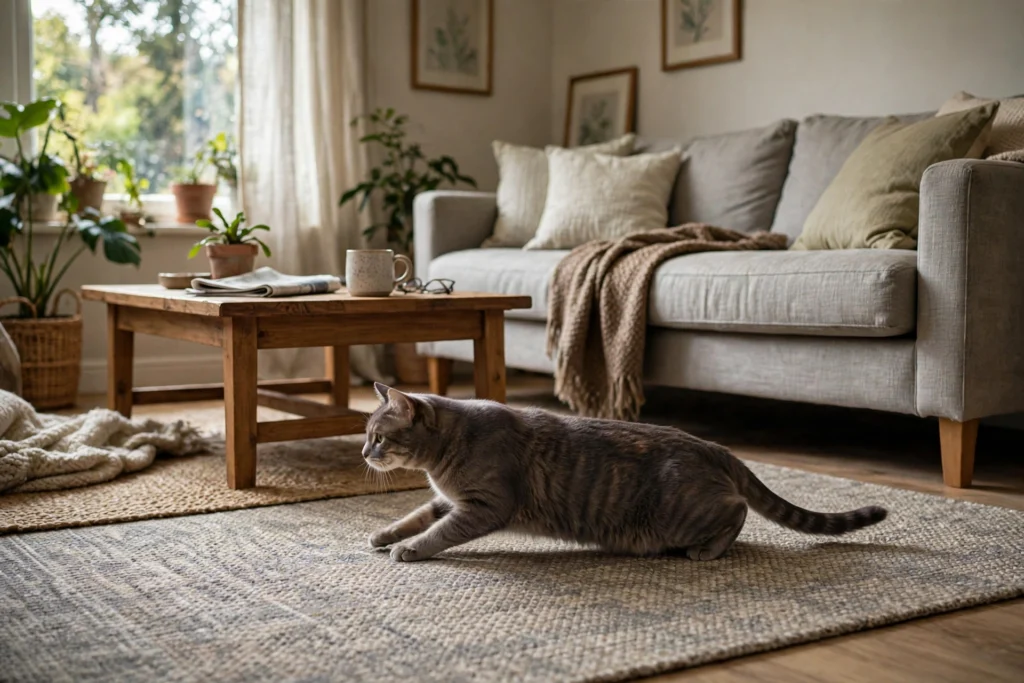

Yes, cats have anal glands. Every cat has two small scent glands sitting just inside the anus, at roughly the 4 o’clock and 8 o’clock positions. They produce a dark, intensely fishy-smelling fluid that is normally squeezed out a little at a time whenever your cat passes a stool. Most owners never think about them at all — until the glands stop emptying properly, and the scooting starts.
This guide explains what anal glands do, how to tell healthy glands from troubled ones, what causes problems, and when a smelly bottom is a same-day vet problem.
Where are a cat’s anal glands and what do they do?
The anal glands themselves sit inside two small pouches called the anal sacs, tucked between the muscles of the anal sphincter on either side of the opening. Each sac is roughly pea-sized and is lined with glands that manufacture an oily, brownish secretion. A short, narrow duct connects each sac to a tiny opening right at the edge of the anus.
That fluid is your cat’s signature scent. In wild cats, anal gland secretions help mark territory and identify individuals. Your domestic cat uses them in a quieter way: every time she passes a firm stool, the stool presses against the sacs as it moves through, squeezing a small amount of fluid out onto the stool. The result is a scent label on every deposit — in cat terms, “I was here.” Other cats read these messages closely, which is why cats investigate each other’s rear ends and stools with such interest.
Cats can also empty the sacs suddenly when badly frightened, much like a skunk’s defensive spray in miniature. A sudden burst of terrible fishy smell during a vet visit or after a scare is usually exactly that.
In a healthy cat, you should never need to think about any of this. The system empties itself with normal bowel movements, and the only trace is the faint scent on the stool itself.
What are the signs of anal gland trouble?
Because the glands are hidden, problems usually announce themselves through behavior. Compare the two columns:
| Healthy glands | Glands in trouble |
|---|---|
| No scooting or dragging the bottom | Scooting or dragging the bottom along the floor |
| Normal grooming around the tail | Constant licking or biting under the tail |
| No unusual smell from the rear end | Strong fishy smell, or smelly fluid spots on furniture and bedding |
| Clean, comfortable rear end | Redness or swelling on one or both sides of the anus |
| Normal, easy bowel movements | Straining, crying out, or discomfort when passing stool |
| Sits and walks normally | Pain when sitting, sudden turning to look or snap at the rear end |
| No discharge | Blood, pus, or discharge under the tail, or a small draining hole in the skin |
PetMD lists the same warning signs owners most often notice: scooting, obsessive grooming under the tail, a red or irritated rear, blood or discharge, and fishy-smelling liquid appearing on soft furnishings. Cats hide discomfort well, so even one or two of these signs is worth taking seriously.
One caution: scooting does not always mean anal glands. Worms, fleas, skin irritation, allergies, and stool stuck in long fur can all make a cat drag her bottom. That is another reason a vet check, rather than home guesswork, is the right response.
What causes anal gland problems in cats?
Problems develop in stages, and each stage is more serious than the last:
- Impaction. The sac cannot empty, usually because the duct is blocked or the fluid inside has thickened into a paste. The sac overfills and becomes uncomfortable. This is the most common anal gland problem in cats — though it is still far less common in cats than in dogs.
- Infection (sacculitis). Bacteria build up in the trapped fluid and the sac becomes inflamed, swollen, and painful.
- Abscess. The infection walls itself off into a pocket of pus. You may see a hot, tender, red or purple swelling on one side of the anus.
- Rupture. If an abscess goes untreated, it bursts through the skin, leaving a draining wound beside the anus. It looks dramatic, and by this point the cat is in real pain.
Why do some cats run into trouble while most never do? The common thread is anything that stops the sacs from being squeezed empty, or that irritates the area. Soft stools are a major factor: a firm stool does the squeezing, so cats with chronic diarrhea, a low-fiber diet, or inflammatory bowel disease empty their sacs poorly. Obesity plays a role too, as excess tissue changes the mechanics of the area, and overweight cats also groom less effectively. Allergies and skin disease around the rear end can swell the duct shut. Rarely, a tumor of the anal sac is behind persistent problems, which is one more reason recurring cases get a full work-up.
VCA Animal Hospitals notes that recurrence is uncommon in cats overall, but more likely in cats with obesity, chronic diarrhea or constipation, inflammatory bowel disease, allergies, or abnormal anatomy.
Should you express your cat’s anal glands at home?
For a healthy cat: no. PetMD is clear that cats without anal gland problems do not need their glands manually expressed at all. Squeezing glands that empty themselves naturally achieves nothing and can bruise or irritate delicate tissue.
There are two ways glands get expressed, and the difference matters:
- Internal expression is done by a vet, wearing a gloved finger inside the rectum to feel each sac and squeeze it fully and safely. This is the only method that reliably empties the sac and lets the vet judge the fluid’s color, thickness, and smell — all diagnostic clues — and feel for lumps or thickening.
- External expression presses on the sacs from outside the body. Some groomers offer it as part of a bath service. It can help a normal gland release a little fluid, but it often empties the sac only partially and tells you nothing about its health. It is maintenance at best, and no treatment at all for an impacted, infected, or abscessed gland.
Doing it yourself carries real risks: it hurts (cats object, strenuously), it is easy to squeeze too hard and damage the tissue, and worst of all, pressing on an abscessed gland can rupture it. If your cat has a genuine recurring problem, your vet may show you how to do external expression safely at home and set a schedule for it — that is a different situation from experimenting on a cat who is scooting for an unknown reason. A scooting cat needs a diagnosis first.
How are anal gland problems treated?
Treatment depends on the stage. For a simple impaction, the vet expresses the sacs and flushes out any solidified material; the sac may then be infused with anti-inflammatory and antibiotic medication, and because the procedure can be painful, sedation is sometimes used. For infection, VCA Animal Hospitals describes expressing the sacs and giving oral antibiotics plus pain relief, with warm compresses at home to ease discomfort. An abscess that has not burst may need to be lanced and drained under sedation. If one has already ruptured, expect flushing, antibiotics, careful wound cleaning while it heals, and an Elizabethan collar (the cone) to keep your cat from licking it.
Just as important as treating the gland is treating the reason it clogged. Weight loss for an overweight cat, diet changes or added fiber for a cat with soft stools, and managing allergies or bowel disease all reduce the chance of a repeat performance. Some cats with recurring problems benefit from routine expression by the veterinary team every few weeks or months.
Surgery to remove the anal sacs entirely is the last resort, reserved for cats with repeated episodes that do not respond to treatment, or where a tumor is suspected. Cats can live perfectly normal lives without their anal sacs — the glands are not essential — but it is surgery near delicate nerves and muscles, so vets prefer to solve the problem medically first.
When should you see the vet?
Book a visit if you notice scooting, persistent licking under the tail, a fishy smell that keeps appearing on bedding, or redness beside the anus. Sooner is better: an impaction handled early is a five-minute job, while an abscess is a painful emergency.
Go the same day — treat it as urgent — if you see any of the following:
- A swollen, hot, or painful lump on one side of the anus
- A hole in the skin beside the anus that is draining fluid, blood, or pus
- Bleeding from the rear end
- Your cat straining to pass stool and producing nothing
- Fever signs: lethargy, hiding, and loss of appetite. A cat in pain from an abscess often refuses food — if yours has stopped eating, our guide on why a cat won’t eat explains why that always deserves prompt attention
Do not try to squeeze or “check” a swollen gland at home before the visit. If an abscess is present, pressure can rupture it, and the area is extremely sore.
Conclusion
Yes, cats have anal glands — two pea-sized scent glands beside the anus that empty a little fishy fluid onto every normal stool, carrying your cat’s signature scent. Healthy glands look after themselves and never need expressing. The signs that something is wrong are scooting, obsessive licking under the tail, a lingering fishy smell, swelling, or discharge, and problems run from simple impaction through infection to a ruptured abscess. Leave the squeezing to your vet, treat a swollen or draining rear end as urgent, and fix the underlying cause — weight, soft stools, allergies — to keep it from coming back.
Frequently asked questions
Do cats need their anal glands expressed regularly?
No. A healthy cat’s glands empty on their own every time she passes a firm stool, so routine expression is unnecessary. Only cats with diagnosed, recurring problems may need scheduled expression, and that should be done by, or taught by, your vet.
Why does my cat scoot her bottom on the floor?
Scooting means something around the rear end itches, hurts, or feels full. Impacted anal glands are a leading cause, but worms, fleas, allergies, skin irritation, and stool caught in the fur can cause the same behavior. Repeated scooting deserves a vet visit to find the real cause.
What does anal gland fluid smell like?
It is famously bad: a strong, fishy, almost metallic smell that is far more pungent than normal stool odor. If you notice that smell on your furniture or bedding, or coming from your cat’s rear end when she has not just used the litter box, the glands may be leaking or overfull.
Can a cat live without anal glands?
Yes. If the sacs are surgically removed because of repeated disease or a tumor, cats live completely normal lives without them. The glands serve scent communication only and are not needed for digestion or health. Surgery is a last resort, though, because the area contains important muscles and nerves.
Can I express my cat’s glands myself?
It is not recommended as a first step. A scooting cat has not been diagnosed, and squeezing an infected or abscessed gland can rupture it and cause serious pain. Healthy cats do not need it done at all. If your vet decides your cat needs regular expressing, ask them to demonstrate the external technique and agree on how often.
Are anal gland problems common in cats?
No — they are far less common in cats than in dogs, and most cats go their whole lives without a single issue. When problems do occur, they are usually linked to an underlying factor such as obesity, chronic soft stools, bowel disease, or allergies.