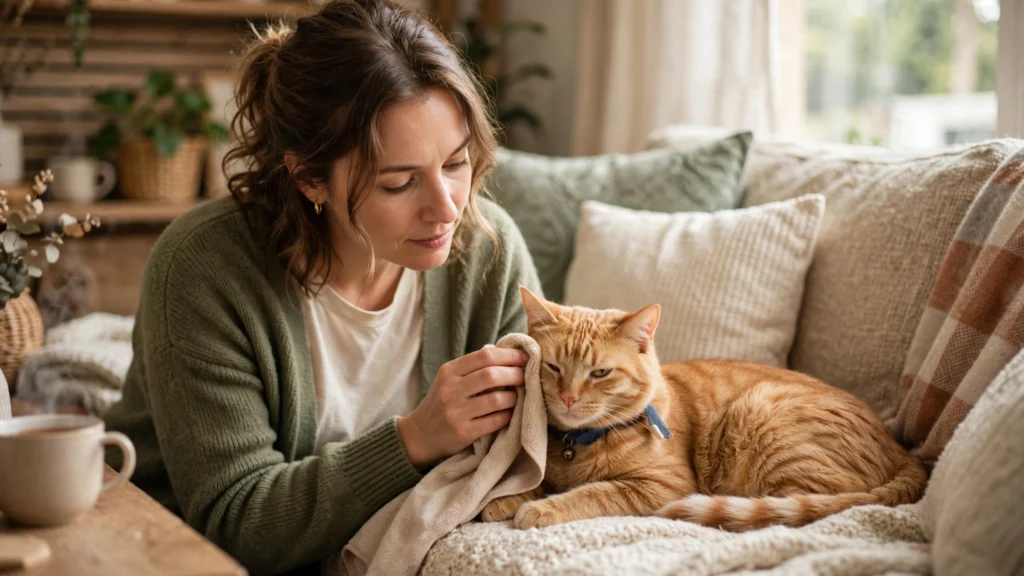

You cannot cure a cat’s cold with medicine from your cabinet, and there is no pill that switches it off. What actually treats a cat cold is good nursing: keeping the nose and eyes clear, keeping your cat eating and drinking, and keeping the air moist while the immune system does its work over the next week or two. Most healthy adults recover at home with that care alone.
This guide gives you the step-by-step home nursing plan vets recommend, a day-by-day timeline, the medicines only a vet can decide on, and the red flags that mean your cat needs a vet the same day — plus the one thing you must never do: reach for human cold medicine, which can poison a cat.
What causes a cold in cats?
A “cat cold” is an upper respiratory infection. The Cornell Feline Health Center explains that these infections are usually caused by viruses, most often feline herpesvirus and feline calicivirus, sometimes with bacteria joining in on top. The signs are familiar: sneezing, a runny or blocked nose, watery eyes, a mild fever, and a cat that sleeps more than usual.
Because the cause is usually viral, antibiotics do not cure a cat cold. Treatment is mostly supportive care: you keep your cat comfortable, fed, and hydrated so its own immune system can clear the virus. If your cat’s main sign is sneezing fits, our guide on why a cat is sneezing a lot explains the other causes worth ruling out.
How do you treat a cat with a cold at home?
Set up a quiet recovery corner first: a warm room away from other cats, with a bed, litter box, water, and food within easy reach. Then work through this nursing plan daily until your cat is clearly improving.
Step 1: Run steam sessions
Steam loosens the mucus blocking your cat’s nose. Run a hot shower with the bathroom door closed and sit with your cat in the steamy room for 10 to 15 minutes, two or three times a day. Keep your cat out of the shower itself and away from the hot water. Afterwards you should see easier breathing and a clearer nose.
Step 2: Wipe the nose and eyes with saline
Several times a day, gently wipe away discharge from the nose and eyes with a soft cloth or cotton pad dampened with warm water or plain saline. Dried crusts around the nostrils block airflow and smell, so keeping them clear helps your cat breathe and find its food. Never pick at dried discharge, and use a fresh pad for each eye.
Step 3: Support the appetite with warmed food
A cat with a blocked nose cannot smell its food, and a cat that cannot smell will not eat. Warm wet food for a few seconds, to about body temperature; warming releases the smell. Offer small, frequent meals of strong-smelling wet food, with a little warm water added. Hand-feeding and sitting with your cat while it eats genuinely helps.
Step 4: Keep hydration up
Sick cats drink less, and fever increases fluid losses. Keep fresh water beside the bed, offer water-rich wet food at every meal, and add extra water to that food. A running water fountain encourages some cats to drink more. Note roughly how much your cat drinks each day; a sharp drop is information your vet will want.
Step 5: Use a humidifier
If you have a cool-mist humidifier, run it in your cat’s recovery room. Moist air soothes irritated nasal passages and keeps mucus thinner between steam sessions. Clean it as its instructions direct, and never add essential oils or vapor rubs, which can irritate a cat’s airways.
Step 6: Isolate your cat from other cats
Cat colds spread easily between cats through sneezes, shared bowls, and grooming. Keep your sick cat in its own room with its own bowls and litter box until it has been clearly improving for several days. Wash your hands after handling the sick cat, and handle the healthy cats first when you can.
Step 7: Let your cat rest, and keep stress low
Sleep is part of the treatment. Keep the room quiet, visits from children and other pets brief, and routines normal. Stress can prolong a herpesvirus cold and trigger future flare-ups, so calm matters.
How long does a cat cold last? A day-by-day guide
Every cat differs, but a typical uncomplicated cold follows this pattern:
| Days | What you will usually see | What to do |
|---|---|---|
| Days 1–2 | Sneezing starts, eyes water, appetite dips, cat seems tired | Start the nursing plan, set up isolation, note eating and drinking |
| Days 3–5 | Symptoms peak: thickest discharge, most congestion, worst appetite | Steam and wiping matter most now; push warmed food and fluids |
| Days 6–8 | Discharge thins and clears, sneezing eases, appetite returns | Keep nursing going; do not stop at the first good day |
| Days 9–14 | Nearly back to normal, maybe an occasional sneeze | Ease off sessions, keep monitoring, mix with other cats gradually |
Cornell notes that cats with uncomplicated upper respiratory disease may recover in days or weeks, so a slow recovery can still be normal. What is not normal is a cat that gets worse after day 5, relapses after improving, or is still clearly unwell after two weeks. Those cats need a vet.
What medicines can a vet prescribe for a cat cold?
There is no over-the-counter cold medicine for cats, but a vet has real options when a cold is severe or off-pattern:
- Antibiotics, only for bacterial infection. If the discharge turns thick and yellow-green, or your vet finds signs of a bacterial infection on top of the virus, they may prescribe an antibiotic. Antibiotics do nothing to the virus itself, so they are not given for every cold.
- Famciclovir for herpesvirus. For significant herpesvirus cases, especially with eye involvement, a vet may prescribe this antiviral. Dosing is vet-only.
- Eye ointments or drops. If the eyes are inflamed or an ulcer develops on the surface of the eye, your vet may prescribe medicated eye ointment. Eye problems should always be checked, because herpesvirus ulcers can damage vision if ignored.
- Pain relief and anti-inflammatory medicine. A vet can give cat-safe medicines for fever or a sore mouth. The human versions are dangerous, as the next section explains.
- Appetite stimulants and fluids. A cat that will not eat may be given an appetite stimulant, and a dehydrated cat may receive fluids at the clinic.
Notice the pattern: every medicine on this list is a vet’s decision, at a cat’s dose. That is deliberate.
What should you never give a cat with a cold?
Never give paracetamol (acetaminophen), found in Tylenol and many human cold and flu products. It is highly toxic to cats even in small amounts, damaging their red blood cells and liver, and it can kill. Human cold remedies generally are unsafe too: they commonly contain paracetamol, decongestants such as pseudoephedrine, or antihistamines at doses and combinations unsafe for cats, and ibuprofen and aspirin are also dangerous.
Other things to avoid:
- Do not put vapor rub or essential oils on or near your cat. Strong scents overwhelm a blocked nose, and many essential oils are harmful to cats.
- Do not force food or water into your cat’s mouth with a syringe unless your vet has shown you how; done wrongly, it can send food into the lungs.
- Do not use leftover antibiotics from a previous illness or another pet. The drug and dose are specific to this cat and this illness.
If your cat has swallowed any human cold or pain medicine, treat it as an emergency and call your vet or an animal poison line immediately, even if your cat looks fine. Poisoning signs can take hours to appear.
Do kittens and senior cats need special care?
Yes. The same cold a healthy adult shrugs off can become serious quickly in these two groups:
- Kittens dehydrate fast, lose body heat, and can stop feeding, which is dangerous at their size. Keep them warm, watch feeding closely, and lower your threshold: a kitten that will not eat, is very sleepy, or has eyes swelling shut needs a vet the same day.
- Senior cats often have other conditions, such as kidney disease, that a cold can destabilize, and they recover more slowly. Keep your vet informed early, and watch water intake carefully.
- Cats with flat faces (such as Persians) and cats with existing breathing problems struggle more with congestion and deserve earlier vet checks too.
When should you see a vet the same day?
Nursing at home is right for a mild cold in a healthy adult. Drop the plan and call your vet the same day, or an emergency clinic if yours is closed, if you see any of these:
- Breathing through an open mouth, working hard to breathe, or noisy breathing at rest
- No eating at all for 24 hours (sooner for kittens), or signs of dehydration
- An eye that is swollen shut, cloudy, or has a visible sore on it
- Thick yellow-green discharge getting worse after several days of care
- Fever signs: hot ears, shivering, refusal to move or respond normally
- Ulcers on the tongue or drooling, which make eating painful
- Getting worse after day 5, or still clearly ill after two weeks
- Blood in the nasal discharge
Trust the overall picture, too. A cat that just seems wrong deserves the call.
How do you stop a cold spreading after recovery?
Keep the isolation in place until your cat has been improving for several days and is eating and breathing normally, and wash bowls, bedding, and litter boxes before shared use. A cat that has had herpesvirus carries it for life and may have milder flare-ups during stress, such as a house move; the same nursing plan applies. Staying current with vaccinations will not prevent every cold, but it reduces the severity of the main viral causes.
Conclusion
Treating a cat with a cold is nursing, not medicating: steam to clear the nose, saline wipes to keep it clear, warmed smelly food to keep your cat eating, plenty of fluids, humid air, rest, and isolation so your other cats stay healthy. Most colds peak around days 3 to 5 and clear within about two weeks. Medicines have their place, but they belong to your vet: antibiotics only when bacteria are involved, famciclovir for herpesvirus cases, and proper eye treatment when the eyes are affected. Never give human cold medicine or paracetamol, which can poison your cat. And if breathing becomes hard, eating stops, or a kitten or senior is struggling, skip the home plan and see a vet the same day.
Frequently asked questions
Can I give my cat human cold medicine?
No. Human cold and flu products are unsafe for cats. Many contain paracetamol (acetaminophen), highly toxic to cats even in small amounts, plus decongestants that are also dangerous. If your cat needs medicine, it has to be one your vet chooses and doses for cats.
How long is a cat with a cold contagious?
A cat is most contagious while it has active signs, especially in the peak days of sneezing and discharge. Keep it isolated until signs have clearly improved for several days. Cats that have had herpesvirus can also shed the virus during later stress-related flare-ups.
My cat with a cold will not eat. What should I do?
Warm strong-smelling wet food, offer small meals often, and sit with your cat while it tries. A blocked nose is usually the problem, so steam and wiping before meals helps. If an adult cat has eaten nothing for 24 hours, or a kitten has missed more than a couple of meals, call your vet the same day.
Can humans catch a cat’s cold, or give one to a cat?
No. Cat colds are caused by cat-specific viruses and bacteria and do not spread to people or dogs, and your cold will not give your cat one either. The risk is cat to cat, which is why isolation and handwashing matter.
When is a cat cold an emergency?
Open-mouth breathing, struggling to breathe, an eye swollen shut or cloudy, a cat that will not eat or drink and is limp or unresponsive, or a tiny kitten going downhill fast: all of these are same-day emergencies. Do not wait for the home care plan in these cases.

Pingback: When Is It Too Late to Neuter a Cat? (Almost Never)