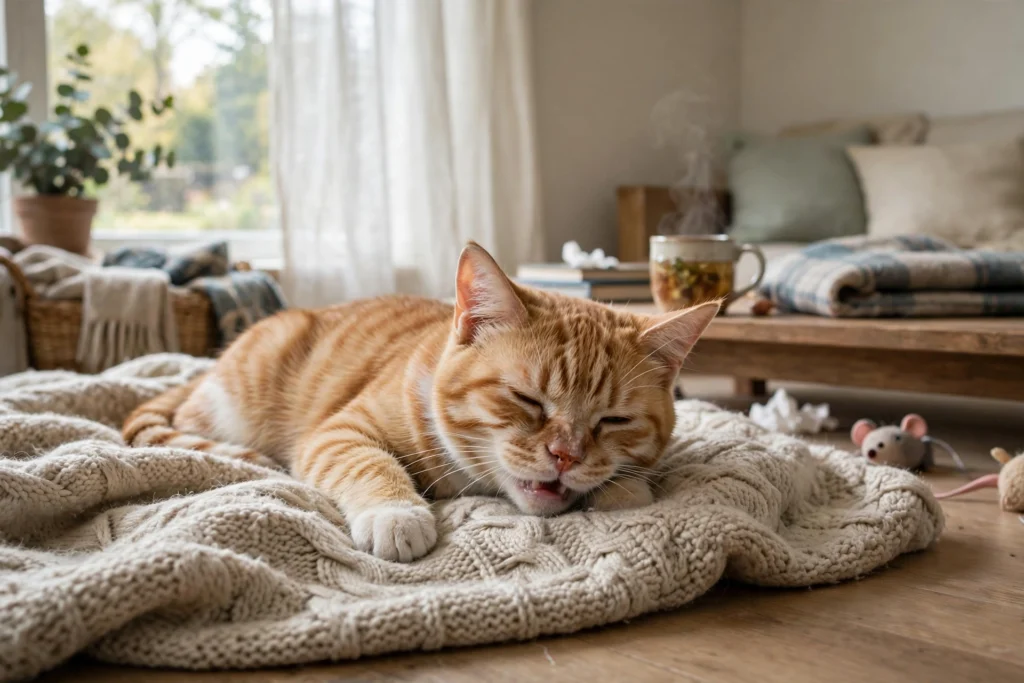

Yes, cats get colds. A cat “cold” is not the same virus that gives you a blocked nose, but the illness looks very similar: sneezing, a runny nose, watery eyes, and a cat who feels tired and sorry for herself. Vets call it a feline upper respiratory infection, and it is one of the most common illnesses of cats worldwide.
Most healthy adult cats shake off a cold at home in about a week to ten days with nothing more than rest and a little nursing. But colds can turn serious in kittens, senior cats, and cats whose immune systems are weak, so it pays to know the symptoms, the home care that actually helps, and the warning signs that mean a vet visit cannot wait.
This guide covers what causes cat colds, how to recognize one, how long it should last, how contagious it is, and exactly how to care for a snuffly cat at home.
What is a cat cold, exactly?
A cat cold is an infection of the upper respiratory tract: the nose, sinuses, throat, and the tissues around the eyes. The Cornell Feline Health Center explains that these infections are especially common where cats live closely together, such as shelters, breeding homes, and multi-cat households, because the germs involved spread so easily from cat to cat.
Unlike a human cold, which is usually one mild virus, a cat cold can involve several different viruses and bacteria, sometimes at the same time. That is why one cat’s cold is a few sneezes while another’s becomes weeks of congestion and sore eyes.
What causes colds in cats?
Two viruses cause the great majority of cases. VCA Animal Hospitals notes that feline herpesvirus type-1 and feline calicivirus together account for roughly 90 percent of feline upper respiratory infections, with a few bacteria responsible for most of the rest.
| Cause | Type | Clues that point to it |
|---|---|---|
| Feline herpesvirus (FHV-1) | Virus | Sneezing, runny eyes, conjunctivitis; often returns during stress because the virus stays in the body for life |
| Feline calicivirus (FCV) | Virus | Mouth and tongue ulcers, drooling; sometimes a temporary limp, especially in kittens |
| Bordetella bronchiseptica | Bacterium | Coughing is more prominent; more common where cats are crowded |
| Chlamydophila felis | Bacterium | Mainly eye infection: red, swollen, weepy eyes with less sneezing |
Cats pick these germs up from other cats: nose-to-nose contact, sneezes, shared bowls and bedding, or the hands and clothes of a person who has just handled a sick cat. Herpesvirus deserves a special mention. Once a cat has it, the virus hides in the body for life and can flare up again during stress, a house move, a new pet, even a trip to the vet, which is why some cats seem to get a cold every time life gets exciting.
Vaccination does not make a cat immune to colds, but the standard FVRCP vaccine covers herpesvirus and calicivirus and makes infections noticeably milder. Keeping vaccinations current is the single best protection you can give an indoor-outdoor or multi-cat household.
What are the symptoms of a cold in cats?
Symptoms usually appear a few days after exposure and build over the first day or two. The classic picture includes:
- Sneezing, often in fits, and sometimes with spray
- Runny or blocked nose, with discharge that starts clear and may turn cloudy, yellow, or green
- Watery, red, or swollen eyes (conjunctivitis), squinting, and discharge that can crust the eyelids
- Mouth or tongue ulcers, more typical of calicivirus, which can cause drooling and reluctance to eat
- Fever, tiredness, and hiding away
- Loss of appetite, mainly because a blocked nose blunts the sense of smell, and cats rely on smell to decide food is worth eating
- A mild cough or a hoarse, changed meow in some cats
That appetite point matters. A cat with a stuffy nose may walk away from a full bowl simply because she cannot smell the food. If your cat is barely eating, read our guide on why a cat won’t eat for what to watch for: a healthy adult should not go more than about 24 to 48 hours without food, and kittens need help much sooner.
What you should not expect from a simple cold: real difficulty breathing. Upper respiratory infections affect the nose and throat. A cat who is breathing with her mouth open, panting, or working hard to breathe may have a lower airway or lung problem instead, and that is urgent, not a wait-and-see situation.
How long does a cat cold last?
For a healthy adult cat, a typical cold runs its course in about 7 to 10 days. The worst sneezing and discharge usually peak around days three to five, then gradually ease. Some cases, particularly calicivirus or a cold with a secondary bacterial infection on top, can drag on for two weeks.
A few situations stretch the timeline:
- Kittens often take longer and get sicker, because their immune systems are still developing.
- Herpesvirus flare-ups may pop up repeatedly through life, usually milder and shorter than the first episode.
- Chronic sniffers are cats left with lasting damage or inflammation in the nose after a bad infection. They may sneeze and produce discharge on and off for months or years and need ongoing vet care.
If your cat is no better after 10 days, is getting worse after initial improvement, or keeps relapsing, she needs to be seen rather than simply given more time.
Are cat colds contagious?
Yes, to other cats, very. Cat colds spread quickly through a household, a shelter, or a boarding facility. A sick cat should rest away from other cats where practical, with her own bowls and litter tray, and you should wash your hands after handling her before touching your other cats. Keep her indoors until she has recovered so she does not share the virus with neighborhood cats.
No, to you. The viruses that cause almost all cat colds are specific to cats. Your cat cannot catch your human cold, and you cannot catch hers. The one partial exception is Bordetella, a bacterium that very rarely can affect people with severely weakened immune systems, but for healthy families, cross-infection is not a concern. Dogs in the home are also safe from feline herpesvirus and calicivirus.
How can you help a cat with a cold at home?
There is no medicine at home that cures a viral cold; your job is to keep your cat comfortable, hydrated, and eating while her immune system does the work:
- Wipe her face gently. Use a soft cloth dampened with warm water to clean discharge from her eyes and nose a few times a day. This keeps her comfortable and lets her breathe and smell better.
- Bring on the steam. Sit with her in a bathroom with a hot shower running for 10 to 15 minutes, once or twice a day. The humid air loosens congestion, the same trick vets recommend for stuffy kittens.
- Tempt her appetite. Warm wet food slightly to release its smell, offer strong-smelling favorites, and try hand-feeding. Small, frequent meals beat one big bowl left to go cold.
- Encourage drinking. Refresh water often, place bowls in more than one spot, and consider a cat water fountain. Wet food adds useful fluid, too.
- Let her rest in one calm room. Keep it warm, quiet, and away from other pets and visitors. Sleep is genuinely part of the treatment.
- Keep the air clean. Avoid smoking, scented sprays, and strong cleaning fumes near a cat whose airways are already irritated.
One firm warning: never give a cat human cold medicine or painkillers. Products containing paracetamol (acetaminophen) are highly toxic to cats, and many decongestants are dangerous for them too. If you think your cat needs medication, that decision belongs to your vet, who may prescribe antibiotics for a secondary bacterial infection, eye medication for sore eyes, or other support based on an exam.
Which cats are at higher risk from a cold?
Any cat can catch a cold, but be extra vigilant with:
- Kittens, whose small size and immature immunity let infections escalate fast, sometimes to pneumonia
- Senior cats, especially those with kidney disease, diabetes, or other long-term illness
- Flat-faced breeds such as Persians, whose short airways cope badly with congestion
- Unvaccinated cats and cats under stress: new arrivals, shelter cats, and cats who have just moved house
- Cats with weakened immune systems, including those with feline immunodeficiency virus (FIV) or feline leukemia virus (FeLV)
For these cats, call the vet early rather than waiting out the usual week.
When should you see the vet?
See a vet promptly, the same day, if you notice any of these red flags:
- Breathing through an open mouth, panting, noisy or effortful breathing, or pale or blue-tinged gums. Treat this as an emergency.
- Not eating at all for more than 24 hours (sooner for kittens), or not drinking
- Eyes that are held shut, very swollen, cloudy, or producing thick colored discharge
- High fever signs: hot ears with deep lethargy, no interest in anything, hiding and unresponsive
- Symptoms that worsen after a few days of home care, or no improvement after 7 to 10 days
- Repeated sneezing fits with blood in the discharge
- A kitten, senior, or chronically ill cat with anything beyond the mildest symptoms
Most mild colds in healthy adults never need this step. But cats hide illness well, and a “cold” that comes with breathing trouble or a total stop in eating is no longer a simple cold.
Conclusion
Yes, cats get colds: upper respiratory infections, usually caused by feline herpesvirus or calicivirus, that bring sneezing, a runny nose, sore eyes, and a few miserable days. In a healthy adult, expect recovery in about 7 to 10 days with warm food, a clean face, steam, and rest. Cat colds pass readily between cats but not to people. What separates a routine cold from a problem is breathing difficulty, refusal to eat, eye trouble, or a cat who is very young, very old, or simply not improving. When in doubt, especially with those red flags, let your vet take a look.
Frequently asked questions
Can cats catch a cold from humans?
No. The viruses behind almost all cat colds are feline-specific, and human cold viruses do not infect cats. If you and your cat are sneezing in the same week, it is a coincidence, or you are both reacting to something in the air, not passing a cold back and forth.
How long is a cat cold contagious?
Cats shed the most virus while symptoms are active, roughly the first one to two weeks. Herpesvirus carriers can shed again during later flare-ups even without obvious illness, which is one reason these infections are so hard to eliminate completely from multi-cat homes.
Do cat colds need antibiotics?
Usually not at first. Most colds are viral, and antibiotics do nothing against viruses. Vets prescribe them when they suspect a secondary bacterial infection, for example thick green discharge, fever that will not settle, or a cat who is not improving, or when a bacterial cause such as Bordetella or Chlamydophila is likely.
Can I give my cat anything from my medicine cabinet?
No. Human cold remedies and painkillers range from useless to lethal for cats. Paracetamol (acetaminophen) is extremely toxic to cats even in small amounts, and decongestants can cause dangerous heart and nervous-system effects. Only give medication your vet has prescribed or approved for your cat.
Why does my cat keep getting colds?
Repeat episodes usually mean feline herpesvirus. After the first infection, the virus stays dormant in the body and reactivates during stress, causing fresh bouts of sneezing and runny eyes. Less commonly, ongoing symptoms point to chronic nasal inflammation left behind by an earlier severe infection. Your vet can help you tell the difference and manage flare-ups.
Should a cat with a cold be kept away from other cats?
Yes, as much as your home allows. Give her a separate room, bowls, bedding, and litter tray, handle her after your healthy cats, and wash your hands between them. Once she has fully recovered and your vet agrees, she can rejoin the household routine.


Pingback: What Smells Do Cats Hate? 12 Scents Cats Can't Stand
Pingback: When Are Cats Fully Grown? Age & Growth Stages Explained