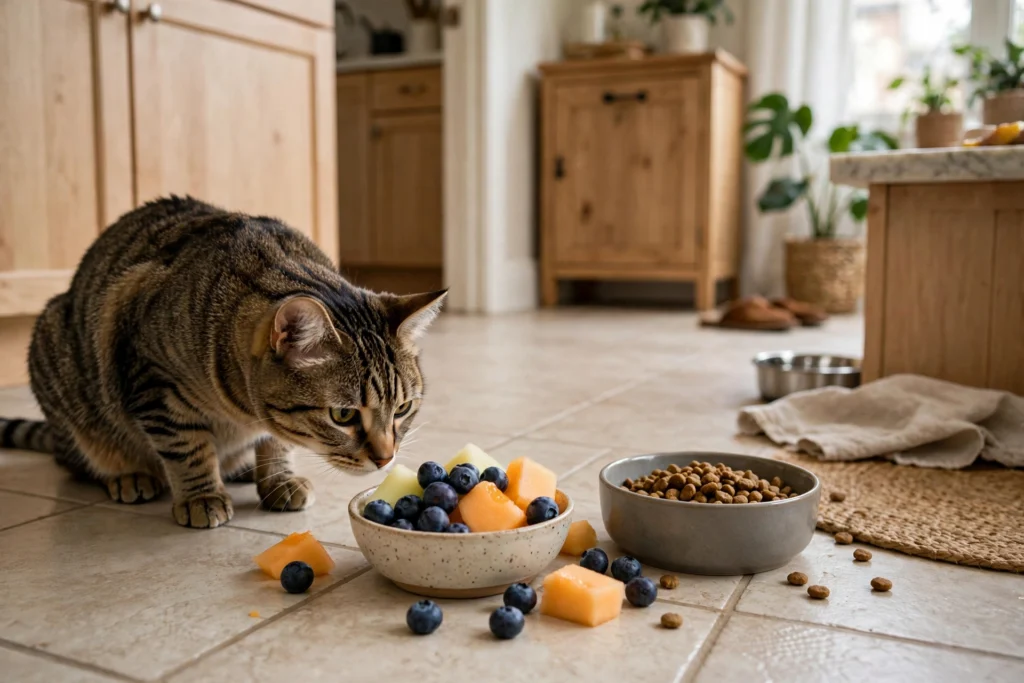

Yes, cats can eat some fruits, but only as a tiny occasional treat. Blueberries, seedless watermelon, banana, and apple without the seeds are all safe in small pieces. Grapes and raisins, on the other hand, are genuinely toxic to cats and must never be offered.
This guide lists the fruits that are safe, the ones to avoid, how much is enough, and how to serve fruit so it does not upset your cat’s stomach.
Can cats eat fruit at all?
Cats are obligate carnivores. Their bodies are built to get everything they need from meat, and a complete, balanced cat food already covers their nutrition. Fruit is never something a cat needs.
There is another reason most cats are not very interested. As PetMD explains, cats lack sweet taste receptors, so they cannot taste the sweetness that makes fruit appealing to us. A cat that begs for a piece of melon is usually curious about the texture, the smell, or the fact that you are eating it.
So think of fruit as entertainment, not nutrition. A few small pieces now and then are fine for a healthy cat. The rules that keep it safe are simple: choose from the safe list, prepare it properly, and keep the amount tiny.
What fruits can cats eat safely?
Every fruit below is safe for cats in small amounts, as long as you remove seeds, pits, stems, and rinds first. Introduce one new fruit at a time, and start with a single small piece.
| Fruit | How to serve it | Watch out for |
|---|---|---|
| Blueberries | Washed, whole or halved; a few berries at a time | Very little to worry about; one of the easiest fruits to share |
| Watermelon | Seedless flesh only, rind removed; a small cube | Seeds and rind can upset the stomach; high in sugar |
| Banana | A thin slice of peeled banana, fresh or frozen | Very sugary and starchy; keep portions tiny |
| Apple | Washed flesh in small slices, core and seeds removed | Seeds contain compounds that are toxic in quantity; never share the core |
| Strawberries | Washed, green top removed, cut into small pieces | Sugar content; a little goes a long way |
| Cantaloupe | Flesh only, rind and seeds removed; a small cube | The rind can carry bacteria and is hard to digest |
| Mango | Peeled flesh in tiny pieces, pit removed | The pit is a choking hazard and must never be given |
| Pineapple | Fresh flesh in tiny pieces, skin and core removed | Skip canned pineapple; it sits in sugary syrup |
| Pear | Washed flesh in small pieces, seeds and core removed | Like apple seeds, pear seeds should always be removed |
| Peaches | Flesh only, skin washed, pit removed | The pit is dangerous and must never be shared |
A few notes on the list. Melons and blueberries tend to be the best tolerated. Some cats love cantaloupe in particular, possibly because its scent contains compounds similar to those in meat. Banana and mango sit at the sugary end, so save them for rare treats. And always serve fruit plain and fresh: no canned fruit in syrup, no dried fruit, no jams, and nothing sweetened.
Other fruits owners often ask about
Raspberries, blackberries, and cranberries are also safe in the same tiny amounts, washed and cut small if needed. Some cats enjoy a piece of banana frozen on a hot day, which is fine as long as the portion stays small. If a fruit is not on the safe list in this guide, do not guess. Check with your vet before offering it, because the difference between a harmless treat and a dangerous one is not always obvious, and a new fruit should always be an informed choice rather than an experiment.
What fruits are toxic or unsafe for cats?
This is the list that really matters. Keep these away from your cat completely.
Grapes and raisins
Never feed grapes, raisins, sultanas, or currants. PetMD warns that cats can develop kidney failure after eating them, and there is no known safe amount, so even one grape is treated as an emergency. That includes foods that hide them, like raisin bread, trail mix, and fruit cake.
Citrus fruits
Lemons, limes, oranges, and grapefruit should be avoided. The flesh in a tiny taste is unlikely to cause serious harm, but the skins, peels, and oils are irritating and can cause vomiting, diarrhea, and skin irritation. In larger amounts citrus is a real problem, and luckily most cats hate the smell anyway.
Cherries
Keep cherries away. The stems, leaves, and pits contain cyanide compounds, and the pit is also a choking and blockage risk. The flesh alone is not the main issue, but cherries are simply not worth the risk when so many safer fruits exist.
Avocado
Avocado contains persin, a substance that can cause vomiting and diarrhea in cats, and its large pit is a choking hazard. High fat content is another reason it does not suit a cat’s digestion. Do not share guacamole either, since it usually contains onion and garlic, which are toxic to cats in their own right.
If your cat eats any fruit from this list, especially grapes or raisins, call your vet or an animal poison line straight away, even if your cat seems fine. Do not wait for symptoms. Warning signs after a toxic food include vomiting, drooling, diarrhea, weakness, and a cat that suddenly goes off food. If that appetite loss continues, our guide on why a cat won’t eat explains when it becomes urgent.
How much fruit can a cat eat?
The standard rule for all treats, fruit included, is that they should make up no more than 10 percent of your cat’s daily calories. In practice, that means very little fruit:
- One or two bite-size pieces in a sitting is plenty
- A few times a week at most, not every day
- A blueberry is a sensible single treat; a whole banana slice is a full portion
Cats have small stomachs and a digestive system tuned for meat, so too much fruit at once commonly causes loose stool or vomiting simply from the sugar and fiber. If that happens, stop that fruit and let the stomach settle.
Two groups of cats need extra caution. Diabetic cats should not be given fruit at all unless your vet says otherwise, because the natural sugars can interfere with blood sugar control. Overweight cats do not need the extra calories, and fruit sugar counts just like any other calories. If your cat is on a prescription diet, check with your vet before offering any fruit at all, as outside food can undermine the diet.
How do you serve fruit to a cat safely?
A minute of preparation removes almost all of the risk. Follow the same routine every time:
- Wash it well. Rinse the fruit under running water to remove dirt and any surface sprays.
- Remove the dangerous parts. Take out all seeds, pits, cores, stems, and leaves, and peel off rinds and skins where relevant. These parts are where choking hazards and most toxins sit.
- Cut it small. Bite-size pieces, roughly the size of a treat. Large chunks are a choking risk, especially for cats that gulp.
- Serve it plain. No sugar, syrup, yogurt coating, chocolate, or spices. Fresh or plainly frozen is best.
- Start with one piece. The first time you offer a new fruit, give a single piece and watch for vomiting, diarrhea, itching, or drooling over the next day.
- Take away what is left. Fruit left sitting in a bowl spoils and attracts insects. If your cat is not interested after a few minutes, remove it.
Skip dried fruit entirely. It concentrates the sugar into a small, sticky package and often sticks to teeth. Fruit juice is also out: it is sugar without the fiber, and some juices contain added sweeteners that are dangerous for cats.
Conclusion
Cats can eat fruit, but they never need it. Blueberries, seedless watermelon, cantaloupe, and the other fruits on the safe list make a fine occasional treat in one or two small pieces, prepared without seeds, pits, or rinds. Grapes, raisins, citrus in quantity, cherries, and avocado stay off the menu completely. Keep treats within 10 percent of daily calories, skip fruit for diabetic and overweight cats, and when in doubt, a proper cat treat is always the safer choice.
Frequently asked questions
Can cats taste sweetness?
No. Cats do not have working sweet taste receptors, so they cannot taste sugar the way we do. A cat interested in your fruit is responding to the smell, the texture, or simple curiosity, not the sweet flavor.
Can cats eat watermelon?
Yes, in small amounts. Offer the seedless red flesh only, with all seeds and the rind removed. A small cube once in a while is a hydrating treat on a warm day. Too much can cause diarrhea because of the sugar and water content.
Can cats eat grapes if they are seedless?
No. Seedless grapes are just as dangerous as seeded ones. The toxin is in the fruit itself, not the seeds, and there is no safe amount for a cat. The same goes for raisins, sultanas, and currants.
Can kittens eat fruit?
It is better not to. Kittens have sensitive stomachs and very specific nutritional needs while they grow. A tiny taste of a safe fruit is unlikely to harm an older kitten, but there is no benefit, and kitten food and kitten treats are the right choice.
What should I do if my cat eats a grape?
Call your vet or the ASPCA Animal Poison Control Center at (888) 426-4435 immediately. Do not wait for symptoms, and do not try to make your cat vomit unless a professional tells you to. Early treatment gives the best chance of preventing kidney damage.
Is fruit good for cats?
Not really. Safe fruits contain water, fiber, and some vitamins, but in the tiny amounts a cat can handle, the nutritional benefit is negligible. Cats get everything they need from a complete cat food. Fruit is a fun extra for cats that enjoy it, nothing more.



Pingback: How Often Do Cats Need Rabies Shots? Full Schedule