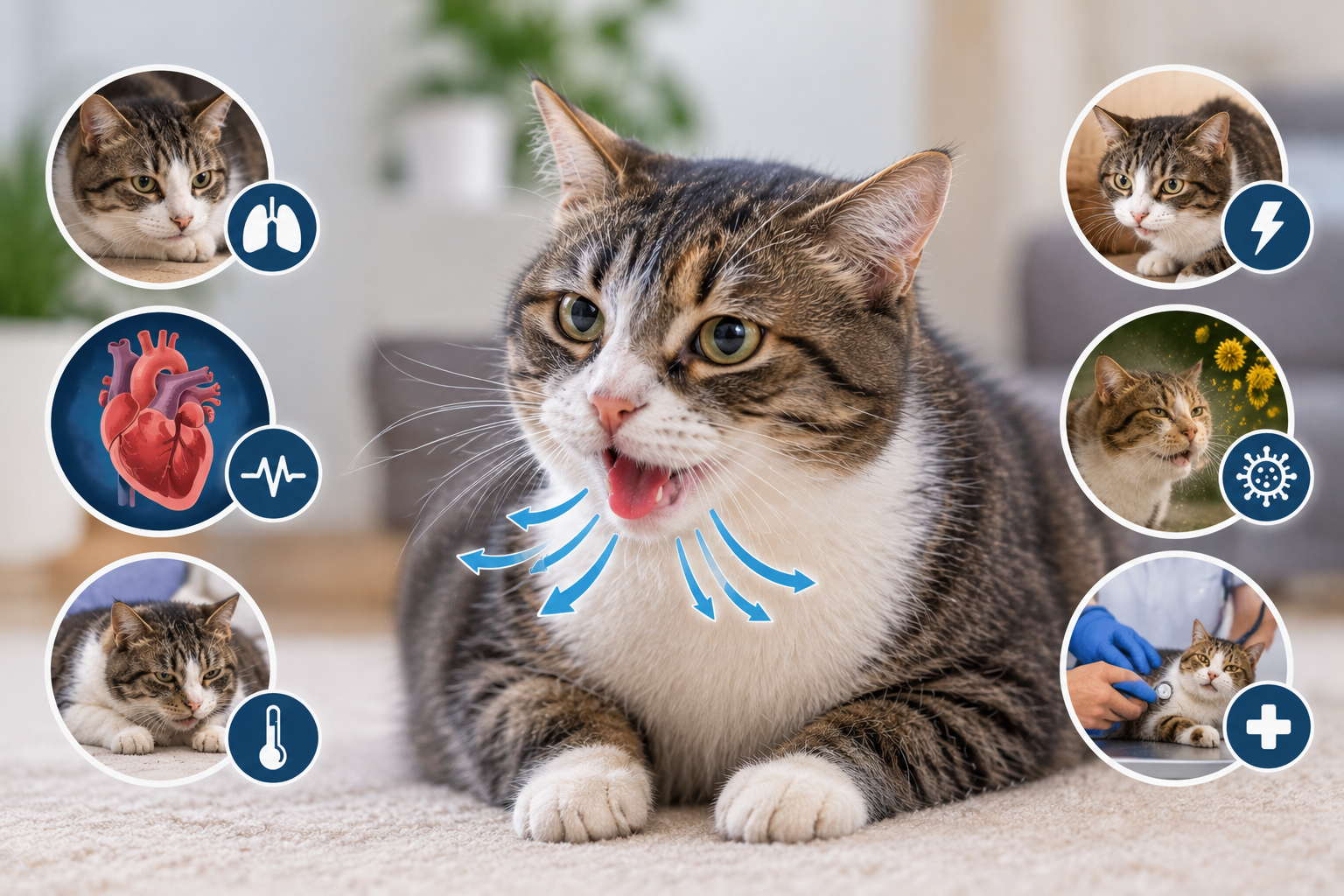
A healthy cat breathes 15 to 30 times a minute while it sleeps or rests calmly. If your cat is breathing faster than that while relaxed, book a vet check. If its mouth is open, its belly is heaving, or its gums look pale or blue, go to an emergency vet right now.
Fast breathing is not always a crisis. A cat that just chased a toy, got a scare, or sat in a hot room will breathe quickly for a few minutes. What matters is what happens next. Normal fast breathing settles once the cat calms down. Fast breathing that carries on at rest means the body is working too hard to get oxygen, or is dealing with illness, pain, or fever.
This guide shows you how to count your cat’s breathing, which causes are harmless, which are serious, which signs mean an emergency, and what to do while you get help.
How fast is too fast for a cat?
For a cat that is asleep or resting quietly, the normal range is 15 to 30 breaths per minute. A rate that stays above 30 is abnormal. Plenty of healthy cats sit around 20 or 21 when they sleep, so your cat’s own baseline may be well below the top of the range.
The count only means something when your cat is truly relaxed. An alert cat, or one that just woke up, will breathe faster. Deep sleep is the best time. Here is how to count a pet’s resting breathing rate at home:
- Wait until your cat is asleep or lying calmly. Don’t wake it or pick it up.
- Watch the chest or flank. One breath is one full rise and fall.
- Set a timer for 30 seconds and count the breaths.
- Multiply the number by two. That gives you breaths per minute.
- Repeat the count a few times over a day or two. One high reading can be a fluke.
Write the numbers down. One reading just over 30 is no reason to panic. Readings that keep coming in above 30 are. So is a rise of about 20 percent over your cat’s usual number that does not go away.
Speed is only half the picture. Also watch how hard your cat works to breathe. Easy breathing is quiet, with the chest rising gently and the mouth closed. Effortful breathing looks different: the nostrils flare, the belly pushes in and out, or the breaths are short and shallow. A cat in trouble may also hold its head low and stretch its body forward, as if it were about to be sick. Fast breathing with visible effort is more worrying than fast breathing alone.
Quick rule: count the breaths in 30 seconds while your cat sleeps, then double it. Counts that stay above 30 mean it is time to call your vet.
When is fast breathing normal in a cat?
Short bursts of quick breathing are normal in a few clear situations. In each one, you can point to a trigger, and the breathing slows within minutes once the trigger ends.
After play. A hard session with a wand toy can leave a cat breathing fast for a couple of minutes. It should ease as your cat rests.
In the heat. A warm room makes a cat breathe faster to shed heat. Move your cat somewhere cooler and offer fresh water. If the breathing does not ease quickly, treat it as possible heatstroke and call a vet.
Fear and stress. A car ride, a loud noise, a new pet, or a vet visit can all speed up breathing. A healthy cat’s rate can climb far above normal in a clinic, which is why counts taken at home, when your cat is calm, tell you more.
Dreaming. A cat in light sleep may breathe quicker and twitch for a short time. Wait until it settles into deeper sleep before you count.
If you can’t name a trigger, or the breathing is still fast after 10 to 15 minutes of quiet rest, treat it as a health problem and call your vet.
What health problems make a cat breathe fast?
When the cause is medical, fast breathing is the body’s way of getting more oxygen or coping with illness. Three conditions are behind most of the serious breathing trouble in cats.
Age gives a clue, though not a rule. Heart failure tends to hit older cats, while asthma can show up at any age. Extra weight does not cause these conditions, but breathing trouble can get worse faster in an overweight cat.
Feline asthma
Asthma inflames and narrows the airways. It can affect cats of any age, and flare-ups are more common in warm weather, when there is a lot of pollen in the air. Signs include coughing, wheezing, and crouching low with the neck stretched out, along with quick breathing. Asthma can be kept under control with medicine, but a severe attack is an emergency.
Heart disease and heart failure
Heart disease is a leading cause of fast breathing, especially in older cats. The most common type is hypertrophic cardiomyopathy, where the heart muscle gets thick. Many cats show no signs for a long time. When the heart can no longer keep up, fluid backs up into the lungs. This is called congestive heart failure, and breathing speeds up. A high sleeping breathing rate is often the first sign an owner sees, which is why counting matters.
Fluid around the lungs
Pleural effusion means fluid has collected in the space around the lungs, so they can’t expand fully. The cat takes short, shallow, fast breaths and may push with the belly to move air. A vet can drain the fluid with a needle, which often brings quick relief. The cause behind the fluid still has to be found and treated.
Other causes worth knowing
Pneumonia, an infection deep in the lungs, brings fast, shallow breathing, often with fever, a cough, and tiredness. A cold or other upper airway infection can block the nose, and cats prefer to breathe through the nose.
Anemia, which means too few red blood cells, leaves the blood carrying less oxygen. The cat breathes faster to make up for it, and the gums often look pale. Pain and fever can also speed up breathing, and so can an overactive thyroid, which is common in older cats.
A chest injury from a fall or a car can bruise the lungs or let air leak into the chest. Something stuck in the nose or windpipe, or a tumor in the lungs, can cause the same problem. So many conditions look alike from the outside that only an exam and tests can tell them apart.
Which signs mean it is an emergency?
Fast breathing plus any sign below is an emergency. Cats hide illness well, and by the time breathing trouble is easy to see, a cat has usually been short of oxygen for a while. Go now. Don’t wait until morning.
- Open-mouth breathing or panting. Cats breathe through the nose and rarely pant.
- The belly moving hard with every breath.
- A stretched neck, a low head, and elbows pushed out from the body.
- Gums or tongue that look blue, gray, or very pale.
- Wheezing, gasping, noisy breathing, or nonstop coughing.
- A cat that can’t settle or won’t lie down.
- Collapse, extreme weakness, or a cat that does not respond to you as usual.
Any cat that has trouble breathing is at high risk of dying without prompt treatment, whatever the cause. Only a vet can examine your cat and run the tests that find the source, so home fixes only waste time. You can read more in the Cornell Feline Health Center’s guide to difficulty breathing.
Breathing fast but otherwise comfortable? If the mouth is closed, the gums are pink, and your cat is eating and moving as usual, call your vet the same day. Don’t wait to see if it passes.
What should I do while I get help?
Move fast, but stay calm. Stress makes a cat use more oxygen, so a quiet approach helps.
- Call your vet or the nearest emergency clinic while you get ready. Tell them what you see so they can prepare oxygen.
- Keep the room quiet and dim. Don’t chase, restrain, or squeeze your cat.
- Guide your cat into a carrier and lay a towel over it to keep things calm. If your cat fights hard, stop and ask the clinic for advice.
- Keep the car cool and drive smoothly. Never leave the carrier in the sun or near a heater.
- If it takes only a few seconds, film your cat’s breathing on your phone. A cat often calms down at the clinic, and the video shows the vet what you saw.
- Don’t give human medicine, home remedies, or steam. Many human drugs are dangerous to cats, and none of them treat the real cause.
Tell the vet what you know. Useful details include when the fast breathing began, your cat’s sleeping count, whether it is eating and drinking, any coughing, vomiting, or sneezing, new medicines, and any chance it got hurt or into something it shouldn’t have. A short, clear history helps the team decide what to do first.
What will the vet do?
Breathing comes first. A cat in distress is fragile, so the vet team often gives oxygen and lets your cat settle before doing much else. Then they listen to the heart and lungs and take chest X-rays. Blood tests and a heart ultrasound may follow.
Treatment depends on the cause. Asthma is treated with medicines that open the airways and calm the swelling. Fluid around the lungs is drained with a needle. Heart failure is treated with diuretics, which pull extra fluid out of the body, and with other heart medicines. Bacterial infections are treated with antibiotics. Many cats improve fast once the cause is found and treated.
If your cat is diagnosed with heart failure and takes a diuretic, your vet will likely ask you to count the sleeping breathing rate at least once a day. It is the easiest early warning you can give your cat.
How can I spot breathing problems early?
Learn your cat’s normal. Count the sleeping rate while your cat is healthy, write it down, and recount now and then so you know the baseline. If your vet finds heart disease or asthma, ask how often to count.
Watch for small changes too. A cat that hides more, plays less, sits hunched, coughs, or eats less may be unwell before the breathing changes. Keep smoke, dust, and strong sprays away from a cat with airway problems. Regular checkups help your vet catch heart disease, thyroid problems, and weight gain before they turn into a crisis.
A note on your phone is enough. Add the date, the count, and anything unusual, such as a cough or a skipped meal. Bring the log to checkups. A slow climb over several weeks is easy to miss in your head but obvious on paper.
Conclusion
A resting cat should take 15 to 30 breaths a minute. Count while your cat sleeps, and treat counts that stay above 30 as a reason to call the vet. Quick breathing after play, heat, or a fright is normal if it settles in minutes. Open-mouth breathing, a heaving belly, a stretched neck, or pale or blue gums mean go now. Cats hide illness, so acting early gives the best chance of a good outcome.
Frequently asked questions
How many breaths per minute is too fast for a cat?
More than 30 breaths per minute while your cat sleeps or rests calmly is too fast. Count for 30 seconds and double it. Check a few times, since one high reading can be a fluke. Counts that keep coming in above 30 need a vet visit.
Is it normal for my cat to breathe fast while sleeping?
Brief fast breathing during dreams can be normal, and it passes. If your cat is in deep sleep and still takes more than 30 breaths a minute on several counts, call your vet. It can be an early sign of heart or lung trouble.
Can stress or anxiety make a cat breathe fast?
Yes. Fear, a car ride, or a vet visit can make breathing quick for a few minutes. It should slow once your cat feels safe. If it stays fast after the stress ends, or your cat opens its mouth, get help.
Is it ever normal for a cat to pant?
Cats rarely pant. Brief panting after very hard play or a big scare can happen, but it should stop within a minute or two of rest. If it does not, or there is no clear reason, go to an emergency vet.
Should I wait overnight to see if my cat’s breathing slows?
Not if your cat has open-mouth breathing, a heaving belly, or pale or blue gums. Go to an emergency vet now. If your cat is comfortable but breathing fast at rest, call a vet the same day and keep counting breaths.
Related Articles
Why Is My Cat Sneezing a Lot? Causes and What to Do
One thought on “Why Is My Cat Breathing Fast? Causes and When to Worry”