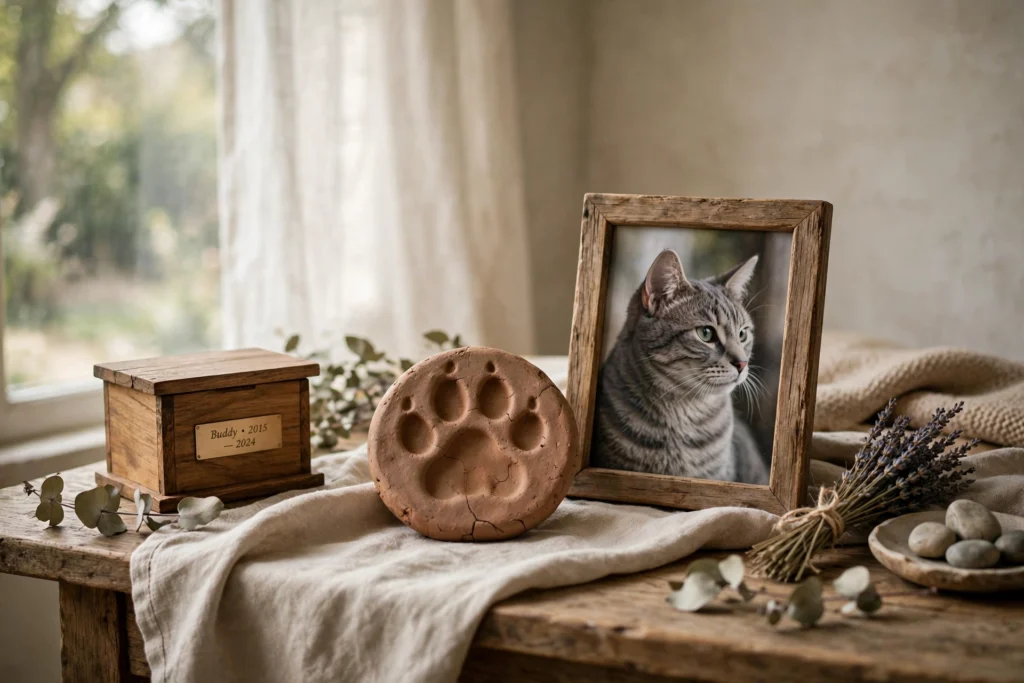

Cremating a cat typically costs between $30 and $250 in the US. A communal cremation, where your cat is cremated with other pets and the ashes are not returned, usually runs about $30 to $80. A private cremation, where your cat is cremated alone and the ashes come back to you, usually costs about $150 to $250. Extras such as an urn, a paw-print keepsake, home pickup, or witnessing the cremation can add to the total.
Prices vary a lot by region, provider, and the choices you make, so treat every figure in this guide as a typical range rather than a quote. What matters most is understanding the options before you have to decide, because these decisions often have to be made on one of the hardest days of your life. This guide walks through each option, what it includes, what affects the price, and the questions worth asking any provider.
What are the different cat cremation options?
Almost every vet clinic and pet crematorium offers the same three basic options. The difference between them is whether other pets are in the chamber and whether you receive ashes back.
Communal cremation
Your cat is cremated together with other pets. Because the ashes are mixed, they cannot be separated or returned to you. The crematory typically scatters the combined ashes in a designated place or disposes of them respectfully. This is the least expensive option, at roughly $30 to $80, and many people choose it when they do not feel a need to keep ashes but want their cat handled with care.
Individual or partitioned cremation
Several pets are in the chamber at the same time, but each is placed in its own separated section or on its own tray, so the ashes can be collected and returned to the right family. A small amount of mixing between sections is possible, which is why this option usually costs less than a fully private cremation: roughly $100 to $250.
Private cremation
Your cat is the only pet in the chamber. The ashes you receive are entirely your cat’s, and most providers use an identification tag that stays with your cat through the whole process. Private cremation typically costs about $150 to $250, and more in large cities. Ashes are usually returned in a simple container, with the option to upgrade to an urn.
Witnessed cremation
Some crematoria allow you to be present, or to view the start of the process from a private room, for an additional fee of roughly $20 to $75 on top of a private cremation. Not every provider offers this, and not everyone wants it, but some families find that being there brings a sense of closure.
| Option | Typical US cost | Ashes returned? |
|---|---|---|
| Communal cremation | $30–$80 | No |
| Individual / partitioned cremation | $100–$250 | Yes, with slight mixing possible |
| Private cremation | $150–$250 | Yes, only your cat’s ashes |
| Witnessing (add-on) | +$20–$75 | — |
These ranges reflect prices published by pet cremation guides such as Catster’s cremation cost guide and by humane societies and crematories. Your local quotes may fall outside them, especially in major cities, where prices tend to be higher.
What affects the cost of cat cremation?
Two families can choose the same option and pay quite different amounts. These are the factors that move the price:
| Cost factor | How it affects the price |
|---|---|
| Type of cremation | The single biggest factor. Communal is cheapest; private costs the most. |
| Who arranges it | Arranging through your vet is convenient, but the clinic adds its own handling. Going directly to a pet crematorium or pet funeral home sometimes costs less, sometimes more for a more personal service. Ask what the quoted package includes either way. |
| Your cat’s size | Many providers price by weight bands. Most cats fall in the smallest band, but a very large cat may cost slightly more. |
| Pickup and transport | If your cat passes at home, transport to the crematory may cost about $30 to $50, and home pickup over a longer distance can run $75 to $150. After-hours or weekend pickup may cost extra. You can usually bring your cat yourself and avoid this fee. |
| Urn and keepsakes | A basic container is often included. Urns range from about $25 for a simple one to $500 or more for premium or engraved designs. Clay or ink paw prints cost roughly $20 to $50, and are sometimes included free. Cremation jewelry can cost $100 to $400 or more. |
| Witnessing and viewing | Being present, or using a private viewing room, adds roughly $20 to $75. |
| Where you live | Prices in large metropolitan areas are noticeably higher than in smaller towns. |
A realistic all-in example: a private cremation at $175, a basic urn at $50, and a clay paw print at $25 comes to about $250 total. Choosing communal cremation with no extras can keep the cost under $100.
What happens during the cremation process?
Knowing the steps can make the process feel less frightening:
- Identification. Your cat is given an ID tag or number that follows them through every step, especially for private cremation.
- Holding. If cremation cannot happen right away, your cat is kept in respectful cold storage. This is normal and nothing to worry about.
- The cremation itself. The chamber is heated to a very high temperature and the process takes roughly 30 minutes to 2 hours for a cat, depending on size and equipment.
- Processing. After cooling, any remaining bone fragments are gently processed into the soft, fine ash most people expect.
- Return of ashes. With a private or individual cremation, the ashes are placed in your chosen container and returned to you, often through your vet or by pickup. Many providers complete this within a few days to a week.
You are allowed to ask a provider to explain their process in detail, including how they guarantee that private ashes are really your cat’s. A reputable provider will answer these questions patiently and without pressure.
Is aquamation a good alternative?
Aquamation, also called water cremation or alkaline hydrolysis, uses warm water and a mild alkaline solution to gently break down the body instead of flame. It is often chosen by families who prefer a gentler, lower-emission process. The ashes returned look similar to cremation ashes, and aquamation typically returns slightly more of them.
Cost-wise, aquamation usually sits in the same range as flame cremation, with private aquamation often quoted around $150 to $400. Availability is the bigger issue: it is offered in a growing number of states and cities, but far fewer providers offer it than flame cremation, so you may need to search a little. If the idea appeals to you, ask your vet or local pet funeral providers whether anyone in your area offers it.
What about burying your cat at home?
Home burial costs little or nothing, and for some families a garden spot feels right. Before you decide, check your local rules: some cities and counties prohibit pet burial on residential property, and rental properties and homeowners’ associations often have their own restrictions. If you do bury at home, choose a spot away from water sources and utility lines, and dig deep enough — generally at least 2 to 3 feet — that wildlife cannot disturb the site. Pet cemeteries are another option if you want a dedicated resting place but cannot bury at home; their prices vary widely, so ask for a full breakdown before committing.
Are you preparing for your cat’s final days?
Many people read about cremation costs while their cat is elderly or seriously ill, because planning ahead is an act of love, not a lack of hope. It lets you make calm decisions now instead of painful ones later.
Near the end of life, cats often eat less, sleep much more, hide away, and groom less. A cat that stops eating altogether needs a vet’s input, even in old age, because discomfort can often be eased. Our guide on why a cat won’t eat explains the common causes and when to call the vet. Your vet can also help you judge quality of life honestly, and tell you what can be done to keep your cat comfortable for as long as possible.
What questions should you ask a cremation provider?
- Is the cremation communal, individual, or truly private, and can you explain the difference in your facility?
- How do you identify my cat and guarantee the ashes I receive are theirs?
- What container are the ashes returned in, and what urns or keepsakes are available?
- Are pickup, transport, and after-hours fees included in the quote, or extra?
- How long until the ashes are ready, and how will I receive them?
- Can I witness the cremation or spend a few quiet minutes with my cat beforehand?
- Can my cat be cremated with a favorite blanket or toy? (Some providers allow this; ask first.)
A good provider will give you a written, itemized quote. If a price seems unusually low for a “private” cremation, ask the questions above — the words communal, individual, and private are not used consistently everywhere.
Where can you find support after losing your cat?
Grief after losing a cat is real grief, and you do not have to carry it alone. The ASPCA runs a Pet Loss Hotline at (877) 474-3310, where trained staff can help with grieving, with talking to children about the loss, and with the difficult decisions around a pet’s final days. Many veterinary schools and local shelters also run free pet loss support groups and helplines, and your own vet’s office can usually point you to one nearby. Reaching out is not an overreaction; these services exist because so many people need them.
Conclusion
Cremating a cat costs about $30 to $80 for a communal cremation with no ashes returned, and about $150 to $250 for a private cremation where the ashes come home with you. Transport, an urn, and keepsakes can add $50 to $150 or more, while aquamation offers a gentler alternative at a similar price where it is available. Whatever you choose, a trustworthy provider will explain their process clearly and give you an itemized quote without pressure. The right choice is simply the one that lets you say goodbye in the way that feels right for your family.
Frequently asked questions
How long does it take to get my cat’s ashes back?
The cremation itself takes a few hours at most. Most families receive ashes back within a few days to about a week, depending on the provider’s schedule and whether you ordered a special urn or keepsake.
Do I have to buy an urn from the crematorium?
No. Providers return ashes in a simple container if you do not choose an urn, and most will happily place ashes in a container you provide yourself. You can also buy an urn later, whenever you feel ready.
Is euthanasia included in the cremation price?
Usually not. If your cat is put to sleep at the vet, euthanasia is normally charged separately from cremation, and the clinic may coordinate the cremation for you. Ask for an itemized estimate so you can see each part.
How much ash does a cat produce?
A small amount, roughly a cup or so for an average cat. It is soft and pale gray to white in color. Aquamation tends to return slightly more ash than flame cremation.
Can I cremate my cat with their favorite blanket or toy?
Often yes, especially with a private cremation, but policies differ and some items cannot be cremated. Ask the provider before the day, so there are no surprises.
What if I cannot afford cremation?
Talk to your vet honestly. They can explain the lowest-cost communal options, and some humane societies offer cremation at reduced prices. A simple farewell with no extras is still a dignified one.