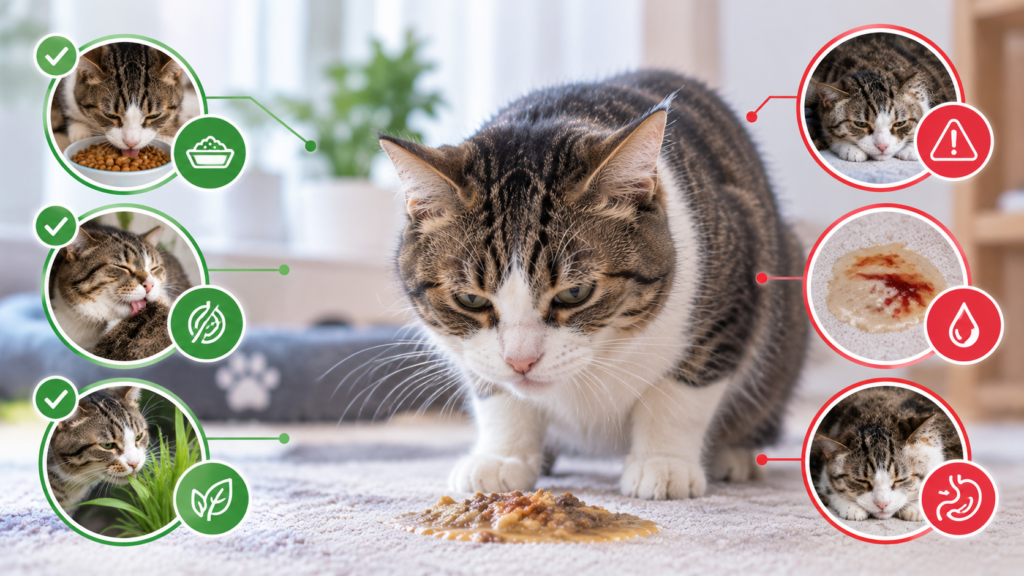

Yes, an occasional episode of vomiting can happen in cats, especially when they bring up a hairball or eat something that upsets their stomach. However, vomiting should not be treated as a normal habit. If it happens repeatedly, becomes more frequent, or comes with changes in your cat’s appetite, energy, thirst, or bathroom habits, contact a veterinarian.
The most useful clues are how often your cat vomits, what comes up, and how they act afterward. A cat who vomits once and then returns to normal is in a different situation from one who keeps retching, refuses food, or seems weak.
Is it normal for cats to throw up?
It can be normal for a cat to vomit once in a while, but frequent vomiting is not normal. Grooming causes cats to swallow loose fur, and some cats occasionally bring up a hairball. A sudden change in food, eating too quickly, or a brief digestive upset can also lead to a single episode.
Frequency matters. Cornell University’s Feline Health Center advises that cats vomiting more than once a week should be assessed by a veterinarian, and vomiting with signs such as weakness, reduced appetite, blood, unusual thirst, changes in urination, or diarrhea deserves prompt attention. Even if your cat seems well between episodes, recurring vomiting is worth discussing with your vet. For additional guidance, see the Cornell Feline Health Center’s advice on vomiting.
There is no single schedule that makes vomiting harmless for every cat. A kitten, senior cat, or cat with an existing health problem may need earlier assessment. If you are unsure whether an episode is unusual for your pet, call your veterinary clinic and describe what happened.
What causes a cat to vomit occasionally?
Several relatively simple issues can trigger vomiting, but the appearance of the vomit alone cannot confirm the cause. Watch for patterns and share them with your veterinarian if the problem repeats.
Hairballs from grooming
Cats swallow hair while cleaning their coats. Sometimes that hair gathers into a damp, tube-shaped clump and is brought up. Long-haired cats or cats that groom heavily may be more prone to hairballs, but repeated hairball vomiting still deserves a vet’s advice, especially if it becomes more frequent or your cat struggles to bring one up.
Eating too quickly or a food change
Some cats gulp food and vomit soon after a meal. A sudden switch in food, rich table scraps, spoiled food, or an ingredient that does not agree with your cat can also upset the digestive system. Avoid repeatedly changing foods to experiment. If you need to change diets, ask your vet how to transition gradually.
Eating something they should not
Cats may chew plants, string, ribbon, plastic, or other household objects. Some plants and human foods are toxic, while string and other objects can cause a dangerous blockage. If you suspect your cat swallowed a foreign object or toxin, contact a veterinarian immediately rather than waiting to see if vomiting stops.
Illness or an underlying condition
Vomiting can also be linked to intestinal parasites, inflammation of the digestive tract, infections, pancreatitis, kidney or liver disease, diabetes, or an overactive thyroid. These problems are more likely to need treatment when vomiting persists or appears with weight loss, appetite changes, diarrhea, increased thirst, or other signs of illness.
How can you tell vomiting from regurgitation or coughing?
What looks like vomiting may actually be regurgitation or coughing, and the difference can help your vet work out what is wrong.
True vomiting usually involves visible effort. Your cat may look nauseated, lick their lips, drool, repeatedly swallow, crouch, and contract the belly before bringing up food, fluid, foam, or hair. The material may be partly digested.
Regurgitation is often more passive and may happen soon after eating or drinking. Food can come back up with little warning and may look fairly undigested or tube-shaped. Repeated regurgitation also needs veterinary attention.
Coughing can look like retching, especially when a cat crouches low and stretches the neck. A cat may cough up a little foam or swallow afterward without producing stomach contents. If you are unsure, safely record a short video of the episode to show your vet. Do not delay urgent care to get a video.
When should you worry about cat vomiting?
Call a veterinarian promptly if vomiting repeats, continues, or occurs alongside other symptoms. Seek urgent veterinary help if your cat seems severely unwell, cannot keep water down, has a painful or swollen abdomen, or may have swallowed a toxin or object.
Warning signs include:
Repeated vomiting in a short period or vomiting that continues into the next day.
Blood in the vomit, or material that looks like dark coffee grounds.
Marked tiredness, weakness, collapse, or trouble standing.
Refusing food, significant diarrhea, or signs of abdominal pain.
Possible exposure to medication, toxic plants, chemicals, string, ribbon, or other foreign objects.
Changes in thirst or urination, especially when paired with vomiting.
Cats can become dehydrated when they lose fluids, and persistent vomiting may also disturb the body’s electrolyte balance. Kittens, older cats, and cats with chronic illnesses can be more vulnerable, so do not wait for symptoms to become severe before seeking advice.
If your cat vomits more than once or twice in a day, call your clinic for guidance. If there is a possible toxin exposure, do not induce vomiting or give a home remedy unless a veterinarian specifically instructs you to do so.
What should you do if your cat throws up?
If it is a single episode and your cat is alert, comfortable, and behaving normally, stay calm and observe closely. Remove the vomit safely, check whether it contains hair, food, blood, or foreign material, and note when it happened.
Keep fresh water available. Do not force your cat to drink, and do not give human medicines or leftover pet medication. Cats have different medication sensitivities from people, and some common human drugs are dangerous to them.
Avoid making a major diet change or deliberately fasting your cat without veterinary advice. Cats, especially those who are overweight or already unwell, can develop serious problems when they do not eat. Ask your vet whether to offer a small meal, use a prescribed easily digested diet, or bring your cat in for an examination.
Write down how many times your cat vomited, the approximate time, what the material looked like, recent food changes, and any other symptoms. Mention access to plants, medications, string, or unusual foods. This simple record can help the veterinarian decide whether an examination or tests are needed.
For ongoing vomiting, a vet may recommend a physical examination and, depending on the history, blood or urine tests, a fecal test, X-rays, or ultrasound. Treatment depends on the cause and may include fluids, anti-nausea medicine, parasite treatment, a diet plan, or treatment for an underlying illness.
How can you reduce vomiting in cats?
You cannot prevent every episode, but a few habits can reduce common triggers and make changes easier to spot.
Brush your cat regularly, particularly if they have a long or thick coat, to remove loose fur before it is swallowed.
Offer measured meals and consider a slow-feeder bowl if your cat gulps food. Ask your vet about meal size and timing if vomiting happens after eating.
Keep the diet consistent. Introduce any necessary food change gradually, following your veterinarian’s advice.
Keep string, ribbon, hair ties, small toys, medicines, cleaning products, and toxic plants out of reach. Lilies are especially dangerous to cats.
Arrange routine veterinary checkups and mention recurring hairballs or vomiting, even if your cat seems fine afterward.
Track patterns rather than judging each episode on its own. For example, vomiting after every meal, vomiting every week, or a sudden rise in hairballs is useful information for your vet. A simple note on your phone can reveal a pattern that is easy to miss day to day.
Conclusion
An occasional episode of vomiting can happen in cats, particularly when a hairball or brief stomach upset is involved. Still, repeated vomiting is not something to ignore. Watch your cat’s behavior, appetite, hydration, and bathroom habits, and record how often episodes occur. Contact a veterinarian if vomiting repeats or comes with other symptoms, and seek urgent help if poisoning, a blockage, blood, or severe illness is possible.
Frequently asked questions
Is it normal for a cat to throw up every day?
No. Daily vomiting is not normal and needs veterinary assessment, even if your cat seems energetic between episodes. Frequent vomiting can be linked to digestive disease, parasites, food problems, or other health conditions.
How often is it normal for cats to throw up hairballs?
Cats may occasionally bring up hairballs, but frequent hairball vomiting should be discussed with a veterinarian. If the pattern changes, your cat repeatedly retches without producing a hairball, or they seem unwell, seek advice promptly.
Should I feed my cat after they throw up?
It depends on your cat’s age, health, symptoms, and how often they vomited. Keep water available and call your vet for guidance rather than forcing food or fasting your cat for a long period.
When should I take my cat to the vet for vomiting?
Contact a vet if vomiting repeats, continues, or occurs with poor appetite, weakness, diarrhea, pain, blood, or changes in thirst or urination. Suspected toxin or foreign-object ingestion needs immediate veterinary advice.
Why does my cat throw up undigested food?
Undigested food may come up after eating too quickly, but it can also be regurgitation rather than true vomiting. If it happens repeatedly or your cat has other symptoms, arrange a veterinary assessment.
Related Articles
Why Did My Cat Throw Up? Causes and Warning Signs
Why Are My Cat’s Ears Hot? Causes & Warning Signs


Pingback: Why Won't My Cat Eat? Causes and What to Do
Pingback: Why Is My Cat Limping? Causes and When to See a Vet