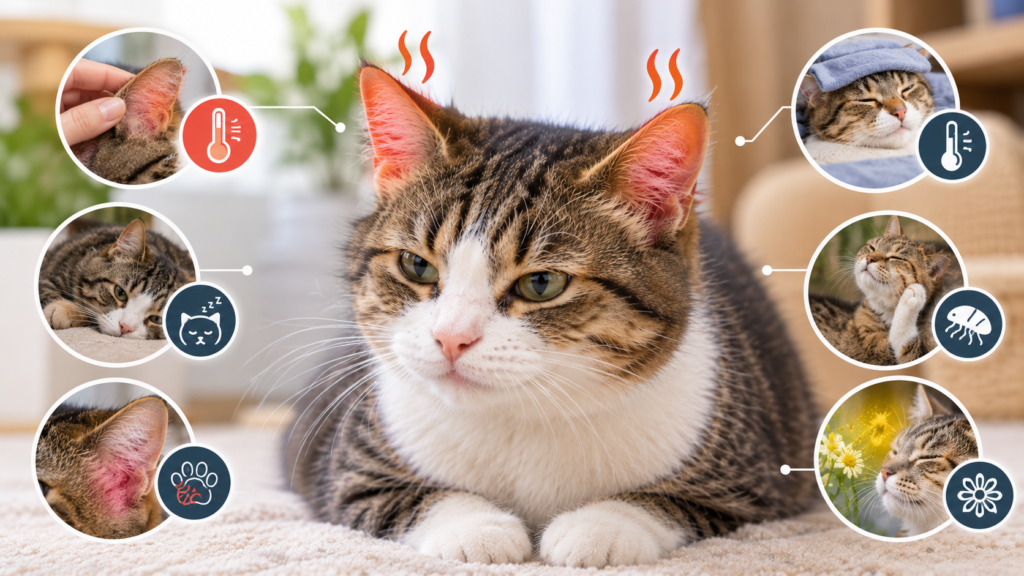

If your cat’s ears feel hot, it does not automatically mean your cat is sick. A cat’s ears can warm up after lying in the sun, resting in a warm room, or playing. However, very hot ears can also occur with fever, irritation, ear mites, allergies, or an ear infection. The best clue is how your cat is acting and whether you notice other signs, such as scratching, redness, discharge, poor appetite, or unusual tiredness.
Are Cats’ Ears Supposed to Feel Warm?
Yes, a cat’s ears can normally feel warm because the skin is thin and blood vessels sit close to the surface. Unlike the fur-covered parts of the body, the outer ears are exposed to the air and can change temperature fairly quickly. A cat that has been curled up in a sunny spot may have warmer ears than one resting in a cool room.
A cat’s normal body temperature is generally around 100.5°F to 102.5°F (38.1°C to 39.2°C). Your hand cannot measure that core temperature accurately, and the temperature of the ears alone cannot confirm a fever. If your cat is eating, drinking, moving, and behaving normally, and the warmth fades after they move to a cooler place, you can usually monitor them calmly.
Why Are My Cat’s Ears Hot? 6 Possible Reasons
1. Warm weather or lying in the sun
Heat from the environment is one of the simplest explanations for warm ears. Cats often choose sunny windowsills, warm blankets, or spots near heaters. Their ears may feel noticeably hotter after this kind of rest, especially on a hot day. Once your cat moves away from the heat and settles in a comfortable area, the temperature should gradually return to normal.
Offer fresh water, shade, and a cool, well-ventilated room. Never force your cat into a cold bath or apply ice directly to the ears. If your cat has been exposed to intense heat and is panting, drooling, weak, vomiting, confused, or collapsing, seek emergency veterinary care. These signs can indicate dangerous overheating, not simply warm ears.
2. Normal changes in blood flow
A cat’s ear temperature can rise and fall as blood flow changes. Activity, excitement, stress, or a warm resting place may temporarily make the ears feel hotter. For example, you might notice warm ears after an energetic play session or a stressful car ride. If your cat quickly returns to their usual behavior and has no other symptoms, temporary warmth may not signal a health problem.
Look at the overall pattern instead of checking the ears repeatedly. If the warmth persists, keeps returning without an obvious reason, or comes with behavior changes, contact your veterinarian for advice.
3. Fever or another illness
A fever can make your cat’s ears feel hot, but touch alone cannot tell you whether your cat has one. Fever may develop with infections, inflammation, wounds, or other medical conditions. Your cat may also hide, seem unusually tired, eat less, shiver, breathe faster than normal, or show less interest in play.
If your cat seems unwell and you suspect a fever, call a veterinarian promptly. A veterinary professional can assess your cat and decide whether a temperature check or other tests are needed. Do not give human fever medicines. Acetaminophen (paracetamol) is highly toxic to cats, and common pain relievers such as ibuprofen can also cause serious harm.
4. Ear mites
Ear mites are tiny parasites that can cause intense itching and irritation in a cat’s ear canals. You may notice frequent head shaking, scratching, dark crumbly debris that resembles coffee grounds, or sore skin around the ears. Repeated scratching and inflammation can make the outer ears feel warmer than usual.
Mites can spread between animals, so a veterinarian should examine your cat if you suspect them, particularly when other pets are also scratching. The right treatment depends on the diagnosis and the animal’s age and health. Avoid putting oils, household remedies, or over-the-counter ear products into the ear unless your veterinarian recommends them.
5. An ear infection or local inflammation
An ear infection can cause heat along with redness, swelling, pain, discharge, or an unpleasant smell. Your cat may tilt their head, rub an ear against furniture, or pull away when you touch the area. Infection may affect one ear or both. Allergies, parasites, trapped debris, and other ear problems can contribute to inflammation, so the signs need to be checked rather than guessed at.
Arrange a veterinary appointment if you see discharge, ongoing scratching, swelling, obvious pain, or a sudden change in how your cat holds their head. A vet can inspect the ear canal and, when needed, test a sample to identify the cause. For more information about common feline ear problems, read Cornell University’s overview of feline ear disorders.
6. Allergies or skin irritation
Allergies and skin irritation can affect the ears and the surrounding skin. Possible clues include redness, itching, scabs, hair loss, or repeated scratching. Some cats also lick or scratch other parts of their bodies. Irritation may come from environmental allergens, food-related reactions, insects, or contact with something that bothers the skin.
Hot ears by themselves do not prove that your cat has an allergy. If the irritation persists or appears alongside other skin problems, ask your veterinarian to assess it. Do not use human allergy medicine or apply creams without veterinary guidance, because some products and ingredients are unsafe for cats.
Why Is One Cat Ear Hotter Than the Other?
If only one ear feels hot, local irritation may be more likely than a general change in body temperature. An insect bite, scratch, ear mite problem, infection, or other inflammation can affect one side more than the other. Look for redness, swelling, odor, discharge, repeated head shaking, or sensitivity when your cat turns or lowers their head.
Do not insert a cotton swab or another object into the ear canal to investigate. If one ear stays hot or your cat seems uncomfortable, arrange a veterinary examination. A head tilt, loss of balance, unusual eye movements, or severe pain needs urgent veterinary attention because deeper ear problems may be involved.
How Can You Tell If Hot Ears Mean a Fever?
You cannot reliably distinguish a fever from normal warmth by touching the ears, nose, paws, or belly. Cats naturally feel warmer than people, and the temperature of the outer ear changes with the environment. A reliable assessment of core body temperature requires an appropriate thermometer used correctly, and taking a cat’s temperature at home can be difficult or stressful.
A normal feline temperature is generally about 100.5°F to 102.5°F. A reading above this range may be significant, but the meaning depends on how it was taken and your cat’s condition. If your cat resists handling, do not risk injuring either of you by forcing a temperature check. Call your veterinary clinic and describe the signs you see.
Pay particular attention to appetite, energy, breathing, drinking, vomiting, and hiding. Warm ears combined with weakness, repeated vomiting, trouble breathing, collapse, or marked confusion deserve urgent care. If your cat is quiet, refuses food, or seems feverish, seek veterinary advice the same day rather than waiting for the ears to cool down.
What Should You Do When Your Cat’s Ears Feel Hot?
Start by moving your cat away from direct sunlight or a heat source and offering fresh water. Let them rest in a comfortable, well-ventilated area. After a short period, check whether they seem comfortable and behave normally. You do not need to keep touching the ears; repeated handling may stress a cat that is already uncomfortable.
Look gently at the outer ear without inserting anything into the canal. Note whether the ears are red, swollen, dirty, smelly, or painful, and whether your cat is scratching or shaking their head. If possible, remember when the warmth began and whether your cat has been outside, in the sun, or around another animal with ear symptoms. These details can help your veterinarian.
Contact your vet if the heat does not settle, keeps returning, affects one ear along with irritation, or appears with any change in behavior. Seek emergency care for breathing difficulty, collapse, severe weakness, seizures, or signs of heatstroke. Do not give human medication, use leftover ear drops, or clean deep inside the ear unless a veterinarian has advised you to do so.
When Should You Take Your Cat to the Vet?
Book a veterinary visit if your cat has persistent hot ears plus itching, redness, swelling, discharge, a bad smell, head shaking, appetite changes, or unusual tiredness. These signs may point to a treatable ear condition or another illness that needs diagnosis. Cats often hide pain, so a clear behavior change matters even when the ears look normal.
Get urgent veterinary help if your cat has trouble breathing, collapses, cannot stand, has a seizure, seems severely disoriented, or may have overheated. A painful head tilt or loss of balance also warrants prompt assessment. If you are unsure how serious the symptoms are, call a veterinary clinic and explain what you are seeing. It is safer to ask than to rely on ear temperature alone.
What Details Should You Track Before Calling the Vet?
A few simple observations can make a veterinary conversation more useful. Note when you first noticed the heat, whether one or both ears are affected, and whether the warmth appears after sunbathing, exercise, or time near a heater. Also watch for changes in eating, drinking, grooming, sleep, and social behavior. A short video of repeated head shaking or unusual movement may help your vet understand what is happening.
Avoid repeatedly pressing or bending the ears to test for pain. If your cat flinches, cries, scratches at you, or tries to escape when the ear is touched, stop the examination. Do not try to remove deep debris or crusts, since this can hurt the ear canal or make inflammation worse. If your cat goes outdoors or lives with other pets, mention that too, because it may help the vet assess possible exposure to parasites or injury.
Conclusion
Hot ears in cats are often caused by warm surroundings, sunlight, activity, or normal changes in blood flow. They can also accompany fever, ear mites, infection, or skin irritation. Judge the situation by your cat’s behavior and any other symptoms, not by touch alone. Offer a comfortable environment, avoid home treatments inside the ears, and contact a veterinarian if the warmth persists or comes with discomfort or illness. Seek emergency care for breathing trouble, collapse, or signs of overheating.
Frequently asked questions
Are hot ears a sign of fever in cats?
Not always. A cat’s ears can feel warm after sunbathing or resting in a warm room. Touch cannot confirm a fever, so contact your veterinarian if your cat also seems tired, stops eating, or behaves differently.
Why are my cat’s ears hot but the rest of the body seems normal?
The ears can warm up because they have thin skin and are exposed to the environment. If your cat is acting normally, monitor them after they move to a comfortable spot. Persistent warmth or irritation should be checked.
Should I clean my cat’s ears if they feel hot?
Do not clean deep inside the ear or use cotton swabs, oils, or ear drops without veterinary advice. Redness, odor, debris, discharge, or repeated scratching may need an examination and specific treatment.
Can hot ears mean my cat has an ear infection?
They can, especially when one ear is hot and your cat also scratches, shakes their head, has redness, discharge, or a bad smell. A veterinarian needs to examine the ear to identify the cause and choose treatment.
When are hot ears an emergency?
Hot ears with panting, drooling, weakness, confusion, collapse, or breathing difficulty can indicate overheating or another serious problem. Seek emergency veterinary care rather than trying to cool your cat with ice or giving medicine at home.
Related Articles
Why Is My Cat Breathing Fast? Causes and When to Worry
Why Is My Cat Sneezing a Lot? Causes and What to Do


Pingback: Why Did My Cat Throw Up? Causes and Warning Signs
Pingback: Why Won't My Cat Eat? Causes and What to Do