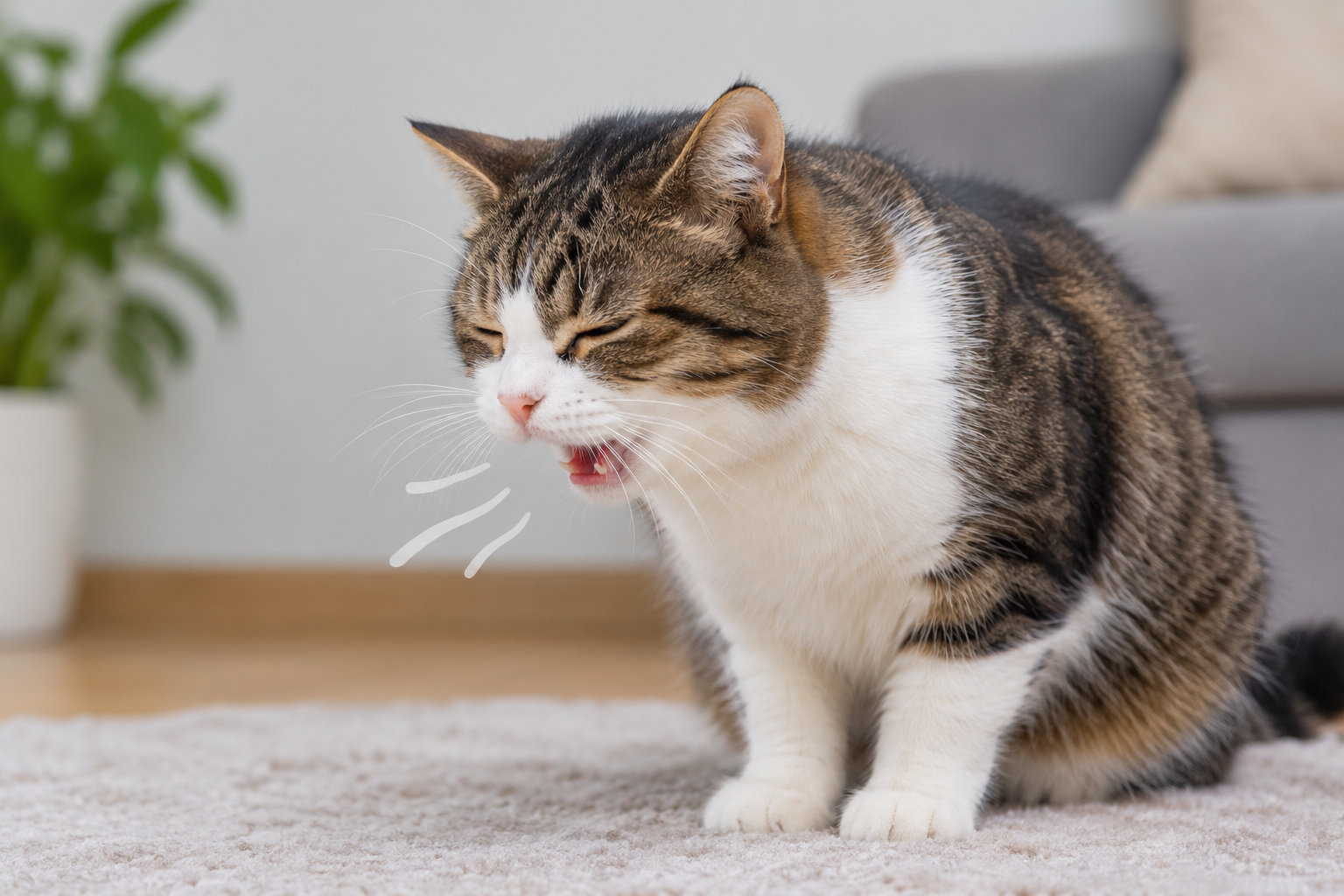
Most cats that cough have asthma, a hairball problem, or something in the air that irritates their lungs. Less often, the cause is an infection, a parasite, or a heart or lung disease. One cough now and then in a cat that eats, plays and breathes normally is usually fine. A cough that keeps coming back needs a vet.
This guide helps you work out what kind of cough you are hearing, what usually causes it, which signs mean you should go to the vet today, and what you can do at home while you wait.
Is my cat coughing, or is it a hairball?
Cats make a few noises that sound alike from another room. Telling them apart gives your vet a much better starting point.
A cough is a short, dry hack. Your cat crouches low, stretches its neck out along the floor, and pushes air out in one or two sharp bursts. You may hear several in a row, then a pause. Some cats end with a swallow or a small gag, which is why owners often think it is a failed hairball.
A coughing cat can look scared. Many get restless and anxious during a fit, which makes it seem as if each cough might be the last. Stay calm and watch how long it lasts and what your cat does afterward.
A hairball is different. The cat retches, and you can see its belly heave. The sound is deeper and drawn out. At the end, a wad of hair, often shaped like a small cigar, comes up. A hairball is really vomit, so it comes from the stomach, not the lungs.
Here is a simple test. If your cat has coughing fits and no hairball ever appears, treat it as a cough. A hairball every month or so is normal. A hairball every week, or retching with nothing coming up, needs a vet visit.
If you can, film an episode on your phone. A short video shows the vet the posture and the sound, and cats rarely cough on cue in the clinic.
What are the most common reasons cats cough?
A cough is a reflex. It starts when something irritates the airways, which run from the throat down into the lungs. These are the usual causes.
Asthma
Asthma is the most common lung problem in cats. Asthma in cats affects between 1 and 5 percent of them, and most are diagnosed around age 4 or 5. The airways swell, tighten and fill with mucus after the cat breathes in something it is allergic to.
Signs include a recurring dry hack, wheezing, fast breathing, and sometimes open-mouth breathing. During an attack, many cats crouch low with the neck stretched forward. Some attacks even look like vomiting.
There is no single test for asthma. The vet rules out other causes first, then uses chest X-rays and sometimes other scans or a camera exam of the airways. Asthma cannot be cured, but it can be controlled. Treatment is usually a steroid to calm the swelling, sometimes with a drug that opens the airways. Both come as an inhaler, a pill or an injection.
Asthma is often a long-term condition, and flare-ups can range from mild to life-threatening. With the right medicine and close watching of your cat’s breathing, many asthmatic cats live well for years.
Hairballs
Cats swallow loose fur while they groom, and some of it forms a clump in the stomach. The cat then retches to bring it up. This is the one cough-like cause that is often harmless. Brushing your cat often means less fur gets swallowed, which lowers the chance of hairballs.
Irritants and allergens
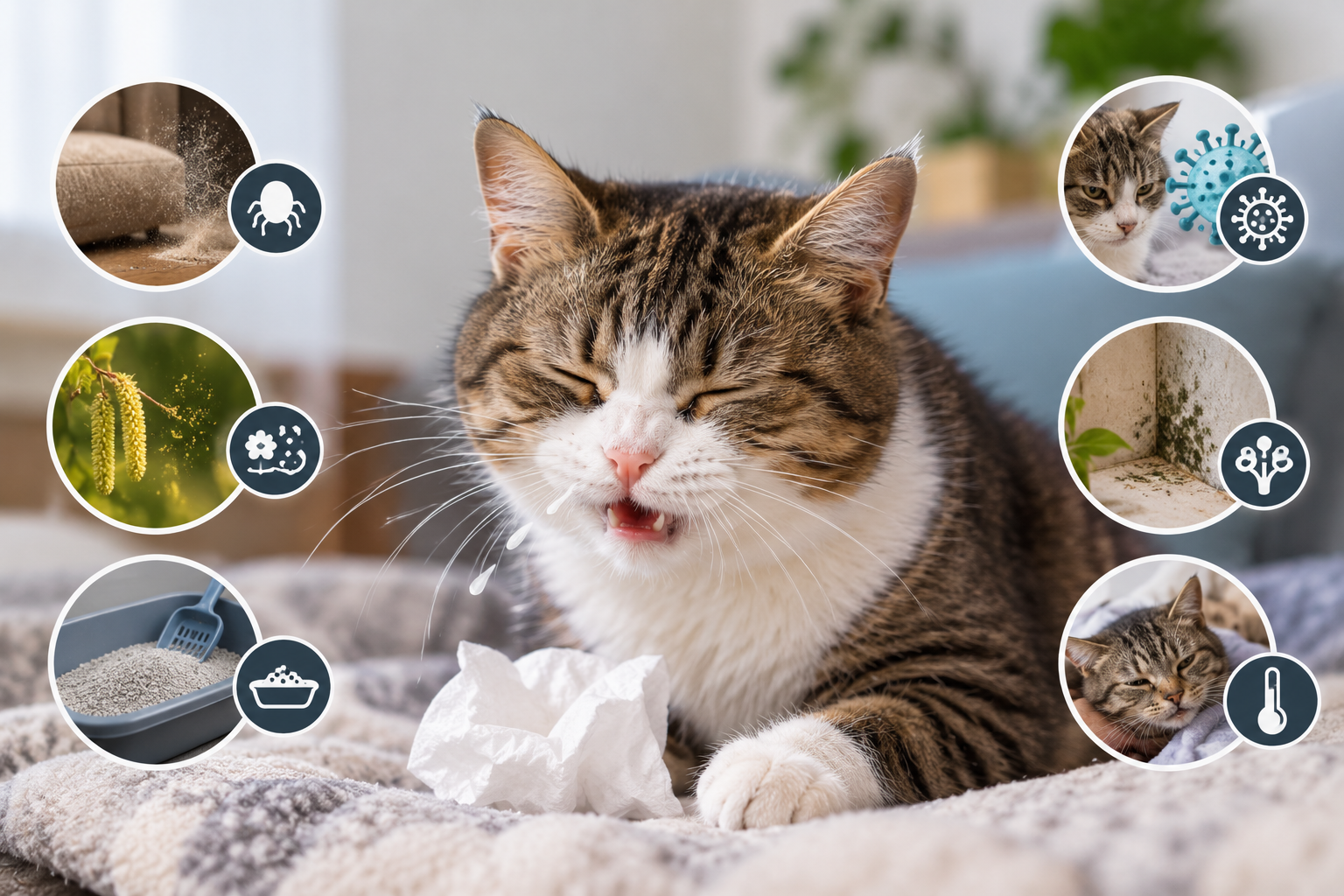
Smoke, cleaning sprays, air fresheners, perfume, essential oils and dust can all set off a cough. So can pollen. A cat that coughs mostly in spring or summer may be reacting to it.
Notice when the coughing starts. If it follows a cleaning session, a new candle or a smoky room, you have a clue to share with your vet.
Respiratory infections
Cat flu is usually caused by the herpes virus or the calicivirus. It mostly brings sneezing, runny eyes and a runny nose. A cough shows up mainly when bacteria move in as well. These infections spread fast where many cats live together, such as shelters, and one bacterium called Bordetella is common in crowded places like these.
Pneumonia is a more serious lung infection. A cat that coughs and is also tired, off its food, or has a fever should be seen soon.
Heartworm
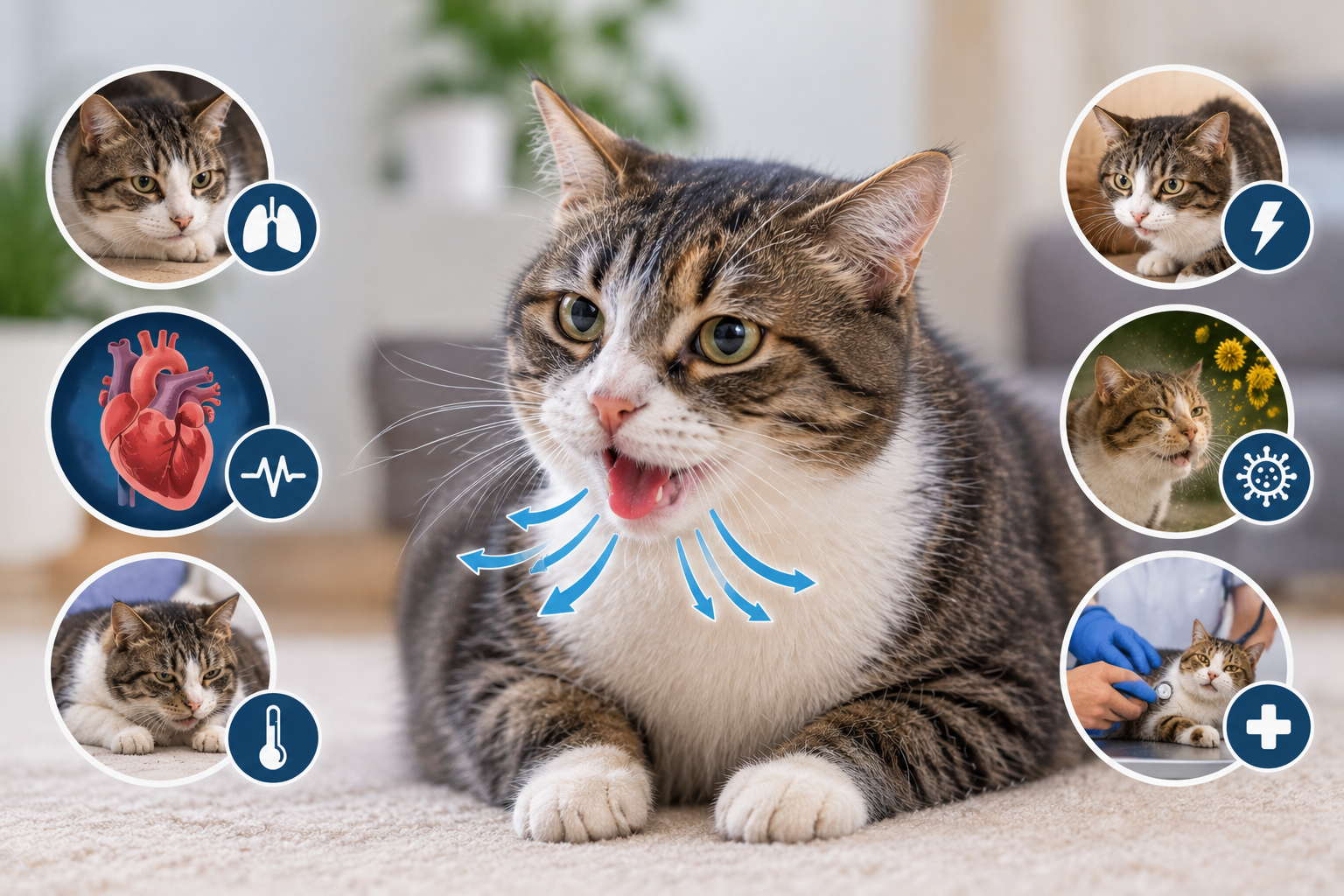
Mosquitoes spread heartworm, and cats get it too. The name does not fit cats well, because the worms mostly harm the lungs. The result is called heartworm-associated respiratory disease, or HARD. Signs include coughing, vomiting and trouble breathing, and the illness can look just like asthma. Some cats show no signs at all, and in others the first sign is collapse. Kittens face the same risk as adult cats.
Indoor cats are not safe. About one in four cats with heartworm lives indoors, and the disease has turned up in all 50 US states. There is no approved treatment for heartworm in cats, so prevention is everything. Your vet can set up a year-round preventive, and the heartworm in cats page from the American Association of Feline Practitioners explains more.
Lungworm
Lungworm is a parasite that lives in the lungs. The most common type is Aelurostrongylus abstrusus. Cats catch it by eating infected rodents, birds, frogs or lizards, so cats that hunt have more chances to pick it up. Some cats show no signs. Others cough or struggle to breathe. Death from lungworm is uncommon, though it can happen in kittens. Vets can test for it, and regular deworming helps keep it away.
Less common causes
A foreign object stuck in the airway, a chest injury, a blood clot in the lung and lung tumors can also cause a cough. They are rarer, but they are the reason a cough that does not clear up should always get checked.
| Cause | Typical clues |
| Hairball | Deep retching, belly heaves, a wad of hair comes up, then the cat acts normal |
| Asthma | Recurring dry hack, wheezing, crouched posture with neck stretched out, often no hairball |
| Irritants or allergens | Coughing after smoke, sprays, scents or dust, or in pollen season |
| Respiratory infection | Sneezing, runny eyes or nose, tiredness, fever |
| Heartworm | Cough, vomiting, trouble breathing, sometimes sudden collapse |
| Lungworm | No signs, or cough and trouble breathing, often in cats that hunt |
Can heart disease make a cat cough?
Sometimes, but less often than most owners expect. Many cats with heart failure never cough at all. Their warning sign is fast breathing while resting.
When the heart does not pump well, fluid can build up in or around the lungs, and that makes breathing quicker. So a cat can have a serious heart problem and never make a sound. This is why a cat that breathes fast should be seen even if you have never heard a cough.
Cats with stable, treated heart failure usually breathe fewer than 30 times a minute while asleep. So a number that creeps up is a sign to call the vet.
How do I count my cat’s breathing rate?
A healthy cat that is resting or asleep takes about 15 to 30 breaths a minute. One breath is one full rise and fall of the chest. Counting takes under a minute:
- Wait until your cat is asleep or fully relaxed. Do not count right after play or a meal.
- Start a 30-second timer on your phone.
- Count each rise and fall of the chest. Skip the count if your cat is purring.
- Double the number to get breaths per minute.
- Write it down, and repeat on a few different days.
A resting rate that stays above 30 is a warning sign. A rate above 40 on more than one count means a vet visit the same day.
Know your cat’s normal. Count the sleeping rate a few times while your cat is well. A steady climb above that baseline is an early warning, often before any other sign.
When is a cat’s cough an emergency?
Go to a vet or an emergency clinic right away if you see any of these:
- Breathing with the mouth open (a sign that your cat is struggling to breathe)
- Coughing nonstop, with no break
- Crouching with the neck stretched out and struggling to get air in
- Coughing up blood or mucus
- Collapse or sudden weakness
- Resting breathing above 40 breaths a minute
Book a visit within a day or two if the cough is brief but your cat seems tired, is not eating or drinking, has a fever (a rectal temperature above 39°C, or 102.2°F), or has several coughing fits in one day.
If your cat is alert, eating and drinking, and has coughed only a few times, you can watch it for a couple of days. If the cough has not gone away by then, or it gets worse, get it checked. Keep your cat calm in the meantime, because exercise and stress can trigger an asthma attack.
What will the vet do?
Expect questions first. When did the coughing start? How often does it happen? Does your cat go outside or hunt? Does it get heartworm prevention? Bring your video if you have one.
The vet will listen to the chest and check breathing. Chest X-rays are the usual next step for a cough. In asthma, they often show a bright branching pattern along the airways, and the lungs may look overinflated. After that, the vet may add blood tests, a stool test, a heartworm test, an ultrasound of the heart, or a camera exam of the airways under sedation. Several tests are often needed, because asthma, chronic bronchitis, lungworm and pneumonia can look alike at first.
Treatment depends on the cause. A drug that helps one cause can do harm in another, so do not try to treat the cough yourself.
What can I do at home while I wait?
Keep it simple. Move your cat away from smoke, sprays, strong scents and dust. Cleaner air is a sensible step, though it has not been proven to treat asthma in cats, so it does not replace medicine.
Keep a short log of each coughing episode: the date, the time, how long it lasted, and what happened just before. Brush your cat, keep the room quiet, and keep an eye on breathing rate. This log and your video will help the vet far more than a guess.
How can I lower the chance of coughing?
You cannot prevent every cough, but a few habits help. Give heartworm prevention all year, even to indoor cats. Brush your cat often to cut down on hairballs. Keep up with deworming, especially if your cat hunts. Skip smoking indoors and heavy scents. And book regular checkups, so small changes in breathing get noticed early.
Conclusion
Cats mostly cough because of asthma, hairballs or irritants in the air. A single cough in a bright, hungry cat can be watched for a day or two. Anything that repeats, comes with fast or open-mouth breathing, or leaves your cat tired or off its food needs a vet. Film the cough, count the sleeping breaths, and take both to the appointment. Most causes can be managed once they are found.
Frequently asked questions
Why is my cat coughing but not bringing up a hairball?
A cough with no hairball is more often an airway problem, such as asthma or an irritant in the air, than a hairball. If it happens more than once or twice, or keeps coming back, have your vet check your cat.
Why is my cat coughing and sneezing?
Cat flu is a common cause, and it usually comes with runny eyes or nose. Allergies and asthma can also do it. If the signs last more than a day or two, or your cat is tired or feverish, see a vet.
How long can I wait before taking a coughing cat to the vet?
If your cat is alert, eating and drinking, and has coughed only a few times, watch it for a couple of days. If the cough lasts longer, gets worse, or breathing looks hard, go sooner.
Can I give my cat human cough medicine?
No. The right treatment depends on what is causing the cough, and the wrong drug can do harm. Only give your cat medicine your vet has chosen for its specific problem.
Can an indoor cat get heartworm?
Yes. Mosquitoes can get inside, and about one in four cats with heartworm lives indoors. The American Heartworm Society advises year-round prevention. Ask your vet which product suits your cat.
Related Articles
How to Tell If a Cat Has Rabies: Signs and Next Steps
One thought on “Why Is My Cat Coughing? Causes and When to Worry”