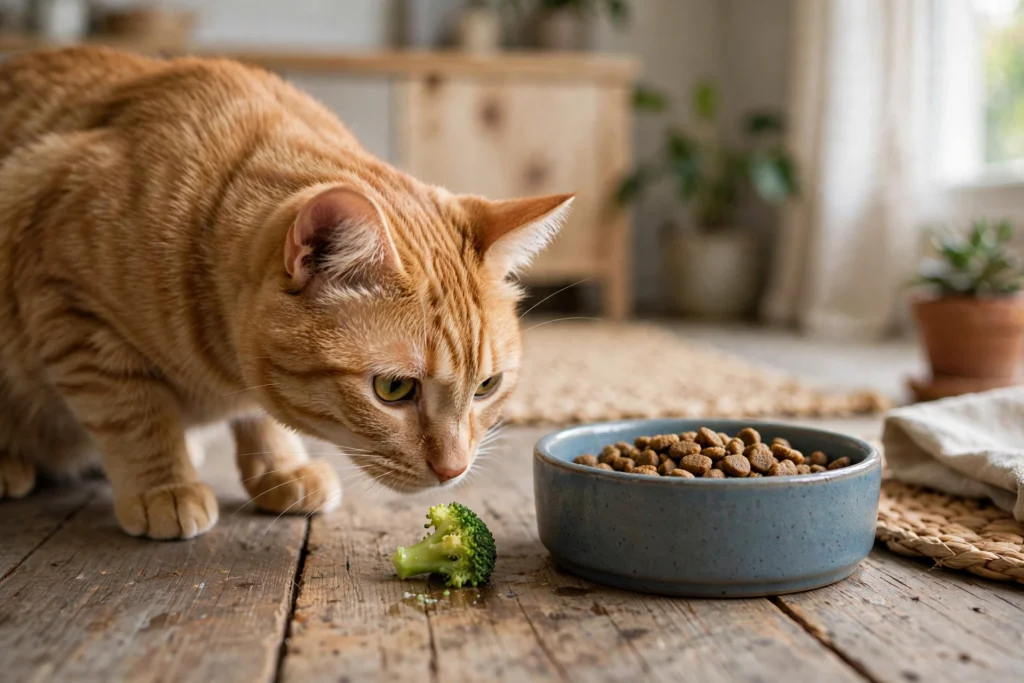

Yes, cats can eat broccoli. It is non-toxic to cats and safe in small amounts, as long as it is served plain and cooked. Broccoli will never be an important part of a cat’s diet — cats are meat eaters by design — but as an occasional little treat, it does a cat no harm and can even offer a small amount of fiber and antioxidants.
This guide explains why broccoli is safe, what benefits it can and cannot offer, the risks to watch for, and exactly how to prepare and serve it. You will also find portion guidance and a short list of other vegetables that are safe to share.
Is broccoli safe for cats?
Yes. Broccoli contains nothing that poisons cats. It does not appear on the toxic side of the ASPCA’s toxic and non-toxic plants list, and PetMD confirms that because broccoli is not toxic, it is safe for cats to eat in small amounts.
That puts broccoli in a very different group from vegetables like onion, garlic, leeks, and chives. Those allium plants damage a cat’s red blood cells and are genuinely dangerous, even in powder form in cooked food. Broccoli has no such compounds.
Safe, however, does not mean unlimited. The ASPCA itself points out that eating any plant material can give cats an upset stomach, and that is exactly the main issue with broccoli: not poison, but digestion. Served the right way and in the right amount, most cats handle it without any trouble at all.
Why broccoli should only ever be a treat
Cats are obligate carnivores. That means their bodies are designed to run on animal protein and fat, and they must get certain nutrients — such as taurine, vitamin A in its ready-made form, and arachidonic acid — from meat, because they cannot make enough of them from plant foods.
Broccoli cannot meet any of those needs. A cat’s digestive system is also short and built for meat, so vegetables pass through without giving up much of their nutrition. In practice, broccoli is something a cat eats because it is interesting, crunchy, or smells good to them — some cats are oddly fond of chewing green things — not because their body needs it.
So the rule is simple: broccoli is a snack, not a food group. Treats of all kinds should make up only a small part of what a cat eats each day, with the rest being a complete and balanced cat food. If your cat turns its nose up at broccoli, that is completely fine too. Nothing is missing from its diet because it skipped a vegetable.
Are there any benefits of broccoli for cats?
Broccoli does bring a few mild positives to the bowl, as long as expectations stay realistic:
- Fiber. Broccoli is rich in fiber, and a small amount can help keep things moving through the digestive system. PetMD notes that the fiber may help normalize stool in a cat with mild constipation or loose stools.
- Antioxidants. Broccoli contains antioxidants that help protect cells from damage. These are a nice bonus in a treat, though the benefits quoted for people have not been directly proven in cats.
- Vitamins in small amounts. Broccoli carries vitamins C and K and some folate. Cats make their own vitamin C, so this is a bonus rather than a need.
- Low in calories, sugar, and fat. For a cat that begs for a share of your dinner, a tiny piece of plain broccoli is a far better answer than a bite of seasoned, fatty human food.
- Something green to chew. Some cats genuinely enjoy the texture, and chewing a safe vegetable is a much better habit than chewing houseplants, which can be toxic.
Think of these as reasons broccoli is a fine treat, not a reason to start feeding it on purpose as a supplement. A complete cat food already covers your cat’s real nutritional needs.
What are the risks of broccoli for cats?
The risks are few and easy to avoid, but they are worth knowing before you share:
Stomach upset
Too much broccoli at once is the most common problem. The fiber that helps in small amounts causes gas, a gurgly belly, vomiting, or diarrhea when a cat eats more than its meat-adapted gut can handle. Cats with sensitive stomachs react to even less. Start tiny, and stop offering broccoli if you see any of these signs.
Choking and blockage
Raw broccoli stalks are hard and fibrous. A big chunk of stalk or a whole floret can stick in a cat’s throat, and a swallowed chunk that is too large can cause a blockage further down. This is a preparation problem, not a broccoli problem: cooked, small pieces remove almost all of this risk.
What the broccoli was cooked with
Plain broccoli is safe. Dinner broccoli often is not. Butter and oils add fat a cat does not need, cheese upsets many cats’ stomachs, and salt is unhealthy in quantity. The serious dangers are garlic and onion, including garlic or onion powder in sauces and seasoning blends — these are toxic to cats. If the broccoli on your plate touched any of them, do not share it, no matter how hopefully your cat is watching you.
Pesticides on raw vegetables
Wash broccoli thoroughly before serving it, raw or cooked, to rinse off dirt and surface pesticide residue.
How to serve broccoli to a cat
Follow these steps and broccoli becomes about as safe as a cat treat gets:
- Wash it well under running water.
- Steam or boil it plain until it is soft. No salt, no oil, no butter, no garlic, no sauce. Steaming softens the vegetable while keeping most of its nutrients, and cooked broccoli is much easier for a cat to digest than raw.
- Let it cool to room temperature. Hot food can burn a cat’s mouth.
- Cut it small. Use the soft floret tops and cut them into pieces no bigger than a pea. Skip the thick stalk, or cook it until very soft and chop it finely.
- Offer a tiny first taste. One small piece, then wait and watch over the next day for vomiting, diarrhea, or gas before offering more.
- Keep it an occasional treat. Once or twice a week at most, and only for cats that actually enjoy it.
Can cats eat raw broccoli? A nibble of raw floret will not poison your cat, and some cats like the crunch. But raw broccoli is harder to digest and the firm texture raises the choking risk, so cooked is the better default. If you do offer it raw, wash it and cut it very small.
How much broccoli can a cat eat?
Portion size is where most owners go wrong, because a “small piece” for a person is a big serving for a 4-kilo cat. PetMD’s guidance is a good yardstick: start with a piece about the size of your pinky nail. If your cat eats it happily and shows no stomach upset over the following day, you can build up to a thumb-sized amount, cut into smaller pieces, once or twice a week.
As a rough picture of a sensible serving:
| Cat | Sensible broccoli serving |
|---|---|
| First taste, any cat | One piece the size of your pinky nail |
| Average adult cat | A thumb-sized amount of soft floret, chopped small, once or twice a week |
| Kitten | Best skipped, or a single tiny soft piece occasionally once weaned and eating solid food well |
Treats, including broccoli and everything else you share, should stay under roughly a tenth of your cat’s daily calories. If your cat is overweight, diabetic, or on a special diet for kidney or stomach problems, ask your vet before adding any new food, broccoli included.
What other vegetables can cats eat?
If your cat enjoys a little vegetable treat, these are also generally safe when cooked plain and cut small:
- Peas — a few at a time, cooked and plain.
- Green beans — steamed and chopped.
- Carrots — cooked until soft and cut tiny; raw carrot is hard and a choking risk.
- Pumpkin — plain cooked pumpkin or puree (never pumpkin pie filling) is a classic vet suggestion for mild stool problems, thanks to its fiber.
- Zucchini and courgette — cooked and chopped.
- Sweet potato — cooked until soft, in small amounts.
And the vegetables to never feed a cat: onion, garlic, chives, leeks, and shallots in any form, including powders. These damage red blood cells and can cause anemia. When in doubt about any food, check a trusted source or ask your vet before offering it — a two-minute check is always better than guessing.
When should you call the vet?
Broccoli rarely causes real trouble, but call your vet if you notice any of the following after your cat eats it (or anything new):
- Vomiting or diarrhea that continues beyond a day, or that keeps coming back.
- Coughing, gagging, drooling, or pawing at the mouth during or after eating. These can be signs something is stuck, and trouble breathing is always an emergency.
- Your cat stops eating altogether. A cat that turns down a new vegetable is normal, but refusing its regular food is not — if that lasts more than 24 hours, read our guide on why a cat won’t eat and book a vet visit.
- Signs of an allergic-type reaction, such as facial swelling, hives, or intense itching. These are rare with food, but they need prompt care.
If you know or suspect your cat ate broccoli cooked with garlic or onion, call your vet or a poison helpline straight away rather than waiting for symptoms, because red blood cell damage can take a day or two to show.
Conclusion
Cats can eat broccoli, and it is safe: non-toxic, low in calories, and a source of fiber and antioxidants in small amounts. It is a treat, not a food — cats are obligate carnivores, and everything they truly need comes from a complete meat-based diet. Serve broccoli steamed, plain, cooled, and chopped small, keep portions to about a thumbnail-sized piece once or twice a week, and keep it away from garlic, onion, butter, and sauces. Do that, and sharing a little broccoli with a curious cat is perfectly fine.
Frequently asked questions
Can cats eat raw broccoli?
They can, and a small nibble will not harm them. Raw broccoli is harder for a cat to digest than cooked, though, and firm raw pieces — especially stalk — are a choking risk. Steamed and chopped small is the safer way to serve it.
Can kittens eat broccoli?
A tiny piece of soft, cooked broccoli will not hurt a weaned kitten that is eating solid food well, but kittens grow fast and need every bite to count toward nutrition. Kitten food serves them far better, so treat broccoli as an occasional nibble at most, or skip it until they are grown.
Can cats eat broccoli stems and stalks?
The stalk is the part to be careful with. It is tough and fibrous, so raw stalk pieces are the main choking and blockage risk. If you serve stalk at all, cook it until very soft and chop it finely. The soft floret tops are the better choice.
Is broccoli good for a constipated cat?
It can help a little, because the fiber adds bulk that helps stool move along, and vets often suggest fiber for mild constipation. A spoonful of plain pumpkin puree is the more common recommendation. If constipation keeps happening, or your cat is straining and producing nothing, that needs a vet, not a vegetable.
What happens if my cat eats a lot of broccoli?
Most likely, a gassy, uncomfortable stomach, possibly followed by vomiting or diarrhea. These signs usually pass within a day once the broccoli does. If they last longer than 24 hours, your cat seems in pain, or your cat stops eating, call your vet.
Can cats eat frozen broccoli?
Yes, once it is cooked. Thaw it, steam or boil it plain until soft, let it cool, and chop it small — exactly as you would with fresh. Do not serve it frozen solid, which is hard, cold, and difficult to chew safely.


Pingback: Can Cats Have Coconut Oil? Benefits, Risks and Dosage