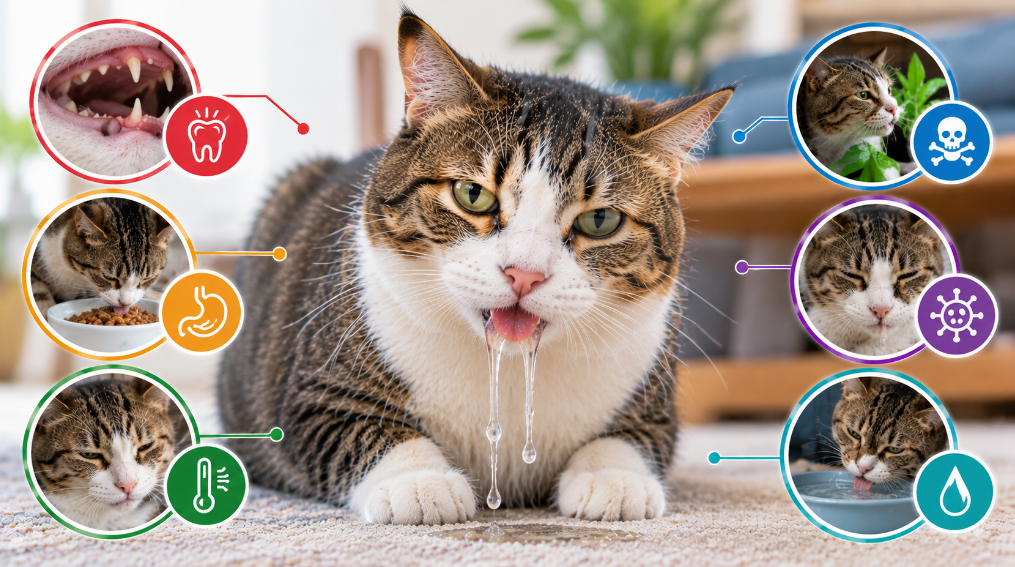

A little drool from a relaxed cat is normal. Heavy, sudden, or constant drooling is not. In most cases it points to a sore mouth, an upset stomach, a toxin, heat stress, or a problem with swallowing, and your cat needs to see a vet.
The medical word for too much saliva is ptyalism. It has two basic causes. Either the body makes more saliva than usual, or the cat can’t swallow the saliva it makes, so it pools and spills out.
This guide covers the common causes, the signs that mean an emergency, what you can safely check at home, and what to expect at the clinic.
Is it normal for a cat to drool?
Yes, in some situations. Many cats drool when they feel deeply relaxed. You might see it while you pet them, while they knead a blanket, or while they sleep. A treat or a tasty smell can also make the mouth water for a moment.
Happy drool has a clear pattern. It is small, it comes with calm body language like purring and slow blinking, and it stops soon after. Your cat eats, drinks, and acts like themselves the rest of the day.
Drooling becomes a problem when that pattern breaks. Watch for drool that is heavy, lasts more than a few minutes, starts out of nowhere, or comes with other changes. Wet fur on the chin or chest, a damp spot where your cat sleeps, and saliva that smells bad or looks pink all count.
When is cat drooling an emergency?
Call a vet right away, or go to an emergency clinic, if your cat is drooling and any of these are true:
- Your cat may have chewed a plant, licked a chemical, or touched a flea product made for dogs.
- You see tremors, twitching, stumbling, or seizures.
- Your cat is panting or breathing with its mouth open. Cats rarely pant, so this is a warning sign.
- It is very hot, and your cat is drooling, weak, or restless.
- Your cat is limp, confused, or hard to wake.
- Your cat has stopped eating or drinking.
- Your cat paws at its mouth and won’t let you near it.
Know this one plant by name. True lilies and daylilies can cause sudden kidney failure in cats. A leaf, a petal, pollen, or even the water in the vase is enough. Waiting more than 18 hours often leads to kidney failure, so call before any signs show.
What causes a cat to salivate so much?
These are the most common causes, starting with the ones vets see most.
Mouth and tooth problems
Gum disease is the most common mouth problem in cats, and it is a leading reason for drooling. Between 50 and 90 percent of cats older than four have some form of dental disease. Tooth resorption, where a tooth slowly breaks down from the inside, affects roughly 30 to 70 percent of cats and can be very painful.
Pain is the link. A sore mouth makes swallowing hurt, so saliva builds up and runs out instead of going down. Mouth sores and inflamed gums can also push the glands to make more of it.
Other mouth problems cause the same sign:
- Stomatitis, a deep and painful swelling of the gums and throat. Cats with it may cry out when they open their mouth, or hiss and run from food they want.
- Mouth sores from viruses such as feline calicivirus and feline herpesvirus.
- A string or thread caught under the tongue.
- Burns from chewing an electrical cord.
- Growths in the mouth. Squamous cell carcinoma is the most common cancerous one.
Clues that the trouble is in the mouth include bad breath, pawing at the face, chewing on one side, tilting the head while eating, and saliva with a pink tint. Cats hide pain well, so the first thing you notice may be a messy chin instead of any cry or limp.
Nausea and an upset stomach
Cats drool when they feel sick to their stomach, often just before they vomit. Motion sickness on a car ride is a classic case. Stomach and bowel inflammation can do it too, as can a hairball or something swallowed that irritates the throat. If your cat also vomits, hides, or skips meals, nausea is a likely cause. A cat that stops eating can develop a serious liver condition called hepatic lipidosis, and drooling can be one of its signs.
Poisons, chemicals, and bitter tastes
Many toxins make a cat drool. Some taste awful, some burn the mouth, and some affect the nerves.
- Dog flea products with permethrin. Dog-strength spot-ons hold 45 to 60 percent permethrin, while cat-safe products hold under 0.1 percent. Cats can’t break permethrin down well, so even close contact with a recently treated dog can cause drooling, tremors, and seizures. Never put a dog product on a cat.
- Lilies. Vomiting comes first, and kidney failure follows if the cat isn’t treated.
- Peace lilies and calla lilies. Their crystals irritate the mouth and cause drooling, usually mild. Still call your vet.
- Cleaning products and other chemicals, which can burn the mouth and tongue.
- Medicine. Many pills and liquids taste bitter, and cats often drool after a dose.
If you think your cat was exposed to a poison, bring the packaging or a photo of the plant. Don’t try to make your cat vomit unless a vet tells you to.
Stress and fear
Fear, nervousness, and excitement can all trigger drool. A car ride, a vet visit, or a loud guest can start it. This kind of drool fades within minutes once your cat calms down. If it goes on after your cat settles, look for another cause.
Heat stress
Drooling and heavy panting are early signs of heatstroke, which can turn life-threatening fast. Move your cat to a cool, shaded room, offer cool (not ice-cold) water, and call a vet. Heatstroke needs professional care even if your cat seems to bounce back.
Infections and organ disease
Feline calicivirus causes both breathing infections and mouth disease, and it spreads easily in shelters and homes with several cats. Kidney failure and liver disease can also bring on drooling.
Rabies is the most serious cause of excessive drooling, which is why a vet rules it out first. Vaccination protects your cat. If your cat is unvaccinated and goes outside, or has been bitten by another animal, tell your vet right away. Rabies can spread to people through saliva, so avoid touching the drool of a cat that may have been exposed.
Trouble swallowing
Sometimes a cat makes a normal amount of saliva but can’t swallow it. Throat pain, swollen tonsils, a blockage in the food pipe, or a growth can all cause this. A salivary mucocele, a pocket of saliva that collects under the skin after a gland or duct is damaged, is less common. It shows up as a soft, painless swelling on the neck or under the tongue.
When is it safe to wait and watch?
If the drool lasts only a few minutes, has an obvious trigger like a pill, a car ride, or a scare, and your cat eats, drinks, and acts normal afterward, you can usually watch at home and mention it at the next check-up.
Book a same-day visit if the drooling comes back, runs for more than a few hours, or shows up with bad breath, weight loss, vomiting, or a drop in appetite. When you can’t tell which group your cat falls into, call your vet. A short phone call costs far less than a missed emergency.
What do the extra clues mean?
Drooling is a sign, not a diagnosis. The other signs that come with it narrow things down.
| What you see | Likely cause | What to do |
| Bad breath, pawing at the mouth, chewing on one side | Dental disease, mouth sores, stomatitis | Book a vet exam soon, and same day if your cat won’t eat |
| Vomiting, lip licking, hiding | Nausea or stomach upset | Call your vet if it repeats or your cat refuses food |
| Tremors, twitching, stumbling | Poison, including dog flea products | Emergency. Go now |
| Heavy panting, weakness, hot room | Heatstroke | Emergency. Cool gently and go now |
| Sneezing, watery eyes, nasal discharge | Viral infection with mouth sores | Vet visit |
| Drool only after a pill, a car ride, or a scare | Bitter taste, motion sickness, stress | Watch closely. Tell your vet if it repeats |
| Soft lump on the neck or under the tongue | Salivary mucocele | Vet visit |
What can you check at home?
You can learn a lot in a few minutes if your cat stays calm and you stay safe.
- Think back. When did the drooling start? Did your cat get a new plant, product, medicine, or treat? Was there a car ride, a hot room, or a chewed cord?
- Look at the face. Check the chin and chest for wet fur, and the lips for swelling or blood.
- Peek inside the mouth only if your cat allows it. Lift the lip gently and look at the gums and teeth. Red gums, brown tartar, or a broken tooth are worth noting. Never force the mouth open or push fingers inside. A cat in pain can bite hard.
- Check the rest of the picture: eating, drinking, vomiting, litter box habits, breathing, and energy.
- Take photos or a short video, and bring the packaging for any product your cat touched.
Wipe your cat’s chin dry with a soft cloth so the skin doesn’t get sore. Skip home remedies, and never give human painkillers. Many are dangerous to cats.
What will the vet do?
Expect questions first. The vet will ask about the timeline, diet, medicines, plants, products, and vaccines. Then comes a full exam with a careful look inside the mouth. Many cats need light sedation for this, because a sore mouth hurts too much to check while awake.
Next steps can include blood and urine tests to check the kidneys and liver, X-rays of the teeth or chest, and a biopsy of any growth.
Treatment follows the cause. Dental disease may need a cleaning and tooth removal. Cats eat well without teeth, and when stomatitis is treated early, extractions help 60 to 80 percent of cats. Poisoning is treated with decontamination, fluids, and medicine to control tremors. Infections get supportive care and antibiotics when needed. Nausea is treated with anti-nausea medicine plus care for whatever is behind it.
Cats with a sore mouth often need soft or liquid food for a while, and some need fluids if they refuse to eat or drink. Ask your vet how long to keep that up, and what signs mean you should call again.
How can you prevent drooling problems?
- Brush your cat’s teeth with toothpaste made for cats. Human toothpaste can be toxic. Book regular check-ups that include a mouth exam.
- Use only flea products labeled for cats, and keep cats away from dogs treated with permethrin until the product is fully dry.
- Keep true lilies and daylilies out of your home and garden.
- Give your cat fresh water, shade, and a cool room when the weather is hot.
- Keep cords, string, and thread out of reach.
- Keep vaccines up to date.
Make a quick mouth check part of your routine. Once a week, lift your cat’s lip and look at the gums. Pink and smooth is healthy. Red lines, swelling, or a bad smell is a reason to book an exam before drooling ever starts.
Conclusion
A little drool from a calm, content cat is normal. Heavy, sudden, or lasting drool means something is wrong, most often in the mouth or stomach, or after contact with a toxin or too much heat. Treat tremors, panting, or possible poison exposure as emergencies. For everything else, book a vet visit soon, note what you see, and skip home fixes. Early care usually means simpler treatment and a faster recovery.
Frequently asked questions
Is it normal for a cat to drool when petted?
Yes. Many relaxed cats drool a little while being petted, kneading, or sleeping. It should be small, brief, and paired with calm body language like purring. If the drool is heavy, lasts a long time, or comes with other changes, see a vet.
Why is my cat drooling and not eating?
A cat that drools and refuses food most often has a painful mouth, such as gum disease, a damaged tooth, or mouth sores. Nausea is the other common cause. A cat that skips meals for more than a day needs a vet visit.
Can stress make a cat salivate?
Yes. Fear, nervousness, and excitement can trigger drooling, and so can motion sickness. It usually stops within minutes after your cat settles. If it keeps going once your cat is calm, look for another cause and call your vet.
Why is my cat drooling and shaking?
Drooling with tremors, twitching, or stumbling can point to poisoning, including contact with dog flea products that contain permethrin. Treat it as an emergency. Go to a vet right away, and bring the product label or plant if you can.
Can I treat my cat’s drooling at home?
Not safely. Drooling is a sign, not a diagnosis, and the cause decides the treatment. You can wipe your cat’s chin dry, keep your cat cool and calm, and note what you see. Then let your vet find the cause.
Related Articles
Why Won’t My Cat Eat? Causes and What to Do
Why Is My Cat Limping? Causes and When to See a Vet

Pingback: What Smells Do Cats Hate? 12 Scents Cats Can't Stand