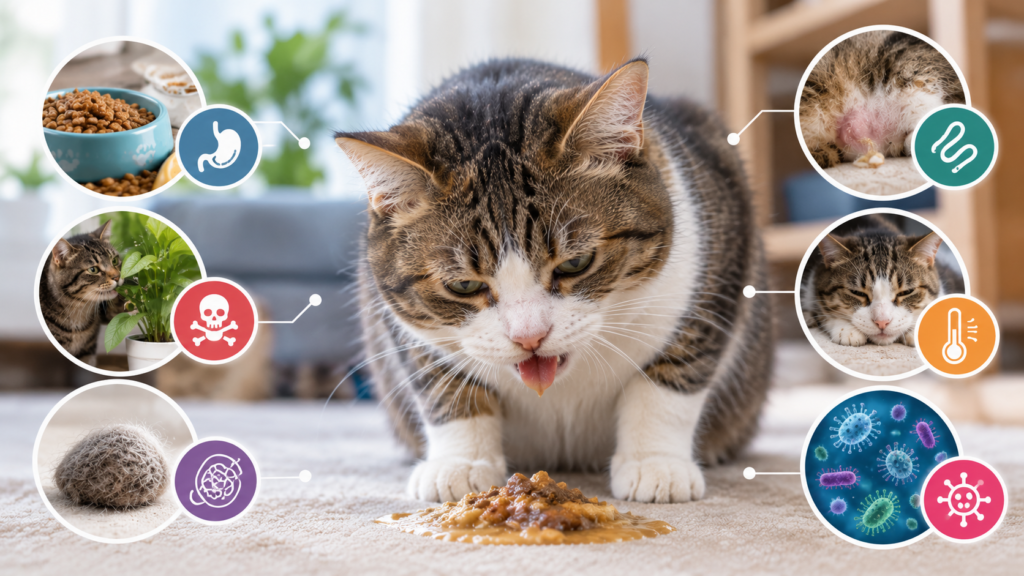

Your cat may have thrown up because of a hairball, eating too quickly, a sudden change in food, or mild stomach irritation. However, vomiting can also be a sign of parasites, a swallowed object, poisoning, or an illness affecting the kidneys, liver, thyroid, or digestive tract. The most useful clues are how often it happens, what your cat brings up, and whether your cat is acting normally afterward.
One isolated episode in a cat that quickly returns to normal may not be an emergency. Repeated vomiting, blood, weakness, pain, or an inability to keep water down needs prompt veterinary advice.
Why did my cat throw up?
Cats vomit for several reasons, and the cause can range from a minor upset to a condition that needs treatment. Common possibilities include hairballs, eating too fast, dietary changes, food intolerance, parasites, infection, toxins, or a blockage in the digestive tract.
Hairballs
Cats swallow loose fur while grooming. Most of it passes through the digestive system, but some hair can collect in the stomach and come back up as a damp, narrow clump. An occasional hairball can happen, especially in long-haired cats or cats that groom often.
Repeated retching without producing a hairball is more concerning. A hairball can sometimes contribute to an intestinal blockage, and frequent episodes may point to another problem rather than routine grooming. If hairballs are happening often, ask your veterinarian about grooming and diet options.
Eating too quickly or too much
Some cats gulp food, then vomit soon after a meal. A large portion can also upset the stomach. If your cat seems well and this happens only once, try smaller, measured meals and consider a slow-feeder bowl. Keep track of whether the problem continues despite these changes.
A sudden food change or something unusual eaten
Changing food abruptly can upset a cat’s digestive system. Table scraps, spoiled food, plants, insects, or something picked up from the floor may also trigger vomiting. Food intolerance or an allergy can cause recurring digestive symptoms in some cats.
If you recently changed your cat’s food, tell your vet what changed and when. When a diet change is appropriate, it is often easier on the stomach to introduce the new food gradually, unless your veterinarian advises otherwise.
Parasites, infection, or digestive disease
Intestinal parasites and infections can cause vomiting, sometimes alongside diarrhea, poor appetite, or weight loss. Longer-term digestive conditions, including inflammatory bowel disease, may cause repeated vomiting or changes in appetite and weight.
Vomiting can also occur with pancreatitis and other disorders. These problems cannot be reliably distinguished at home by looking at the vomit, so recurring symptoms deserve an examination.
An obstruction or toxin exposure
Cats may swallow string, ribbon, thread, small toys, rubber bands, or other objects that can become stuck in the digestive tract. Some plants, household chemicals, human medicines, and certain foods are poisonous to cats. These situations can become life-threatening.
If you suspect your cat swallowed an object or came into contact with a toxin, contact a veterinarian immediately. Do not pull on string that is hanging from your cat’s mouth or rear, and do not try to make your cat vomit unless a veterinarian specifically instructs you to.
Illness elsewhere in the body
Kidney disease, liver disease, diabetes, and an overactive thyroid can cause vomiting, particularly in older cats. Increased thirst, changes in urination, weight loss, a change in appetite, or low energy may offer additional clues. These signs are a reason to arrange veterinary care rather than treating the vomiting as an isolated stomach problem.
What does the color or texture of cat vomit mean?
The appearance of vomit can provide useful information, but it cannot confirm the cause by itself. Food, bile, hair, and blood may look different, and several conditions can produce similar-looking vomit.
| Appearance | What it may mean |
| Undigested food | Eating too quickly, overeating, or vomiting soon after a meal |
| Hair or a narrow fur clump | A hairball |
| Clear fluid or white foam | Stomach fluid, saliva, or vomiting when the stomach is relatively empty |
| Yellow fluid | Bile may be present, but color alone does not identify the cause |
| Green material | May involve bile or something eaten, including plant material |
| Red blood or dark, coffee-ground-like material | Possible bleeding that needs urgent veterinary assessment |
| Worm-like material | Possible intestinal parasites; contact your vet |
Do not rely on color alone to decide that your cat is safe. A cat that vomits yellow fluid repeatedly, for example, still needs attention, especially if appetite or behavior has changed. Take a photo of the vomit if you can do so safely, and note when it happened and what your cat had eaten.
Is my cat vomiting or just bringing food back up?
Vomiting usually involves effort. Your cat may seem nauseated, lick their lips, drool, retch, and contract their belly before bringing up food or fluid. The material may be partly digested.
Regurgitation is often more passive and happens soon after eating or drinking. Food may come back up with little warning and look relatively undigested, sometimes in a tube-like shape. Coughing can also look like retching, but it may involve a stretched neck and a cough rather than forceful abdominal contractions.
The difference matters because the causes and tests can differ. If you are unsure what you saw, record a short video of an episode if it is safe and show it to your veterinarian. Do not delay care to get a video if your cat appears unwell.
When should I take my cat to the vet for vomiting?
Seek emergency veterinary care if your cat vomits repeatedly over a short period, cannot keep water down, has blood in the vomit, seems very weak, collapses, has trouble breathing, or appears to have a painful or swollen abdomen. Suspected poisoning or swallowing a foreign object also needs immediate advice, even if your cat seems normal at first.
Contact a veterinarian promptly if vomiting occurs with diarrhea, reduced appetite, unusual tiredness, dehydration, weight loss, changes in thirst or urination, or repeated unproductive retching. Kittens, senior cats, and cats with existing health conditions can become unwell more quickly and should be assessed with a lower threshold for concern.
Even if your cat otherwise seems fine, recurring vomiting should not be treated as normal. Cornell’s Feline Health Center advises prompt evaluation when vomiting happens more often than once a week or appears with signs such as weakness, reduced appetite, blood, or changes in thirst or urination. You can read its guidance on vomiting in cats (Read Guide).
What should I do after my cat throws up once?
If your adult cat has vomited once and is alert, comfortable, and behaving normally, monitor them closely. Make sure they have access to fresh water, but do not force them to drink. Once their stomach has settled, offer a small amount of their usual food if they want it, unless your veterinarian has advised a different plan.
Avoid giving a large meal straight away, introducing new foods, or offering rich table scraps. Do not give human medicines or over-the-counter anti-vomiting products unless a veterinarian tells you to. Some human medicines are dangerous to cats, and home treatment can delay care for a serious cause.
Watch for another episode and note your cat’s appetite, energy, drinking, urination, and bowel movements. If vomiting returns or your cat develops other symptoms, call your vet. If you suspect a toxin, a plant such as a lily, or a swallowed object, do not wait to see whether the problem passes.
For possible poisoning, Cornell’s guide to common cat hazards explains why prompt veterinary advice matters. Do not induce vomiting unless a veterinary professional specifically directs you to do so.
How will a veterinarian find out why my cat threw up?
Your veterinarian will ask how often the vomiting has occurred, when it began, what the material looked like, whether your cat can eat and drink, and whether anything in the home or diet has changed. Bring details about medicines, treats, plants, cleaning products, and possible access to string or small objects.
The vet will examine your cat and may recommend tests based on the symptoms and medical history. These can include blood tests, urine tests, stool testing for parasites, X-rays, or ultrasound. Imaging may help identify a foreign object or other problem inside the abdomen.
Treatment depends on the cause. Some cats need fluids and medicine to control nausea, while others need parasite treatment, a diet plan, care for an underlying disease, or removal of an obstruction. Never give leftover medicine from another pet, because the right treatment depends on what is causing the vomiting.
How can I help prevent my cat from throwing up?
You cannot prevent every episode, but a few habits may reduce common triggers. Brush your cat regularly to remove loose fur, particularly during heavy shedding. Feed measured portions, use a slow feeder if your cat gulps meals, and make diet changes gradually when possible.
Keep rubbish, string, ribbon, small toys, medicines, chemicals, and unsafe plants out of reach. Store food properly and avoid feeding scraps that may upset your cat or contain unsafe ingredients. Keep routine veterinary visits and parasite prevention up to date.
If vomiting keeps happening, do not rely on hairball products or diet changes alone. A simple log of dates, meals, vomit appearance, and other symptoms can help your veterinarian identify a pattern.
Conclusion
Your cat may have thrown up because of a hairball, fast eating, a food change, or stomach irritation, but repeated vomiting can signal a more serious problem. If your cat is bright and normal after one episode, monitor closely and offer water without forcing it. Seek prompt veterinary help for repeated vomiting, blood, weakness, pain, appetite changes, or possible toxin or object ingestion. When in doubt, call your vet for advice.
Frequently asked questions
Should I worry if my cat throws up once?
Not always. A single episode in a cat that quickly returns to normal may be minor. Watch for repeat vomiting or other symptoms, such as low energy, poor appetite, diarrhea, or pain. If any warning signs appear, contact your veterinarian.
Why is my cat throwing up undigested food?
Undigested food may come up when a cat eats too quickly, eats too much, or regurgitates soon after a meal. If it happens repeatedly, or your cat has other symptoms, a veterinarian should check for digestive or esophageal problems.
Is yellow cat vomit dangerous?
Yellow vomit may contain bile, but the color alone cannot tell you why your cat is sick. Repeated yellow vomiting, or yellow vomit with weakness, pain, appetite loss, or diarrhea, warrants prompt veterinary advice.
Can stress make a cat throw up?
Stress may affect a cat’s appetite and digestion, but vomiting should not automatically be blamed on stress. If it repeats or occurs with other changes in behavior, eating, or litter-box habits, ask your veterinarian to assess your cat.
Should I withhold food after my cat vomits?
Do not put a cat on a prolonged fast without veterinary advice, especially if the cat is young, elderly, diabetic, or already unwell. If your cat is otherwise normal after one episode, offer a small amount of usual food once settled and contact your vet if vomiting returns.
Related Articles
Why Are My Cat’s Ears Hot? Causes & Warning Signs
Why Is My Cat Breathing Fast? Causes and When to Worry

Pingback: Is It Normal for Cats to Throw Up? When to Worry
Pingback: Why Won't My Cat Eat? Causes and What to Do