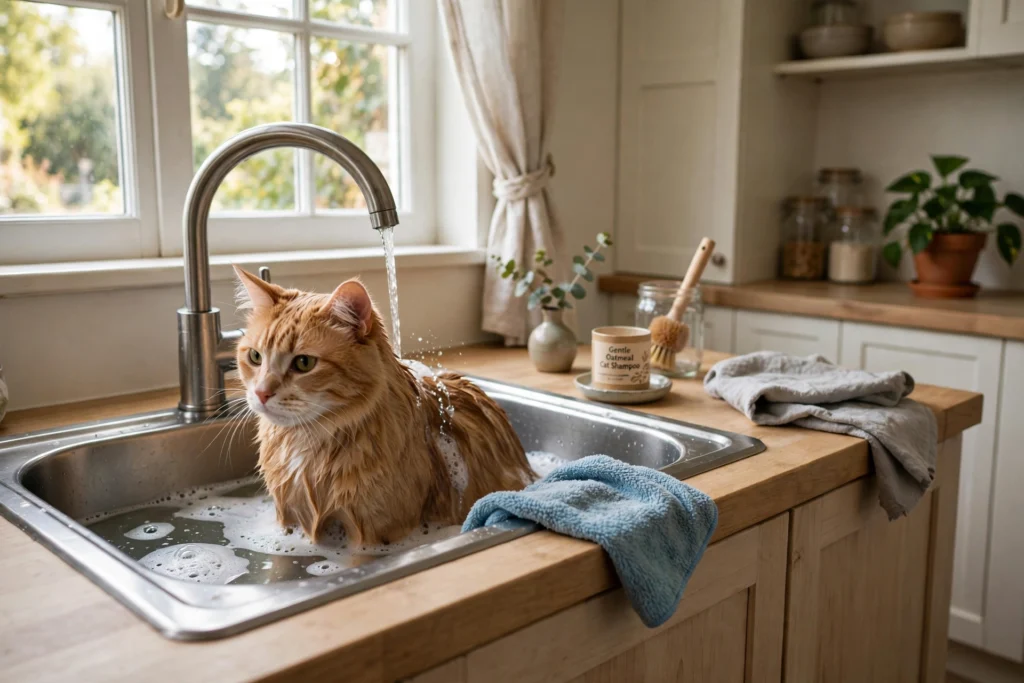

For most healthy cats, the answer is no. Cats are expert self-groomers, and a normal indoor cat may go its whole life without ever needing a full bath. Bathing becomes necessary only in specific situations: something harmful or sticky on the coat, a flea problem, a skin condition your vet is treating, or a cat that can no longer groom itself properly.
This guide explains when a bath is genuinely needed, how often you can safely bathe a cat, which shampoos are safe (and which are dangerous), and how to wash a cat step by step with as little stress as possible — plus gentler alternatives for cats that cannot tolerate water at all.
Do cats need baths if they groom themselves?
Healthy cats are built to keep themselves clean. Their tongues are covered in tiny barbs that work like a comb, pulling loose fur, dirt, and debris out of the coat, and spreading natural skin oils along each hair. Those oils keep the coat smooth, water-resistant, and in good condition.
That is why vets say most cats do not need routine bathing. As PetMD puts it, cats need to be bathed only in certain circumstances, such as getting into something messy or having a medical issue that calls for it. Bathing too often can actually cause problems, because shampoo strips away the natural oils and can leave the skin dry, flaky, and itchy. There is also the stress factor: most cats dislike water, so a bath should always have a real reason behind it.
When does a cat actually need a bath?
A bath is the right call when grooming alone cannot solve the problem, or when licking the problem off would be worse than washing it off:
| Situation | Why a bath helps |
|---|---|
| Something toxic or sticky on the coat | Paint, oil, glue, tar, or household chemicals must come off before your cat licks and swallows them. For anything poisonous, call your vet first for advice. |
| A flea infestation | A cat-safe flea shampoo kills fleas on the body and gives a heavily infested cat fast relief, alongside proper flea treatment. |
| Ringworm or a skin infection | Medicated baths are part of the treatment. Your vet prescribes the shampoo and the schedule. |
| Hairless breeds | Sphynx and similar breeds have no fur to soak up skin oils, so oils and dirt build up on the skin. They need regular bathing. |
| Senior, arthritic, or overweight cats | A cat that cannot twist around to reach its back and rear end cannot keep those areas clean. Gentle bathing help keeps the skin healthy. |
| A dirty rear end or soiled coat | Long-haired cats sometimes get feces stuck in the fur, beyond what licking can fix. |
| Allergies in the household | Bathing reduces the loose fur and dander that trigger symptoms in allergic family members, though the effect is short-term. |
If your cat got into something and you are not sure whether it is toxic, do not guess — call your vet before the bath. A cat that has already licked a chemical off its coat may need care even after it looks clean.
How often can you bathe a cat?
For a normal coated cat: only when needed, which might be once or twice a year, or never. If you do bathe regularly for dander control or coat reasons, PetMD’s vets advise avoiding baths more often than every 4 to 6 weeks, because frequent bathing dries out the skin.
There are two exceptions to the “rarely” rule:
- Medicated baths. When a vet prescribes a medicated shampoo for a bacterial or yeast skin infection, or for allergies, the schedule follows the treatment plan, not the general rule. VCA Animal Hospitals notes that medicated baths are often recommended on a weekly basis, and possibly more or less often depending on the condition. Follow your vet’s instructions and the contact time on the bottle, since medicated shampoos usually need several minutes on the coat to work.
- Hairless breeds. A Sphynx typically needs a bath about once a week to keep skin oils from building up and staining bedding and furniture. Use a very gentle shampoo made for cats.
Kittens are a special case. Young kittens chill quickly, so full baths should wait until a kitten is at least 8 weeks old, and only when really needed. Spot-clean a younger kitten with a warm, damp cloth instead.
What shampoo is safe for cats?
Always use a shampoo made specifically for cats. Cat skin is different from human and dog skin, and cats lick whatever is left on their coat, so anything you use must be safe to swallow in small amounts.
Never use human shampoo on a cat. Human skin is more acidic than cat skin, and human shampoos (including baby shampoo) are balanced for that different pH. On a cat they can dry and irritate the skin, and their fragrances and detergents are not made to be licked off and swallowed. Dish soap is no better as a routine wash — it is far too harsh, whatever its emergency de-greasing uses.
Be careful with dog shampoo, too. Some dog shampoos and flea products contain permethrin, an insecticide that is safe for dogs but highly toxic to cats. It can cause tremors, seizures, and even death. Never use a dog flea product on a cat, and keep a freshly treated dog away from your cat until the product is fully dry.
A good cat shampoo is labeled for cats, fragrance-free or lightly scented, free of essential oils (which cats cannot process well), and moisturizing if your cat needs regular baths. Medicated shampoo should be used only when your vet prescribes it. And rinse thoroughly, whatever you use: shampoo left in the coat irritates the skin, attracts dirt, and will be licked off later.
How to bathe a cat safely, step by step
Most of a successful cat bath is preparation. Once the water is running is the wrong time to discover the towel is in another room.
Before you start:
- Trim your cat’s nails a day or two beforehand, not right before the bath.
- Brush the coat to remove loose fur and tangles. Mats tighten in water and become much harder to remove.
- Gather everything within reach: cat shampoo, a cup or jug for rinsing, a non-slip mat, a damp washcloth, and two large towels.
- Put lukewarm water in the sink or tub before bringing the cat in, so the noise of running water does not frighten them. A few inches is enough. The water should feel comfortably warm on the inside of your wrist, never hot.
The bath itself:
- Lower your cat in gently. Talk calmly and let them stand on the non-slip mat. Many cats feel safer in the smaller space of a sink.
- Wet the coat. Pour water over the body with the cup, starting behind the ears and working toward the tail. Keep water off the head and out of the ears.
- Shampoo from the neck down. Massage a small amount of cat shampoo through the coat down to the skin. For a very dirty or greasy coat, a second lather after rinsing the first is normal.
- Leave the face to the washcloth. Clean the face and around the eyes with the damp washcloth and plain water. Never dunk your cat’s head or spray its face.
- Rinse, then rinse again. Pour clean lukewarm water over the coat until it runs completely clear. Leftover shampoo is the most common cause of post-bath itching.
- Dry straight away. Wrap your cat in a towel and pat gently until the coat is as dry as you can get it, then let them finish in a warm, draft-free room. A hairdryer is fine only if your cat tolerates the noise, on the lowest, coolest setting.
- Reward your cat. Treats, praise, and play once they have calmed down help the next bath go a little easier.
Work steadily rather than fast, and keep one hand on your cat so they do not make a sudden leap. If your cat is panicking or likely to injure you or itself, stop — a dirty cat can wait, and a professional groomer or your vet clinic can do the bath instead.
One more thing: a bath is stressful enough that some cats hide and skip a meal afterward. That is normal for a few hours, but if your cat is still refusing food the next day, read our guide on why a cat won’t eat and call your vet if it continues.
What if your cat hates baths? Gentler alternatives
For light dirt or a cat that truly cannot cope with water, try these first:
- Pet grooming wipes. Cat-safe wipes handle dirty paws, a grubby rear end, and surface dust in seconds, with no water involved.
- Waterless or foam shampoo. These cat-safe products are worked into the coat and toweled or brushed out, freshening the coat without a soak.
- Spot cleaning. For one dirty area — a sticky patch or litter stuck to long rear fur — a warm, damp cloth, or carefully trimming the soiled fur, is often all that is needed.
- Regular brushing. Brushing removes loose fur, dirt, and dander, spreads the skin’s natural oils, and prevents mats. For most cats, brushing once or twice a week makes baths almost unnecessary.
- A professional groomer. Cats that need regular bathing, especially long-haired and hairless breeds, are often calmer with an experienced cat groomer.
What these alternatives cannot do is replace a medically needed bath. If your vet prescribed medicated bathing, the prescription shampoo and its contact time are the treatment — wipes are not a substitute.
When should you call the vet?
Book a visit if you notice any of the following:
- Your cat needs bathing again and again because the coat gets greasy, smelly, or flaky quickly. A change in coat and grooming habits can be an early sign of illness, including thyroid problems, arthritis, or dental pain.
- Red, itchy, or broken skin, bald patches, or a rash after a bath — possibly a reaction to a shampoo ingredient, or the skin condition itself.
- Your cat licked off a chemical, paint, or anything you cannot identify. Call before or instead of bathing, and take the product container with you.
- Tremors, drooling, twitching, or wobbliness after any flea product was used — treat this as an emergency, especially if a dog product was involved.
- A senior cat that has stopped grooming altogether. Losing interest in grooming is a health symptom, not laziness.
Conclusion
Most cats do not need baths at all, because healthy self-grooming does the job better and without the stress. A bath earns its place when something toxic or sticky is on the coat, when fleas or a skin condition need treating, or when age, weight, or arthritis stops a cat grooming properly. Keep routine baths at least 4 to 6 weeks apart, always use a shampoo made for cats — never human shampoo or a dog flea product — and reach for wipes, waterless shampoo, or the brush whenever a full bath is more than the situation needs.
Frequently asked questions
Can I bathe my cat with human shampoo?
No. Human shampoo is made for more acidic human skin, and it dries and irritates cat skin. Its fragrances and detergents are also not safe for a cat to lick off its coat. Always use a shampoo labeled for cats.
Do indoor cats need baths?
Usually not. An indoor cat that grooms normally may never need one, since indoor life removes most of the mud and grime outdoor cats pick up. A bath is only needed for the same specific reasons: something on the coat, a medical treatment, or a cat that cannot groom itself.
Will a bath get rid of fleas?
A bath with a cat-safe flea shampoo kills many of the fleas on the cat at that moment, which is real relief for a heavy infestation. It does not end the problem on its own, because most of the flea life cycle lives in carpets and bedding, not on the cat. Pair the bath with a vet-approved flea treatment and regular bedding washes.
How often should I bathe a Sphynx or hairless cat?
Most hairless cats need a bath roughly once a week, because their skin oils have no fur to absorb them. Use a very gentle cat shampoo, and ask your vet to adjust the schedule if the skin looks dry or irritated.
Can I bathe a kitten?
Yes, from about 8 weeks old, and only when needed. Kittens chill quickly, so use warm water, keep it short, and dry the kitten thoroughly in a warm room. For younger kittens, wipe with a warm, damp cloth instead.
What temperature should the water be for a cat bath?
Lukewarm — comfortably warm on the inside of your wrist, similar to a baby’s bath. Hot water can scald a cat’s thinner skin, while cold water chills them and adds to the stress.


Pingback: Can Cats Eat Broccoli? Safety, Benefits and Portions
Pingback: Why Does My Cat Bite Me Gently? Love Bites, Explained