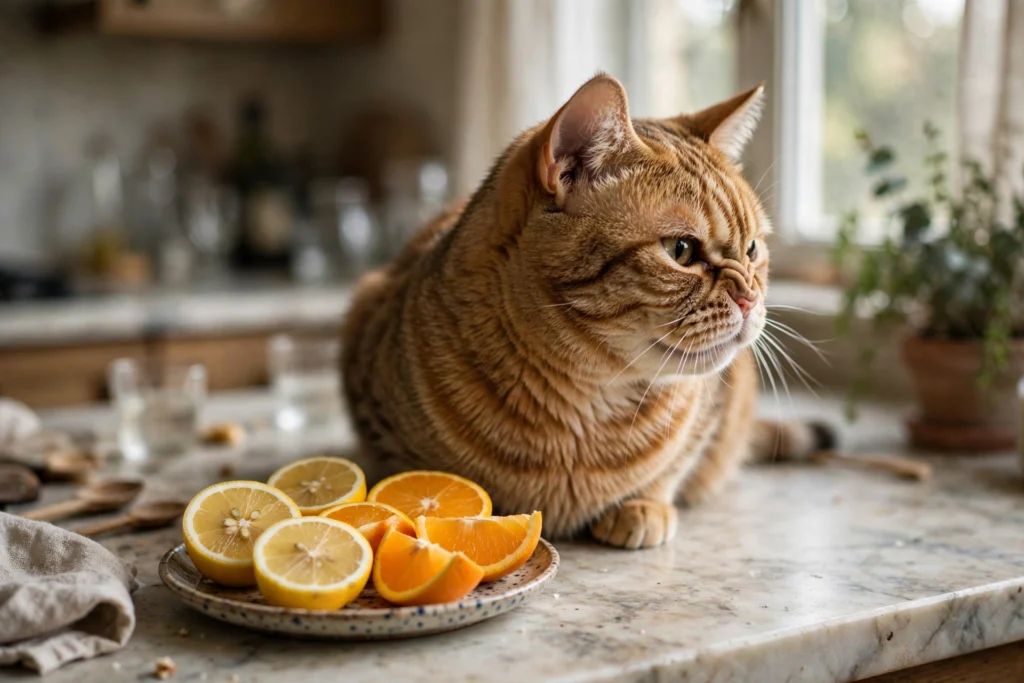

Cats hate citrus more than almost any other smell, followed closely by vinegar, banana, coffee, mint, and strong herbs and spices. A scent that seems mild to you can be overwhelming to a cat, because a cat’s nose is far more sensitive than a human’s.
This guide lists the 12 smells cats dislike most, explains why cats react so strongly to scent, and flags which of these smells are actually dangerous — and which you can safely use to keep a cat away from a plant, a counter, or a piece of furniture.
Why is a cat’s sense of smell so sensitive?
Smell is one of a cat’s main ways of reading the world. Cats have an estimated 200 million scent receptors in their noses, compared with about 5 million in a human nose, and their sense of smell is often described as around 14 times stronger than ours. Newborn kittens, born with their eyes closed, find their mother and her milk by smell alone.
Cats also have a second scent organ, the vomeronasal (Jacobson’s) organ, in the roof of the mouth, which detects pheromones a normal sniff misses. The odd “stink face” a cat makes after smelling something strong, mouth slightly open, is the flehmen response: your cat is drawing the scent toward that organ to analyze it.
This powerful nose decides whether food is safe, whether another animal has passed through, and whether a place feels like home. It also means strong odors can be genuinely stressful for a cat, and some are harmful, which is why the safety section below matters as much as the list itself.
What smells do cats hate?
Every cat has its own preferences, but these are the scents most cats avoid most consistently.
1. Citrus fruits
Lemon, orange, lime, and grapefruit top almost every list of cat-hated smells. The sharp oils in citrus peel hit a cat’s nose hard, and most cats will back away from a freshly peeled orange.
2. Vinegar
The sour, acidic sting of vinegar is too much for most cats, whether it is white vinegar or apple cider vinegar. The smell fades quickly for humans once a surface dries, but your cat will notice it far longer.
3. Banana
Many cats recoil from a ripe banana. The peel of a ripening banana gives off a sweet, chemical-like smell (including a compound called ethyl acetate) that cats seem to find unpleasant.
4. Coffee
Coffee grounds and beans have a strong, bitter aroma that most cats avoid. The dislike is only about the smell, though. Caffeine is toxic to cats, so grounds and beans should always be kept where a cat cannot eat them.
5. Mint and menthol
Peppermint, spearmint, and menthol rubs have a sharp, cooling smell many cats avoid. Catnip is the famous exception, but it is a different plant: its active compound triggers excitement and play, not the nose-wrinkling dislike that menthol causes.
6. Lavender
Lavender smells relaxing to most people, but its strong floral scent is too intense for many cats, and they tend to leave the area. Treat it with care rather than using it freely as a repellent: as the safety section explains, lavender oil in particular is not harmless for cats.
7. Eucalyptus
Eucalyptus has a strong, medicinal smell that cats generally avoid. Like lavender, it belongs on the “hate it, and it can hurt them” list, so it should never be used as a cat deterrent.
8. Cinnamon and strong spices
Cinnamon, cloves, and other strong baking spices overwhelm a cat’s nose. The dry powder can also irritate the airways if a cat sniffs it up close.
9. Rosemary and strong herbs
Rosemary, thyme, and rue have pungent scents many cats avoid, which is why rosemary is often planted where owners want cats to keep away. The plant itself is non-toxic to cats, making it one of the safer options on this list.
10. Chili peppers and mustard
Capsaicin, the compound that makes peppers hot, irritates a cat’s nose, eyes, and skin. Cats hate the smell, but chili and mustard products should never be used as deterrents — anything that works through pain and irritation is not a humane way to keep a cat away.
11. Perfume, cologne, and scented sprays
Heavy fragrances and alcohol-based sprays are a lot for a cat’s nose to process. Many cats leave the room when someone applies perfume or a strongly scented lotion. Never spray perfume or air freshener near a cat, and let applied products dry before cuddling.
12. Cleaning products and chemicals
Bleach, disinfectants, and strong cleaning sprays have harsh chemical fumes that cats hate and instinctively avoid. Keep cats out of the room while you clean, and let surfaces dry and air out before letting your cat back in. If a new cleaning product or air freshener sets off a sneezing fit in your cat, read our guide on why a cat is sneezing a lot to work out whether scent is the cause or something else is going on.
The 12 smells at a glance: safe or toxic?
Hating a smell does not make it safe to use around a cat. Check the last column before using any scent as a deterrent.
| Smell | Why cats hate it | Safe or toxic? |
|---|---|---|
| Citrus (lemon, orange, lime) | Sharp peel oils overwhelm the nose | Smell generally safe; citrus oils toxic; rind can upset the stomach |
| Vinegar | Sour, acidic sting | Safe as a cleaner once dry; never spray it on a cat |
| Banana | Sweet chemical smell of ripe peel | Safe |
| Coffee grounds and beans | Strong, bitter aroma | Smell safe; caffeine toxic if eaten — keep out of reach |
| Mint and menthol | Sharp, cooling scent | Plants low risk; concentrated mint oil toxic |
| Lavender | Intense floral scent | Plant may upset stomach if eaten; oil toxic |
| Eucalyptus | Strong medicinal scent | Toxic — both the plant and the oil |
| Cinnamon and spices | Warm, spicy bite | Scent usually safe; oil toxic; powder irritates airways |
| Rosemary | Pungent herbal scent | Plant is non-toxic; avoid concentrated rosemary oil |
| Chili pepper and mustard | Capsaicin burns the nose | Not safe — irritates eyes, nose, and skin; do not use as a deterrent |
| Perfume and scented sprays | Heavy fragrance and alcohol | Irritating; never spray near a cat |
| Cleaning chemicals and bleach | Harsh chemical fumes | Toxic — never use as a deterrent; store locked away |
Are any of these smells actually dangerous for cats?
Yes — and this is the most important section of this article. A smell a cat hates is not automatically safe to use as a repellent. Some of them can poison a cat.
Essential oils are the biggest risk. They are highly concentrated plant extracts, and cats lack certain liver enzymes needed to break down many of their compounds, so the chemicals can build up in the body. VCA Animal Hospitals lists the oils known to be poisonous to cats, including cinnamon, citrus, pennyroyal, peppermint, pine, sweet birch, tea tree (melaleuca), wintergreen, and ylang ylang. They can harm a cat when licked, absorbed through the skin, or in some cases inhaled, and liquid potpourri can burn the mouth and skin.
The ASPCA warns that essential oils ingested in significant quantities or concentrations can cause stomach upset, central nervous system depression, and even liver damage, and that inhaling the oils can lead to aspiration pneumonia. Their advice: do not use essential oils where your cat has access unless your vet approves.
Practical rules that keep your cat safe:
- Never apply essential oils to your cat’s fur or skin, and never add them to food or water.
- Do not use essential oils, chili products, mothballs, or cleaning chemicals as cat repellents — mothballs are poisonous to cats too.
- If you use a diffuser, keep it in a room your cat can leave freely, run it for short periods, and keep the device where it cannot be knocked over. Cats with breathing problems are better off with no diffuser at all.
- Store oils, potpourri, and cleaners out of reach, in a closed cabinet. A cat that walks through a spill will lick the product off its coat while grooming.
Signs of essential oil or chemical poisoning include drooling, vomiting, pawing at the mouth, redness or burns on the skin or lips, tremors, wobbliness, unusual quietness, and difficulty breathing. If you see any of these after an exposure, treat it as urgent and call your vet straight away.
What can you safely use to keep a cat away from an area?
You do not need strong or risky products. The safest scent deterrents are mild, natural, and used on the place, never on the cat:
- Fresh citrus peels. Leave peels in a dish or a mesh sachet on or near the spot you want protected, and replace them every few days as the scent fades. Place them where your cat can smell but not chew them.
- Diluted vinegar as a cleaner. Wiping a surface with a vinegar solution leaves a smell cats avoid long after it stops bothering you.
- A potted rosemary plant. Useful near garden beds and plant shelves, and one of the few scent deterrents that is non-toxic if nibbled.
- Store-bought cat repellent sprays made for use around pets. Follow the label exactly, and stop if your cat seems distressed by it.
- Scent-free solutions often work best of all. Cover soil in plant pots with foil or large stones, offer a scratching post right beside the furniture your cat scratches, and give your cat an appealing spot of its own nearby. A good alternative often beats any smell.
Whatever you choose, never spray a deterrent at your cat, and never punish a cat for going somewhere. Redirect, make the spot less appealing, and make the right spot more appealing.
When should you call the vet?
Most hated smells cause nothing more than a wrinkled nose and a quick exit. Call your vet promptly if:
- Your cat has licked, chewed, or been sprayed with an essential oil, potpourri, mothballs, or a cleaning chemical
- You notice drooling, vomiting, diarrhea, or pawing at the mouth after an exposure
- Your cat develops tremors, wobbliness, seizures, or seems unusually drowsy or depressed
- Your cat is coughing, wheezing, or struggling to breathe — treat breathing trouble as an emergency
- A strong smell seems to have got on your cat’s coat, since grooming will turn skin contact into swallowing
Take the product container with you if you can — the ingredients help your vet judge the risk quickly.
Conclusion
Cats can’t stand citrus, vinegar, banana, coffee, mint, lavender, eucalyptus, cinnamon, strong herbs, hot spices, heavy perfumes, and chemical cleaners, all because their sense of smell is so much stronger than ours. The key lesson: a hated smell is not automatically a safe deterrent. Essential oils, chili products, mothballs, and cleaning chemicals can genuinely harm a cat. Stick to citrus peels, vinegar-wiped surfaces, and rosemary plants, and you will get the result without the risk.
Frequently asked questions
What smell do cats hate the most?
Citrus is the closest thing to a universal answer. The sharp scent of lemon, orange, and grapefruit peel repels most cats more reliably than any other smell. Vinegar is usually a close second.
Is vinegar safe to use around cats?
Yes — as a household cleaner it is one of the safest options. Let surfaces dry before your cat walks on them, and never spray vinegar on the cat itself.
Why does my cat run away from bananas?
The peel of a ripe banana gives off a sweet, chemical-like scent that many cats find unpleasant, so they back away from it. It is a harmless dislike.
Are scented candles and diffusers safe around cats?
Use them with caution. Candle smoke and strong fragrance can irritate a cat’s airways, and diffused essential oils carry the poisoning risks described above. Keep sessions short, ventilate the room, let your cat leave whenever it wants, and avoid the oils known to be toxic to cats altogether.
Can I spray citrus spray on my cat to stop scratching?
No. Sprays belong on the furniture or surface, never on the cat. Spraying a cat is frightening and stressful for them, and if the product contains citrus essential oil, your cat will lick it off and swallow it.
Do all cats hate the same smells?
No. Individual cats vary. Most hate citrus, but a few seem barely bothered by it, and reactions to banana, rosemary, or perfume differ from cat to cat. Watch your own cat’s response rather than relying on a list.